Semantic Models with Apache Ossie
How do you define a metric once for every tool?
By Dr. Simon Harrer · · 2:10 video · 8 slides
In short
Define datasets, joins, and metrics one time in an Apache Ossie semantic model. This open file gives each tool the same calculation. The warehouse, the dashboard, and the AI agent then show the same number.
Watch on YouTube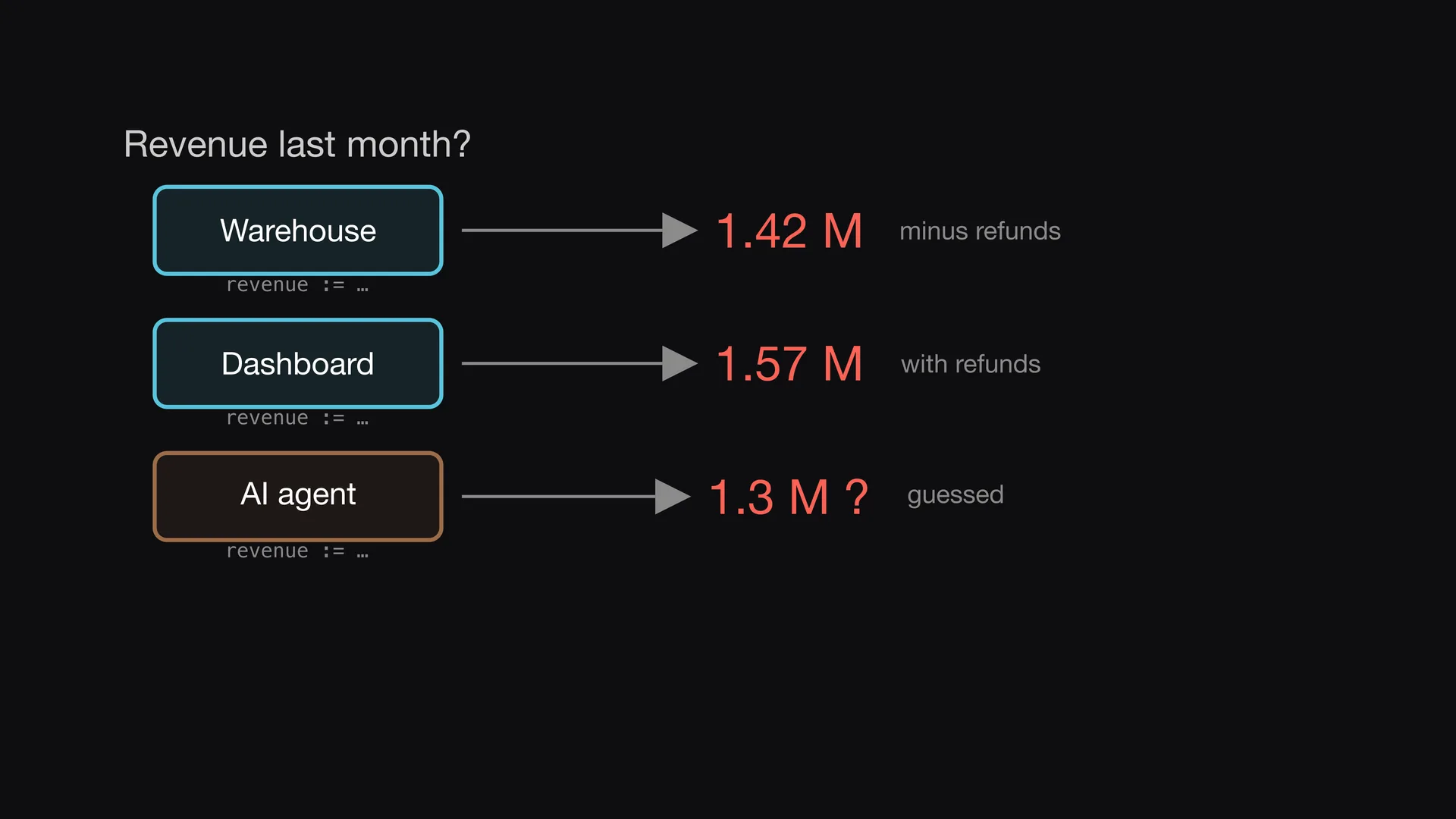
Three tools, three numbers
Ask three tools for the revenue of last month, and you get three numbers. The warehouse subtracts refunds. The dashboard does not subtract them. The AI agent guesses. Each tool defines the metric on its own, and no tool reads the definitions of the other tools.
From OSI to Apache Ossie
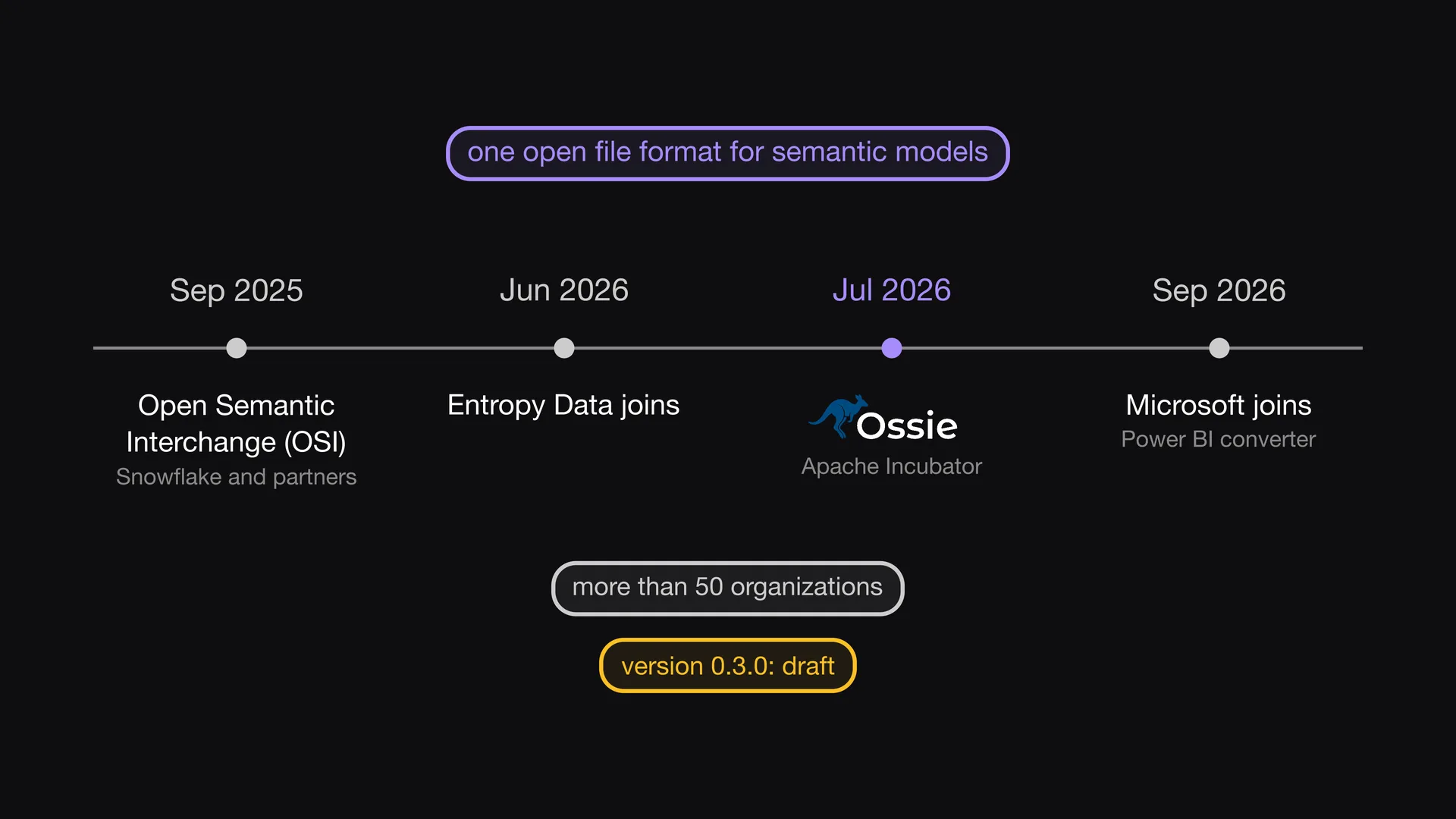
Snowflake and its partners started the Open Semantic Interchange (OSI) in 2025. Its goal is one open file format for semantic models. Entropy Data joined in June 2026. In July 2026, OSI moved to the Apache Incubator as Apache Ossie. Microsoft joined with a converter for Power BI. The specification is still a draft.
Datasets
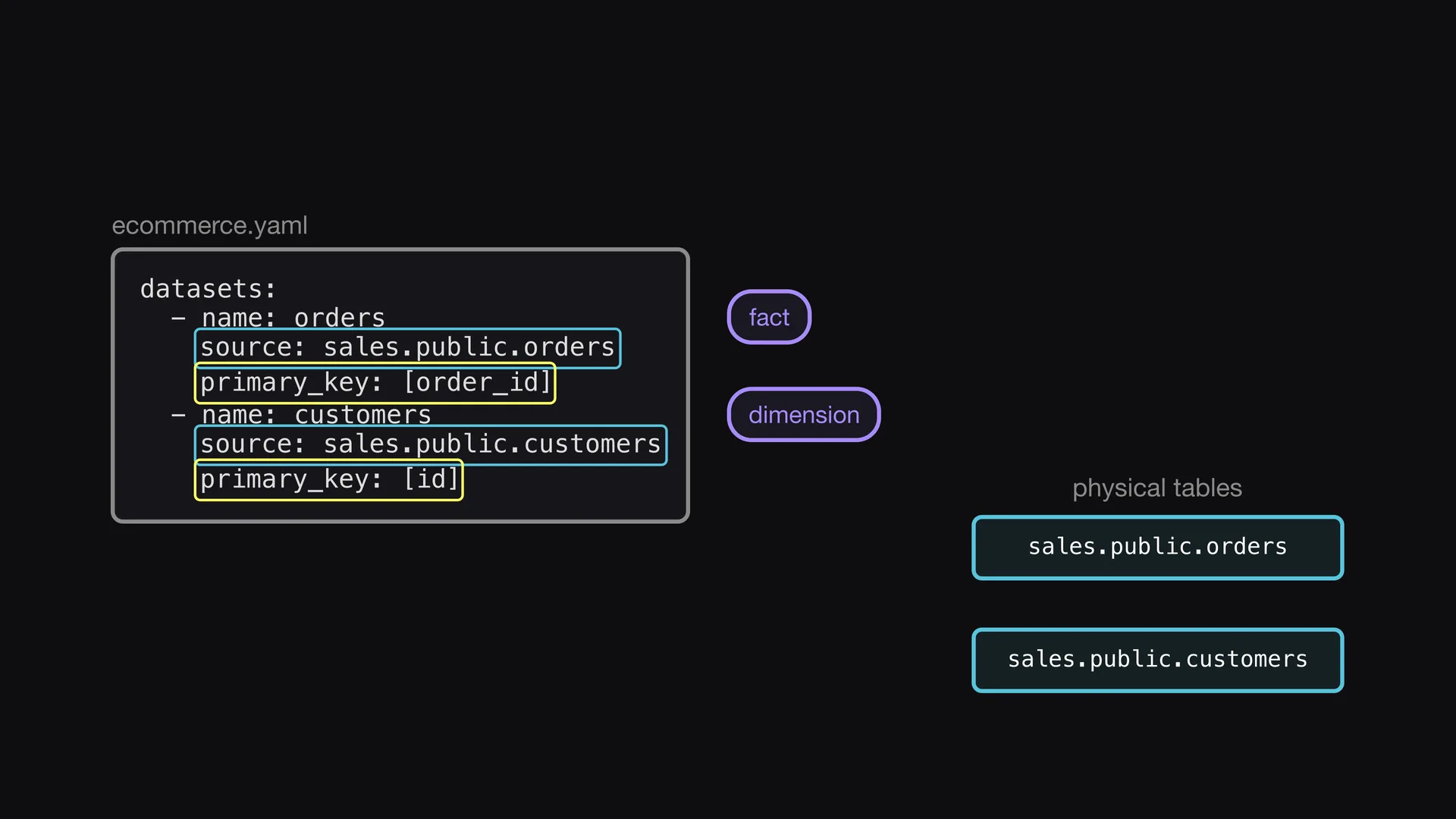
A semantic model starts with datasets. Datasets are the fact tables and the dimension tables. Each dataset points to its physical source, for example sales.public.orders. Each dataset also declares its primary key. Here, the orders dataset is a fact table, and the customers dataset is a dimension.
Fields
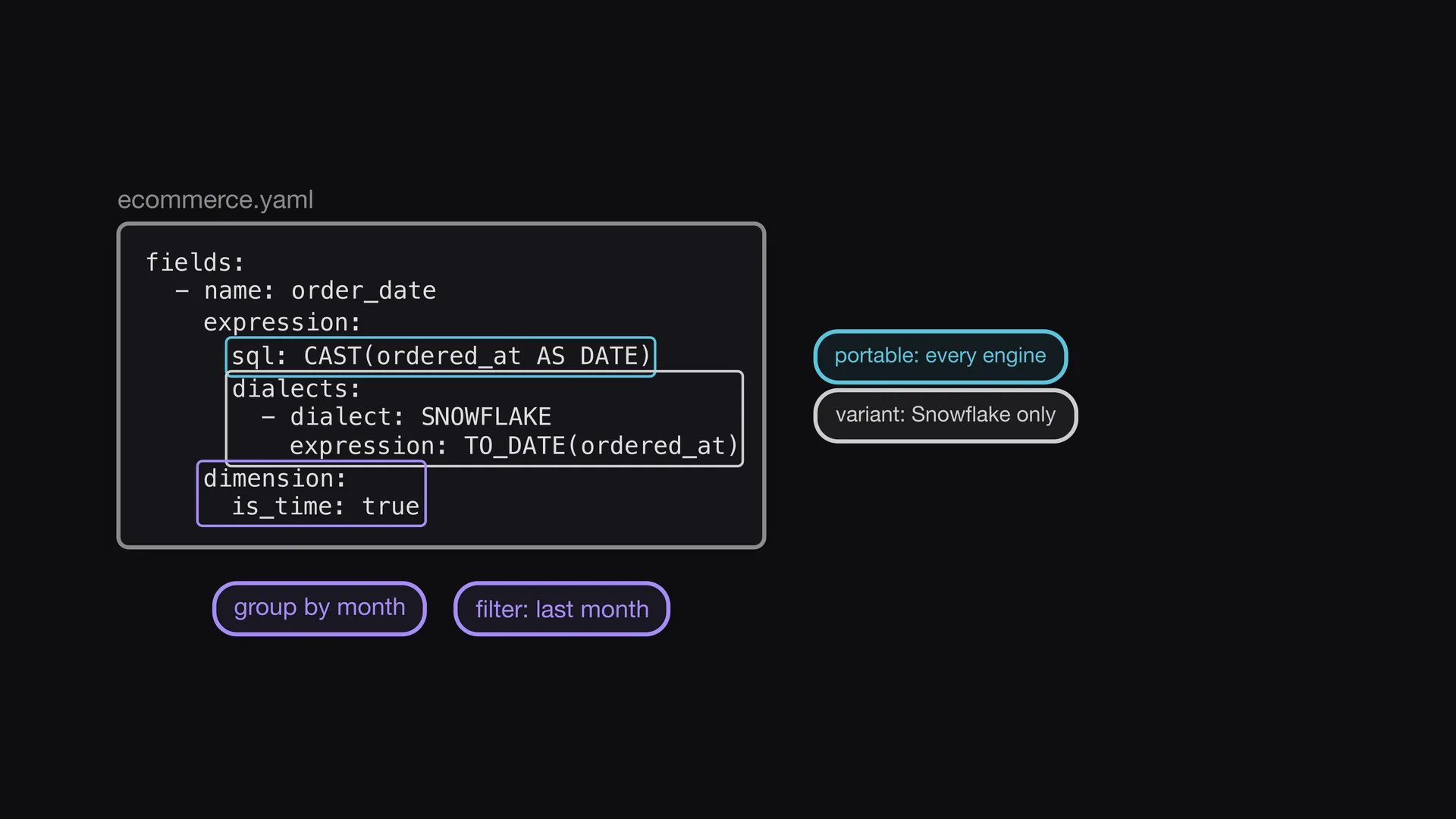
Fields are the columns of a dataset. Each field has a portable SQL expression that every engine can run. A field can also have variants for one platform, for example Snowflake. A field tells if it is a dimension or a time dimension. Then tools know how to group and filter the data.
Relationships
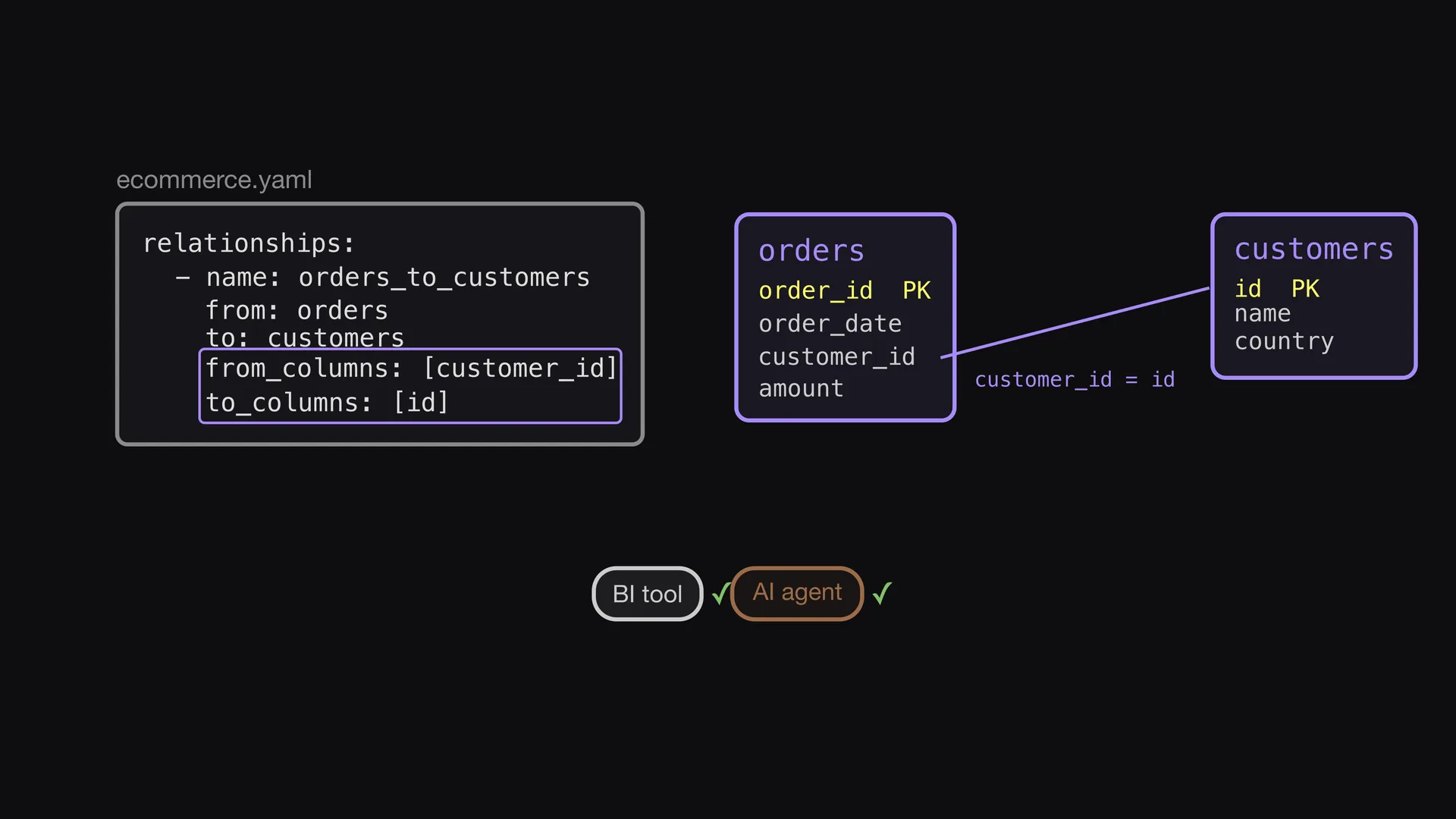
Relationships tell how datasets join. Here, orders join customers on the customer id. The semantic model writes this join one time. A BI tool and an AI agent read the same relationship, so they do not have to guess the join.
Metrics
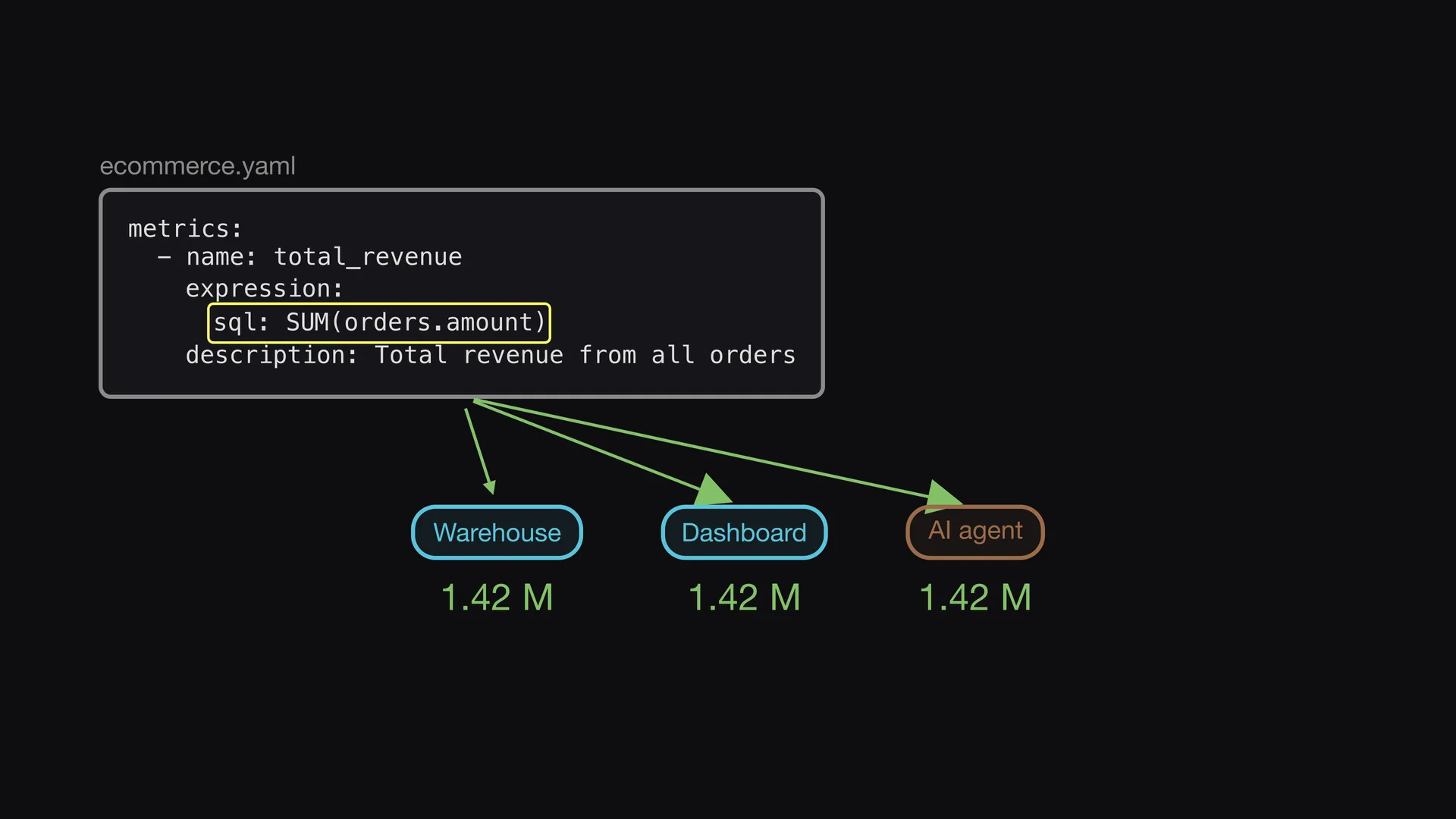
Metrics are the numbers that the business uses. Total revenue is the sum of the order amounts. The semantic model writes this metric one time, in portable SQL. The warehouse, the dashboard, and the AI agent read the same definition. So all three tools show the same number.
Context for AI
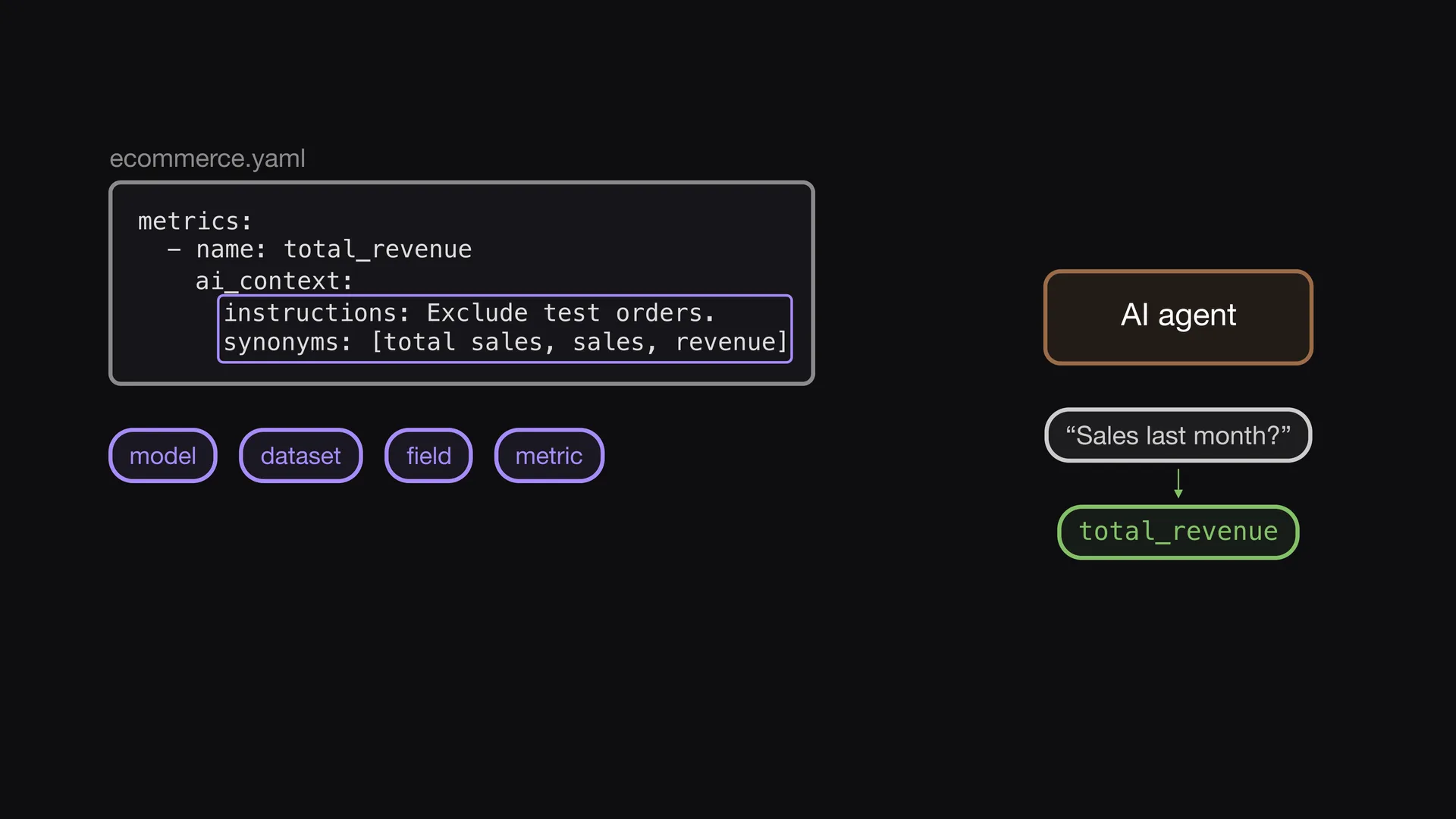
Each model, dataset, field, and metric can have AI context. The context contains instructions and synonyms. Here, the instruction tells the agent to exclude test orders. The synonyms include sales. So when a person asks for sales, the agent uses total revenue.
Defined one time
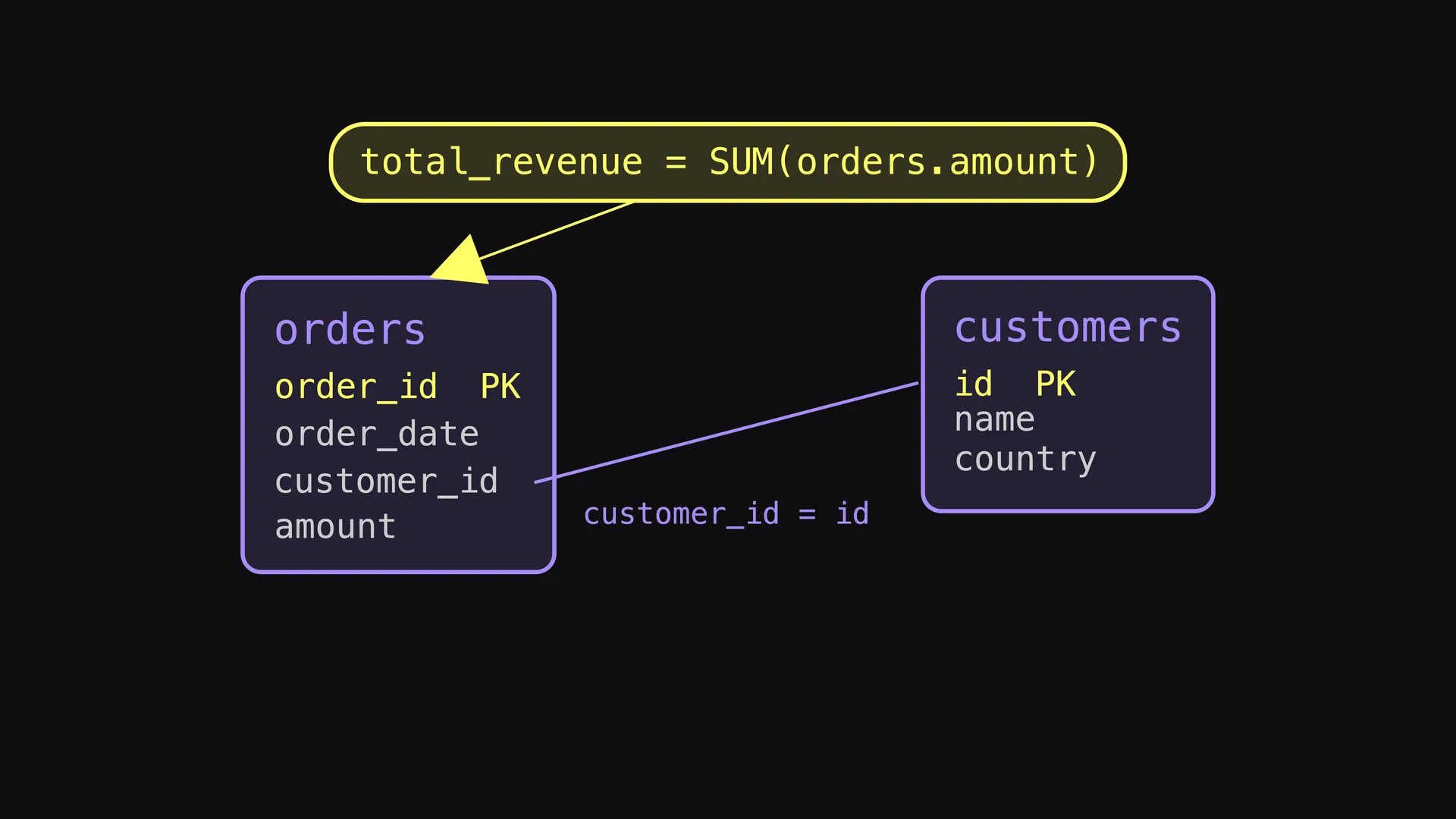
Datasets, joins, and metrics are defined one time, in one open file. Every tool can read this file. Here, total revenue is the sum of the order amounts, and orders join customers on the customer id. The result is the same number in every tool.