The Open Data Product Standard from Bitol
What is the Open Data Product Standard?
By Dr. Simon Harrer · · 2:31 video · 8 slides
In short
ODPS is the open standard for the whole data product, and Bitol maintains it. One YAML file describes the fundamentals, the input and output ports with their data contracts, the management ports, the team, and the support.
Watch on YouTube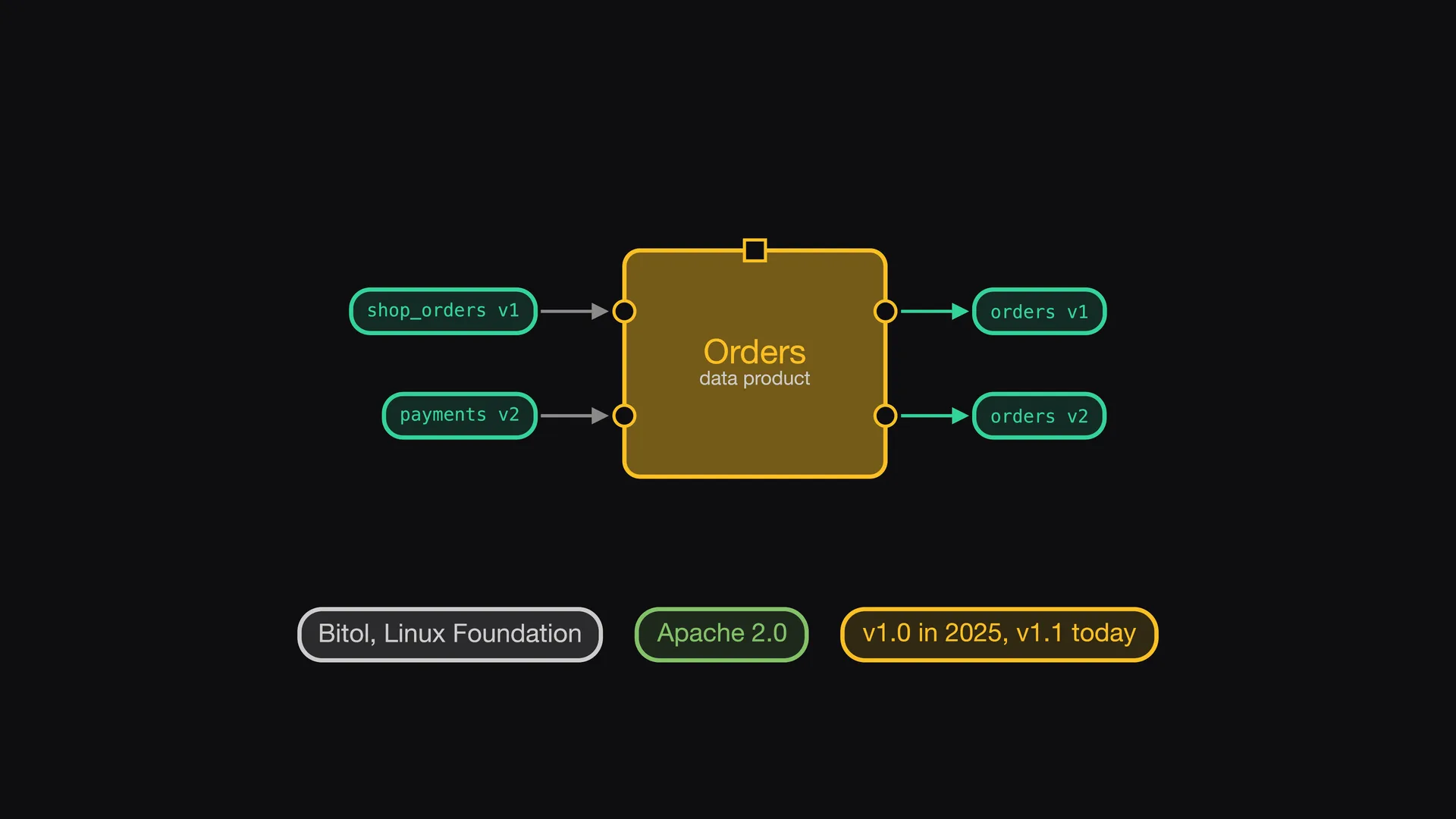
Why a second standard
A data contract describes one dataset and its promises. A data product has more: inputs, code, several output ports, and an owner team. ODPS, the Open Data Product Standard, describes the whole data product in one YAML file. ODPS is the second standard from Bitol, after ODCS.
One file, many sections
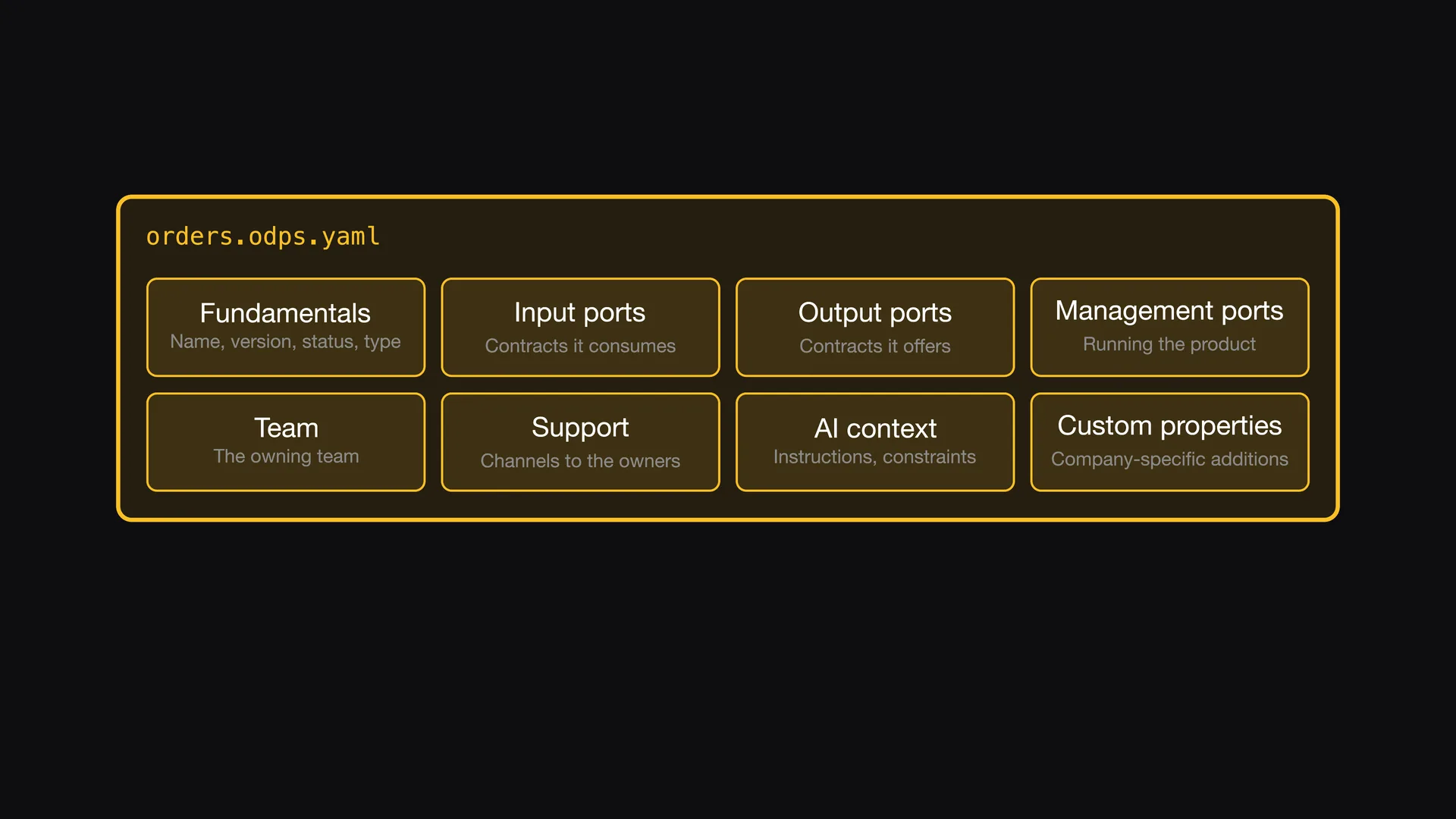
Like a data contract, a data product is one YAML file with sections. The fundamentals say what the product is. Input and output ports point to data contracts. Management ports help to operate the product. Team and support tell who owns it. The AI context helps AI agents.
Fundamentals and type
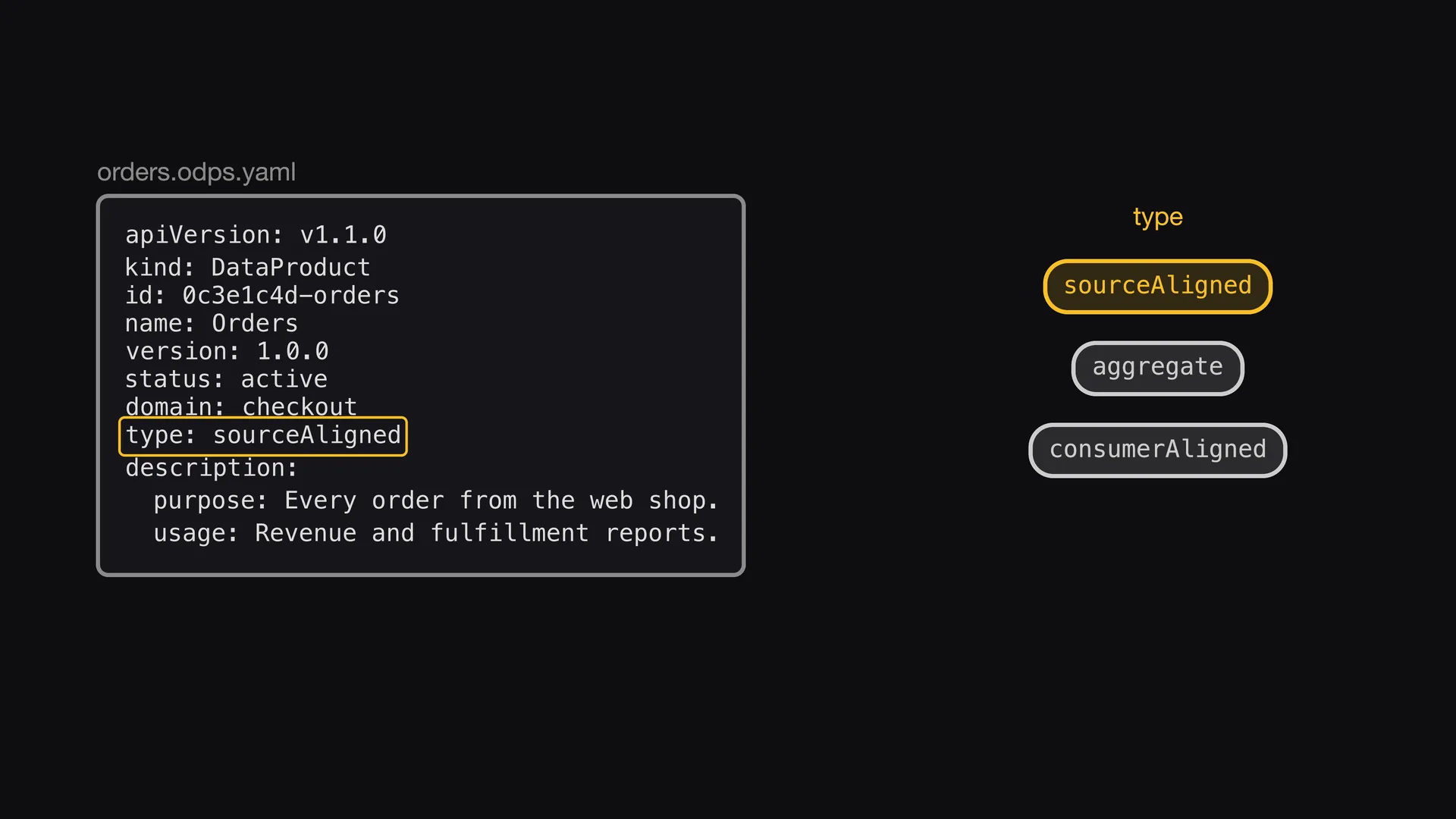
The fundamentals are the same as in ODCS: id, name, version, status, domain, and description. A type says if the data product is source-aligned, an aggregate, or consumer-aligned. Catalogs and agents use the type to sort data products.
Input and output ports
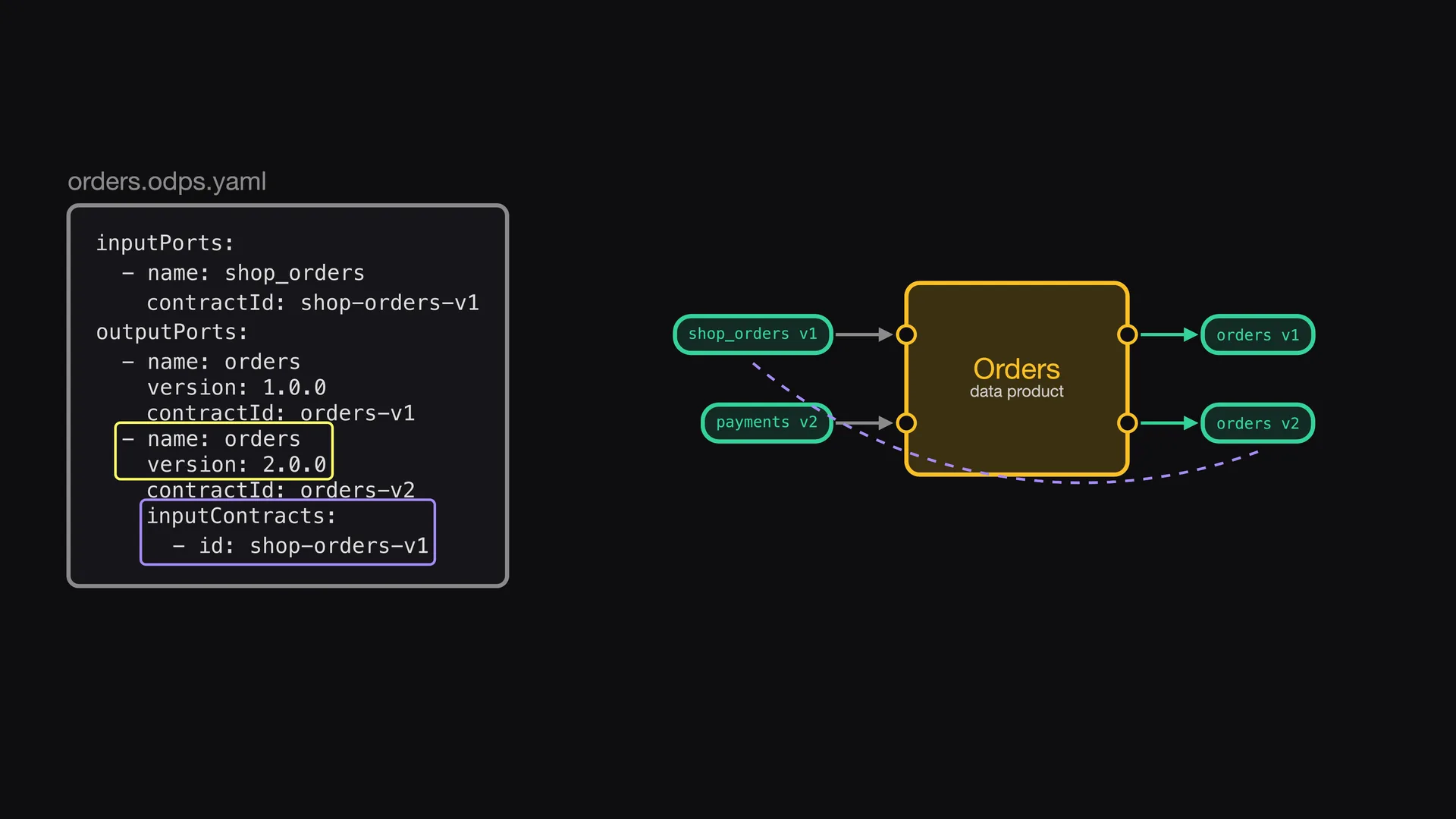
Input ports say what the data product uses, and each one points to the data contract of its source. Output ports say what it gives, and each one points to its own data contract. Output ports can also list their input contracts, so the file contains the lineage.
Management ports
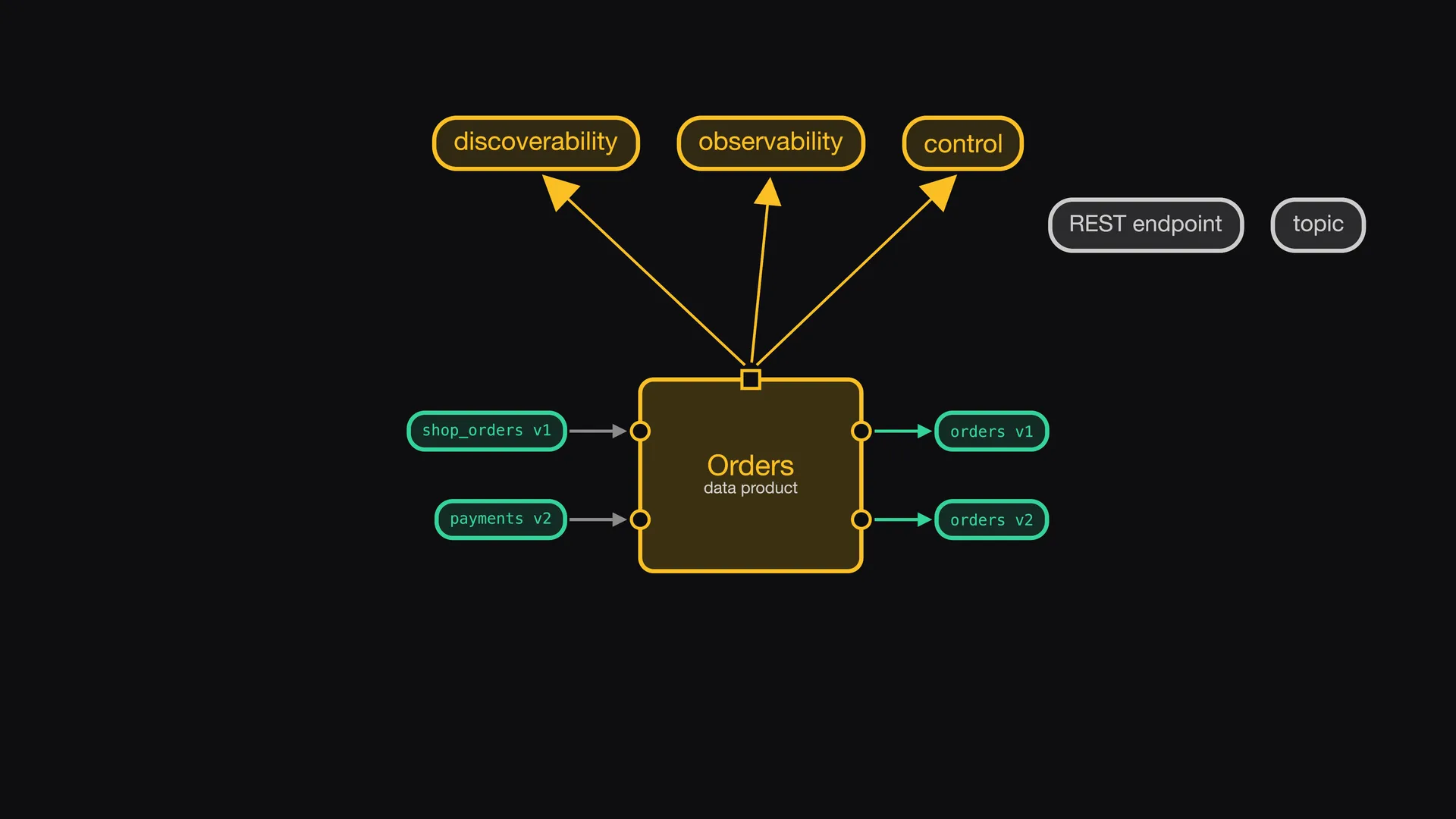
Management ports are for the operation of the data product, not for its data. They give discoverability, observability, and control. A management port can be a REST endpoint or a topic. Platforms and tools use these ports to monitor and run the data product.
Team and support
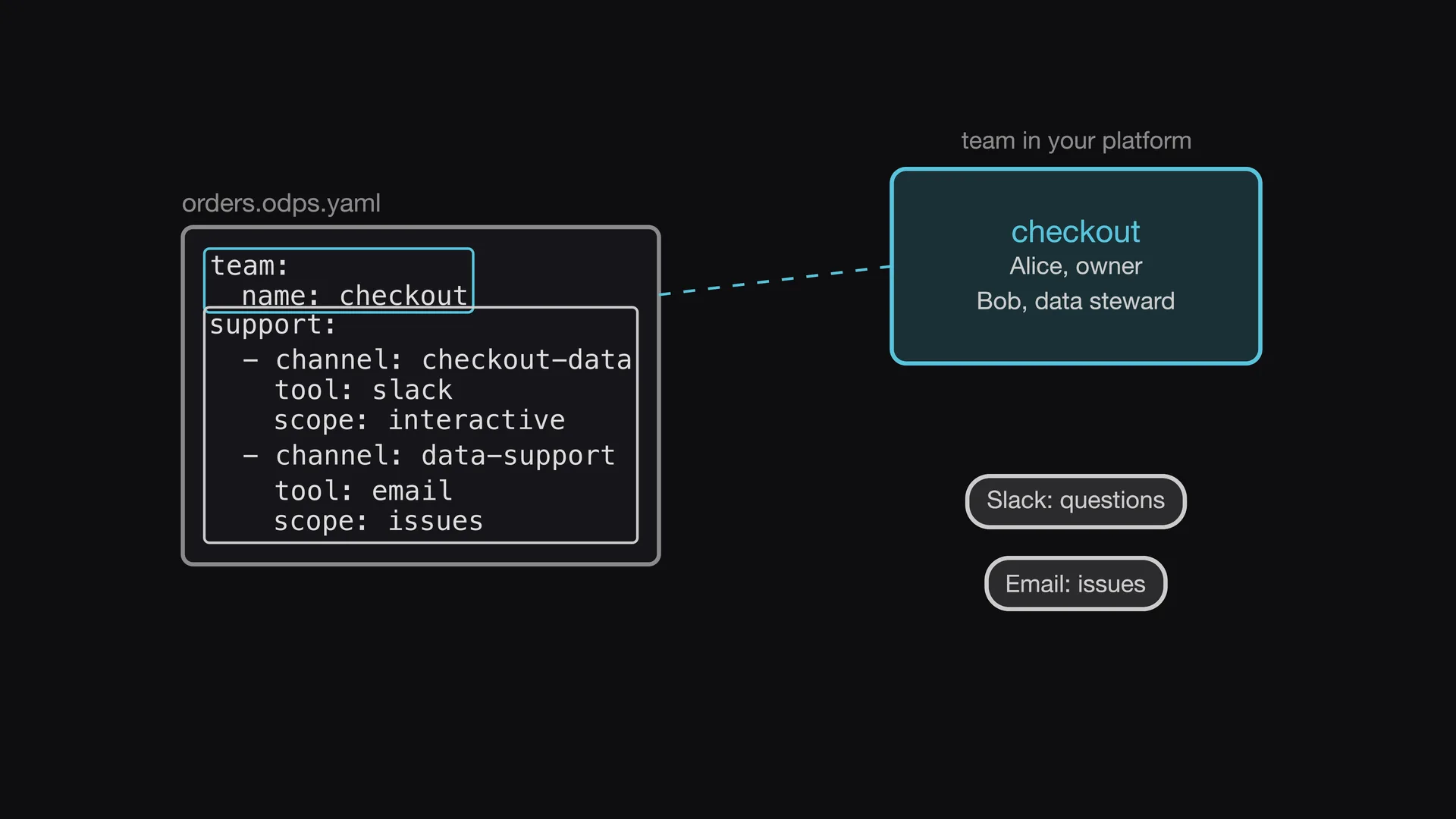
Do not repeat the team and the support in each data contract. All output ports share them, so put them in the data product one time. This keeps the data contracts smaller. For the team, use only its name and a link to the team in your platform. Support tells where consumers ask questions.
Ready for AI
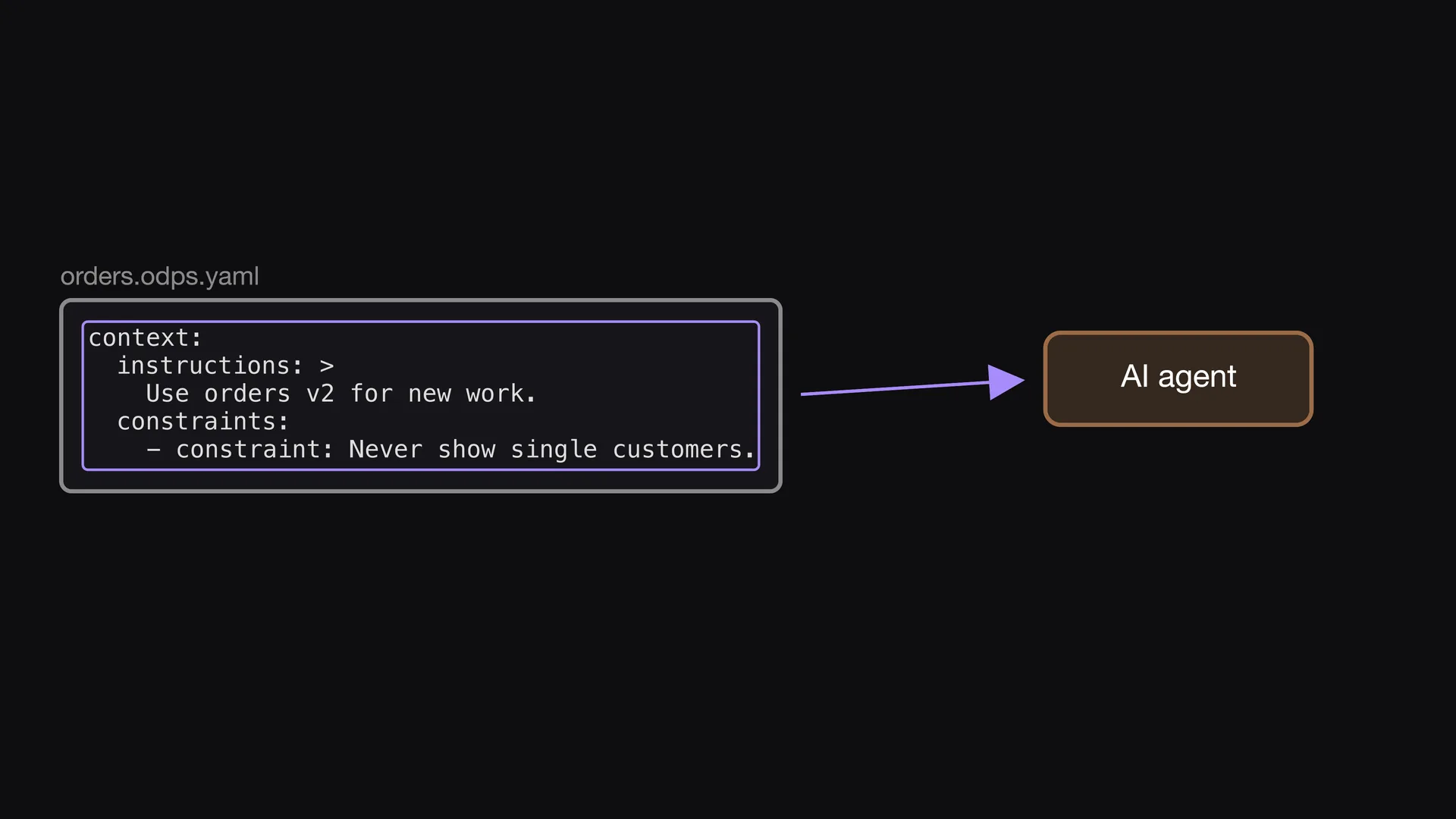
Like ODCS, ODPS has a context block with instructions and constraints for AI agents. Here, an instruction tells the agent to use version 2 for new work. A constraint tells it not to show single customers.
Product and promises
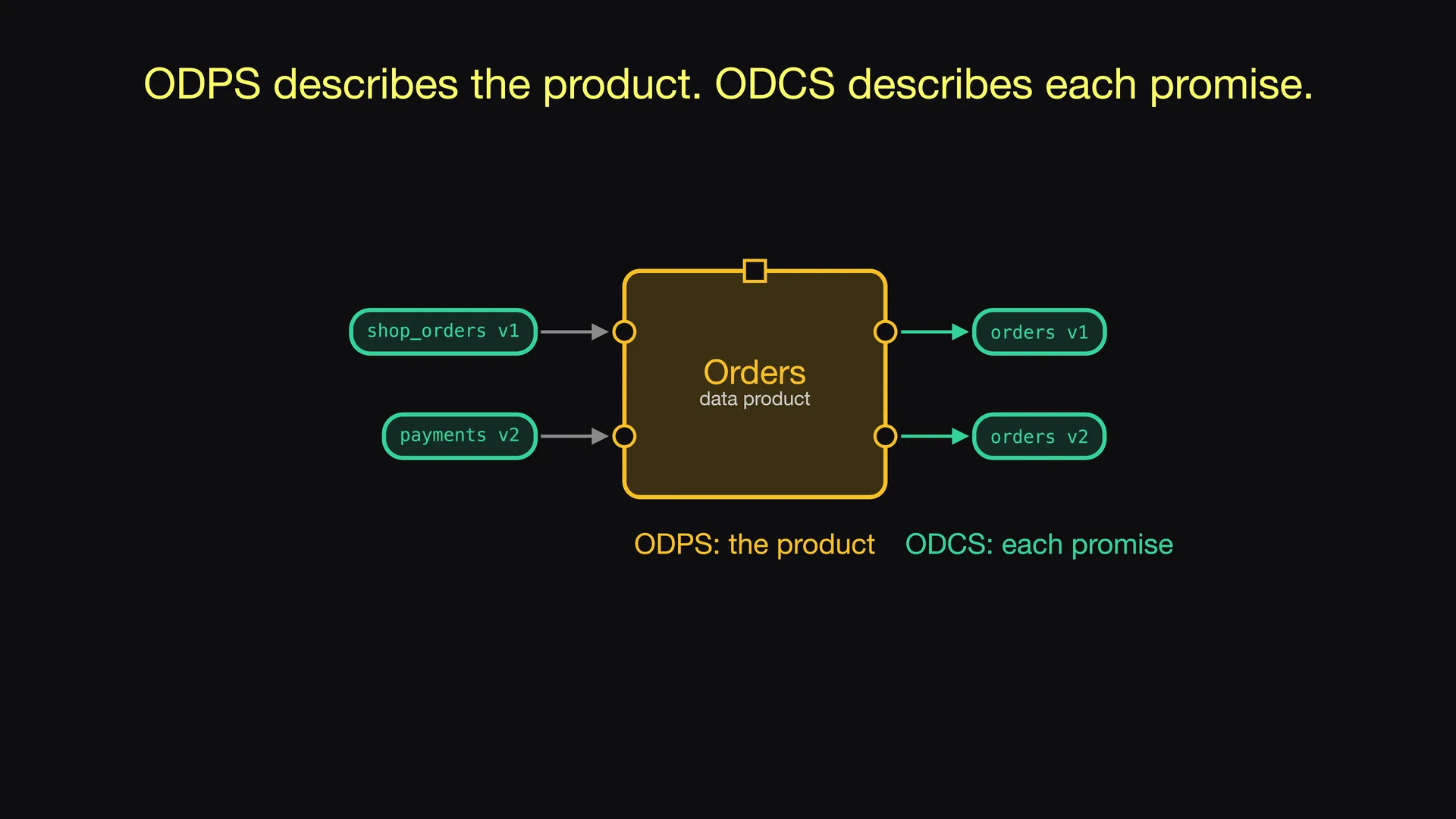
ODPS describes the data product. ODCS describes each promise of an output port. Together, the two standards describe the ports, the data contracts, the team, and the context of a data product. Each output port has its own data contract.