Ontologies with Apache Ossie
How do you write down what your business means, in a format tools understand?
By Dr. Simon Harrer · · 2:16 video · 7 slides
In short
An Apache Ossie ontology describes the business without tables. It contains concepts, relationships, and rules in one open format. Mappings connect the ontology to semantic models and data contracts. Every tool and every AI agent can read it.
Watch on YouTube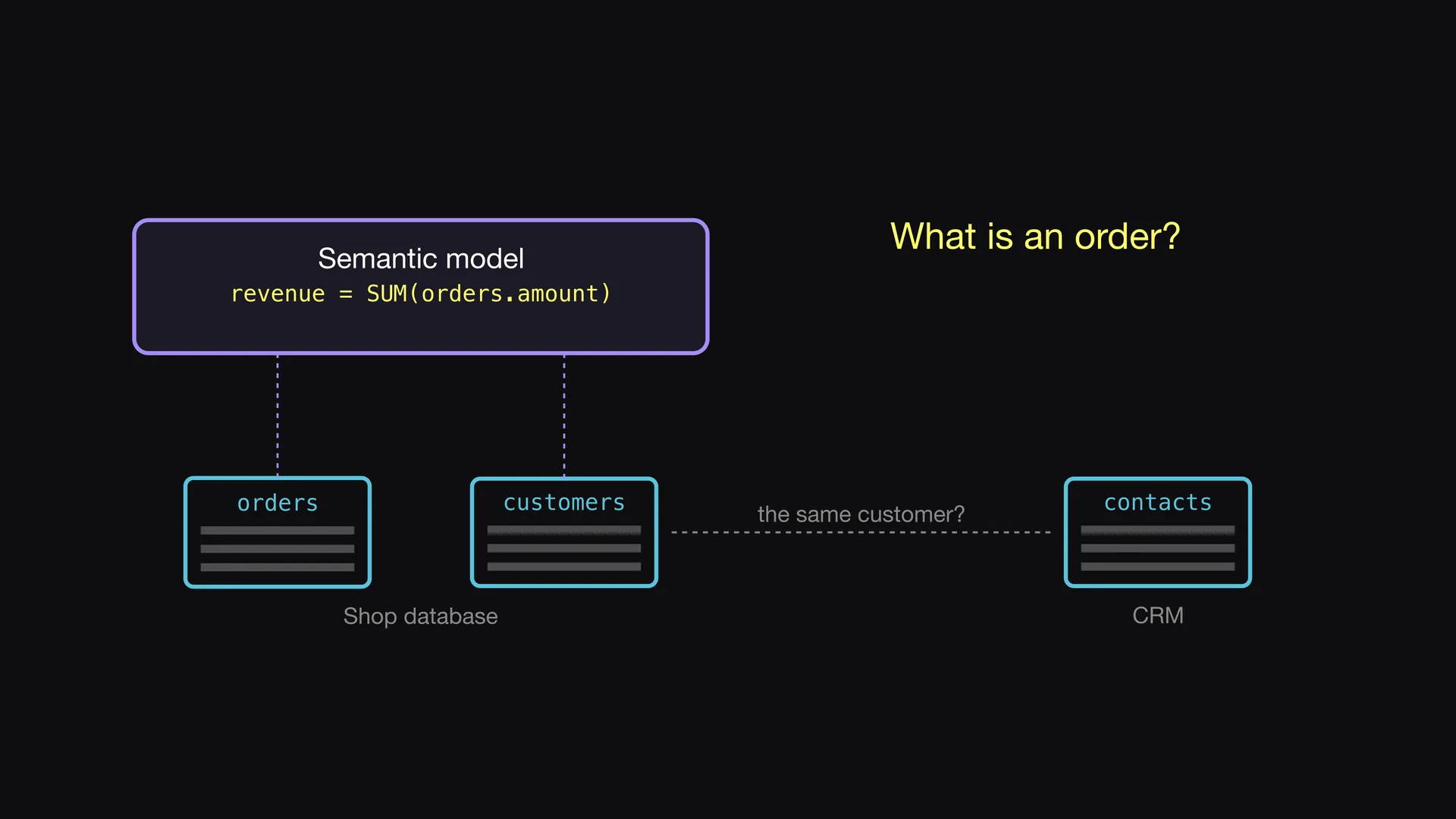
What is an order?
A semantic model tells how to calculate revenue from the tables. It does not tell what an order is. It also does not tell that the same customer is in the CRM. An ontology does this job. It describes the business without tables.
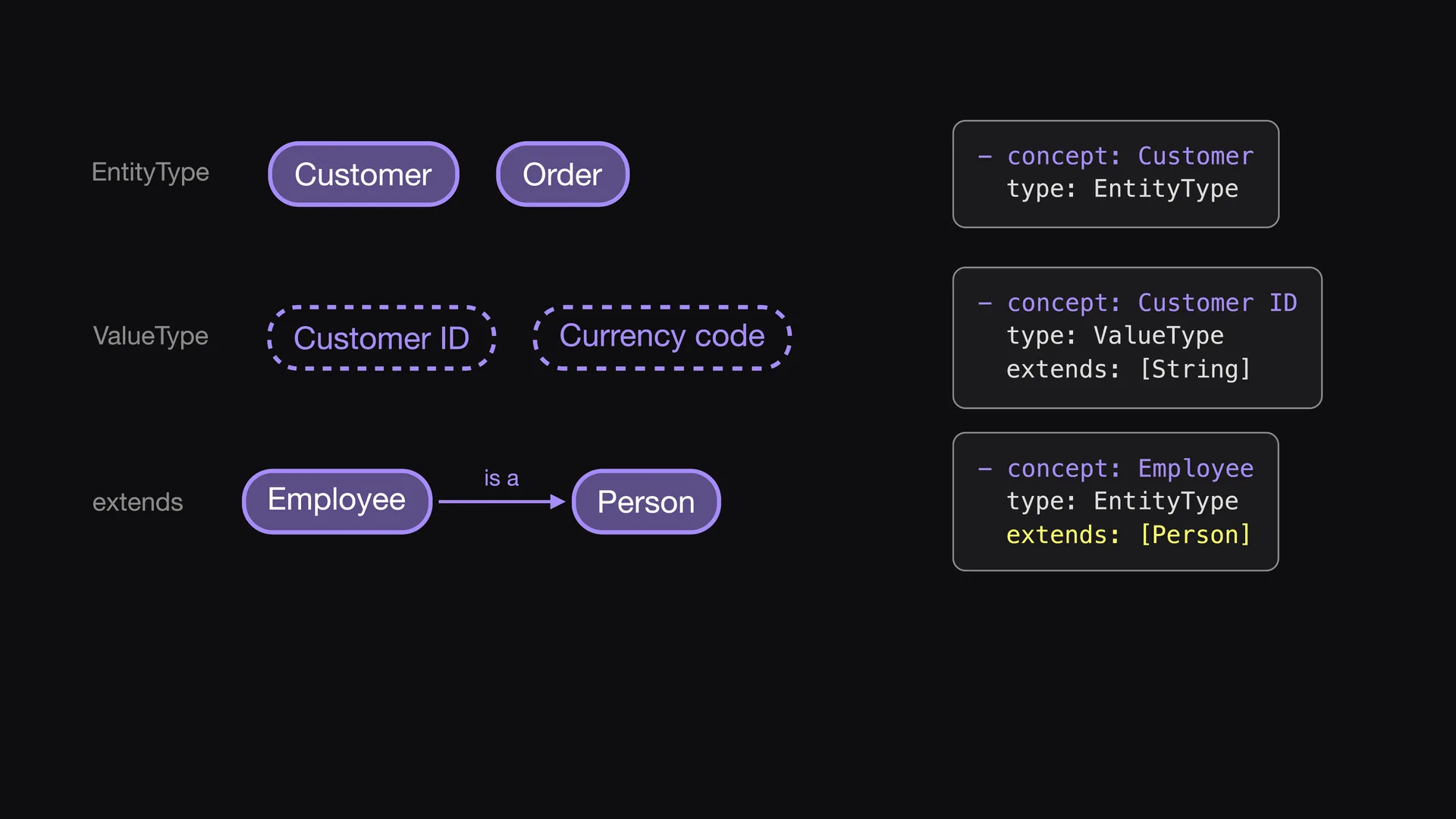
Concepts
In an Apache Ossie ontology, everything is a concept. An entity type is a real thing, for example a customer or an order. A value type is a data type with a meaning, for example a customer ID or a currency code. Concepts can extend other concepts: an employee is a person.
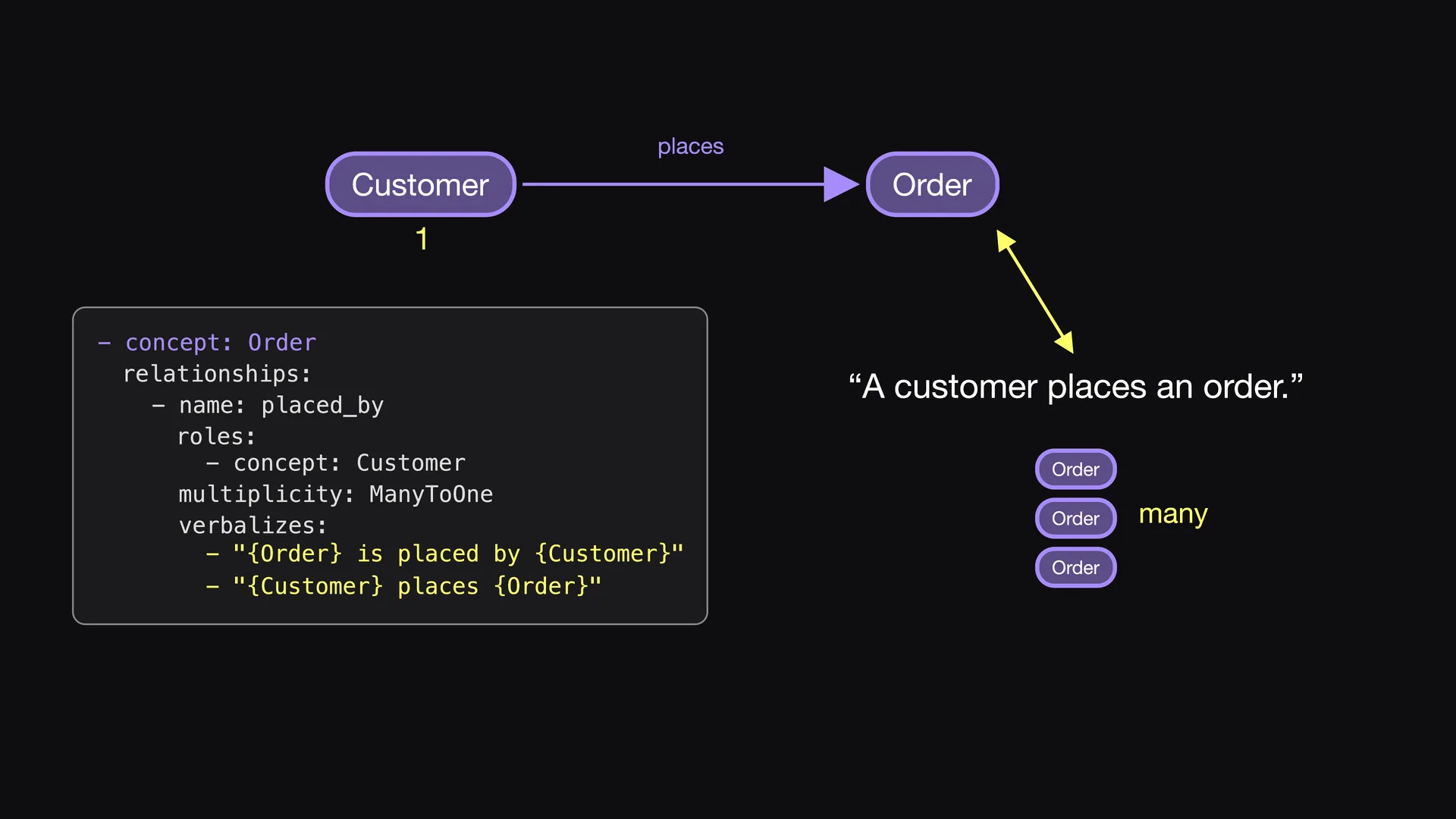
Relationships
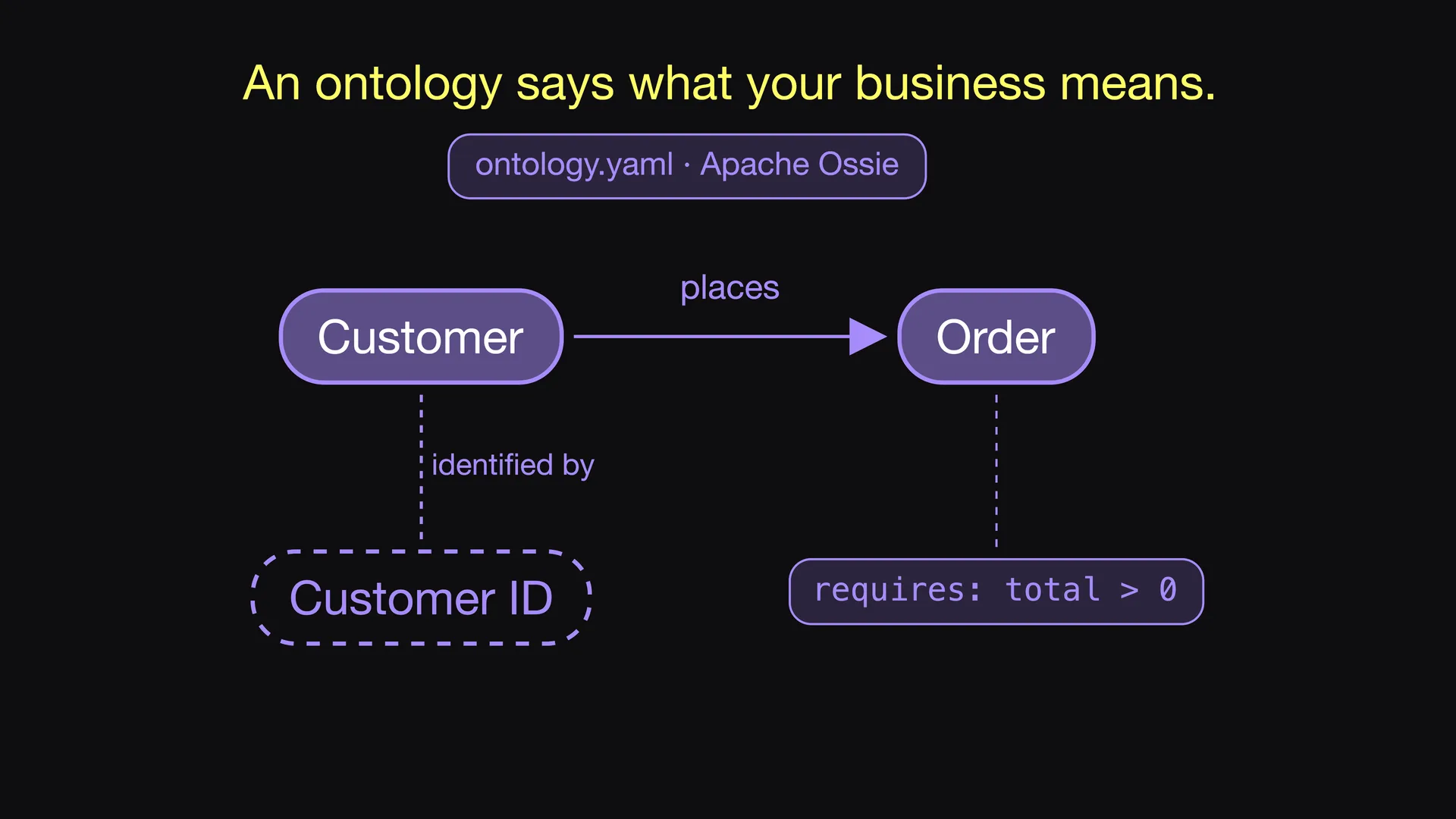
Relationships connect concepts. A customer places orders. Each relationship tells how it reads in plain language. Thus a tool or an AI agent can change the graph into sentences, and sentences into the graph. Multiplicity tells how many: each order is placed by one customer.
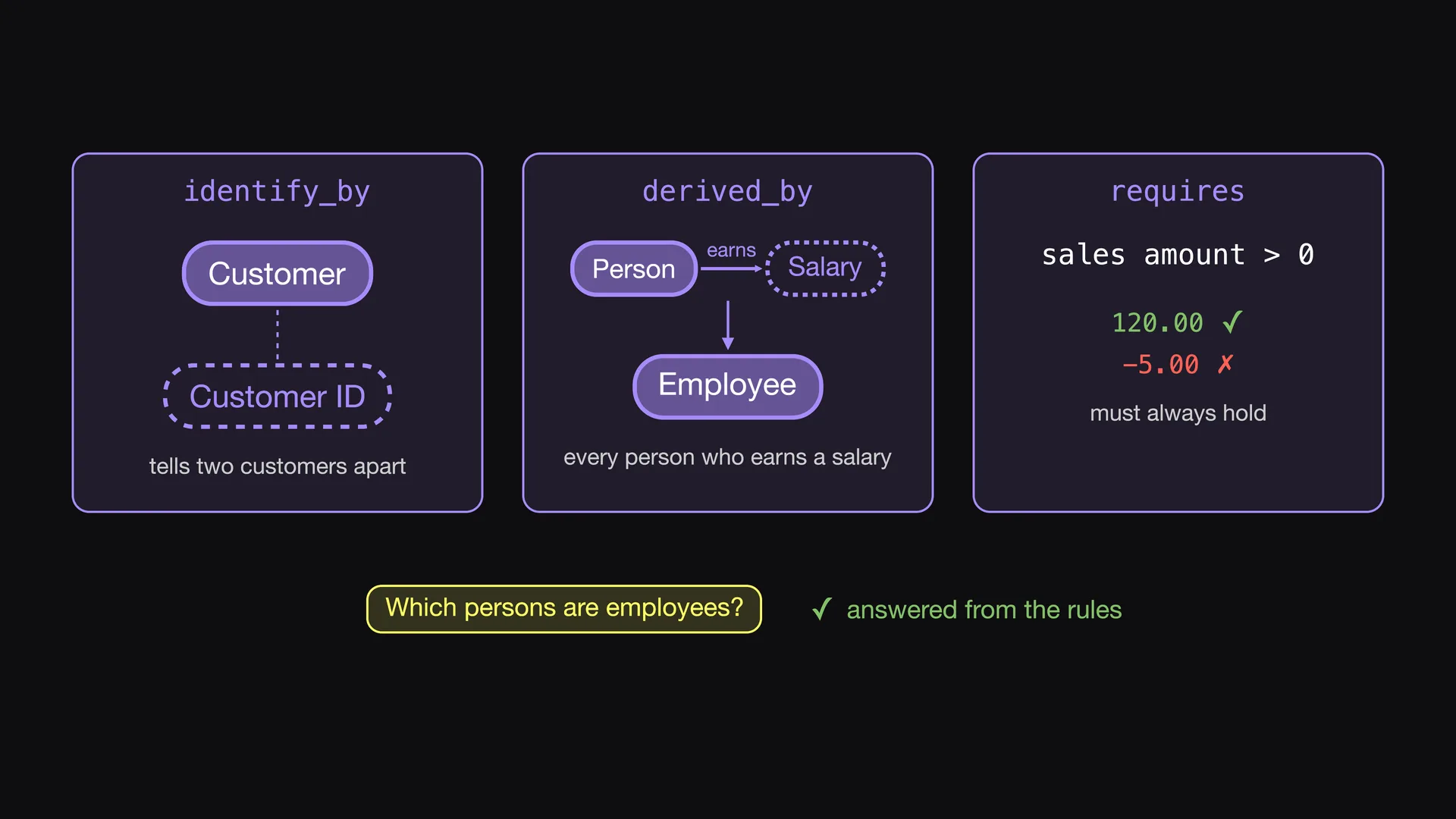
Rules
An ontology is more than a glossary. Identifiers tell how to see that two customers are different. Derivations define new concepts: an employee is each person who earns a salary. Constraints must always be true: a sales amount is more than zero. Tools can check these rules and answer new questions.
Mappings
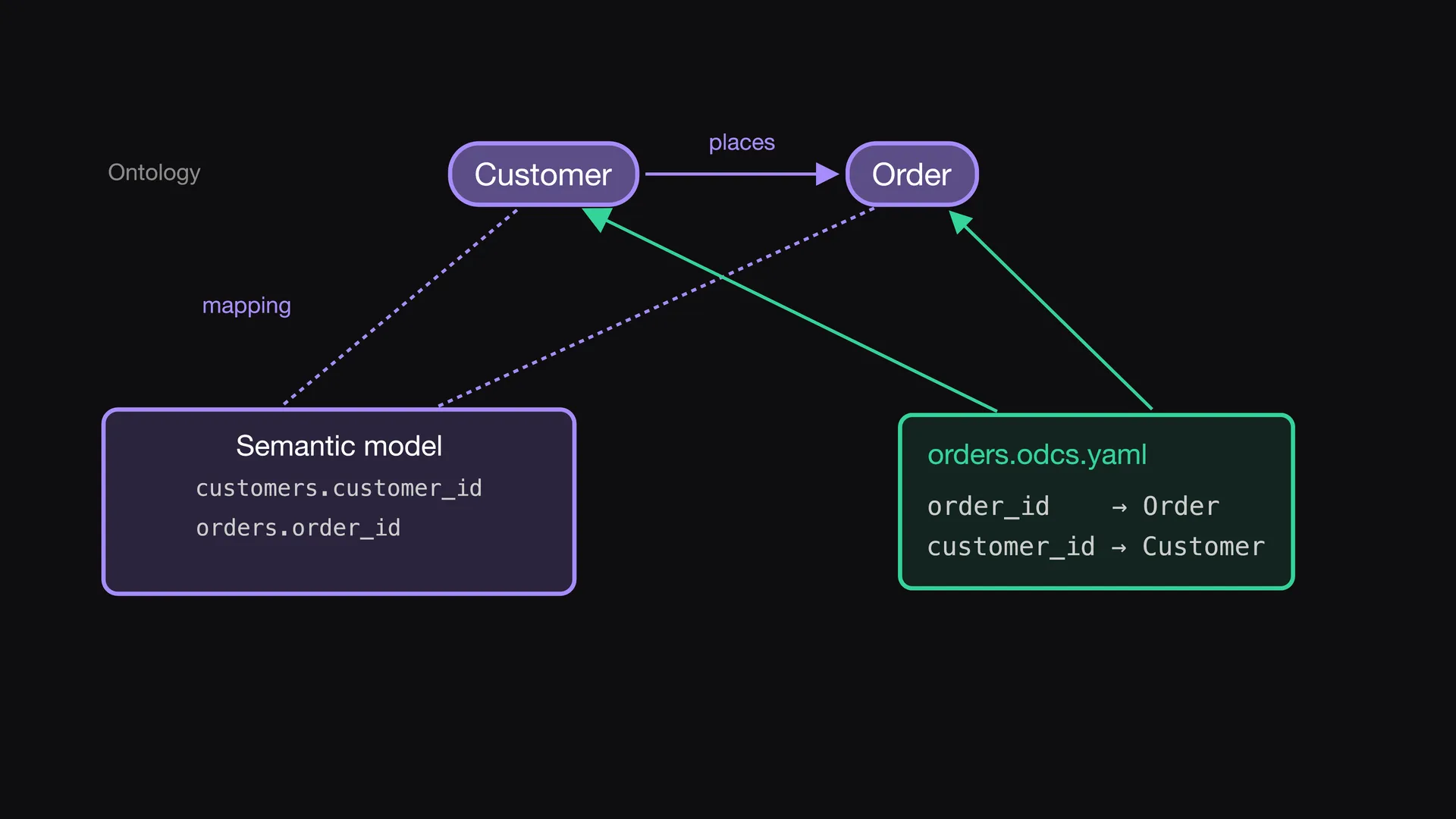
Mappings connect the ontology to the data. They fill concepts and relationships from the fields of a semantic model. Data contracts link their columns to the concepts that they implement. Here, the column customer_id in the data contract implements the concept Customer.
Portable
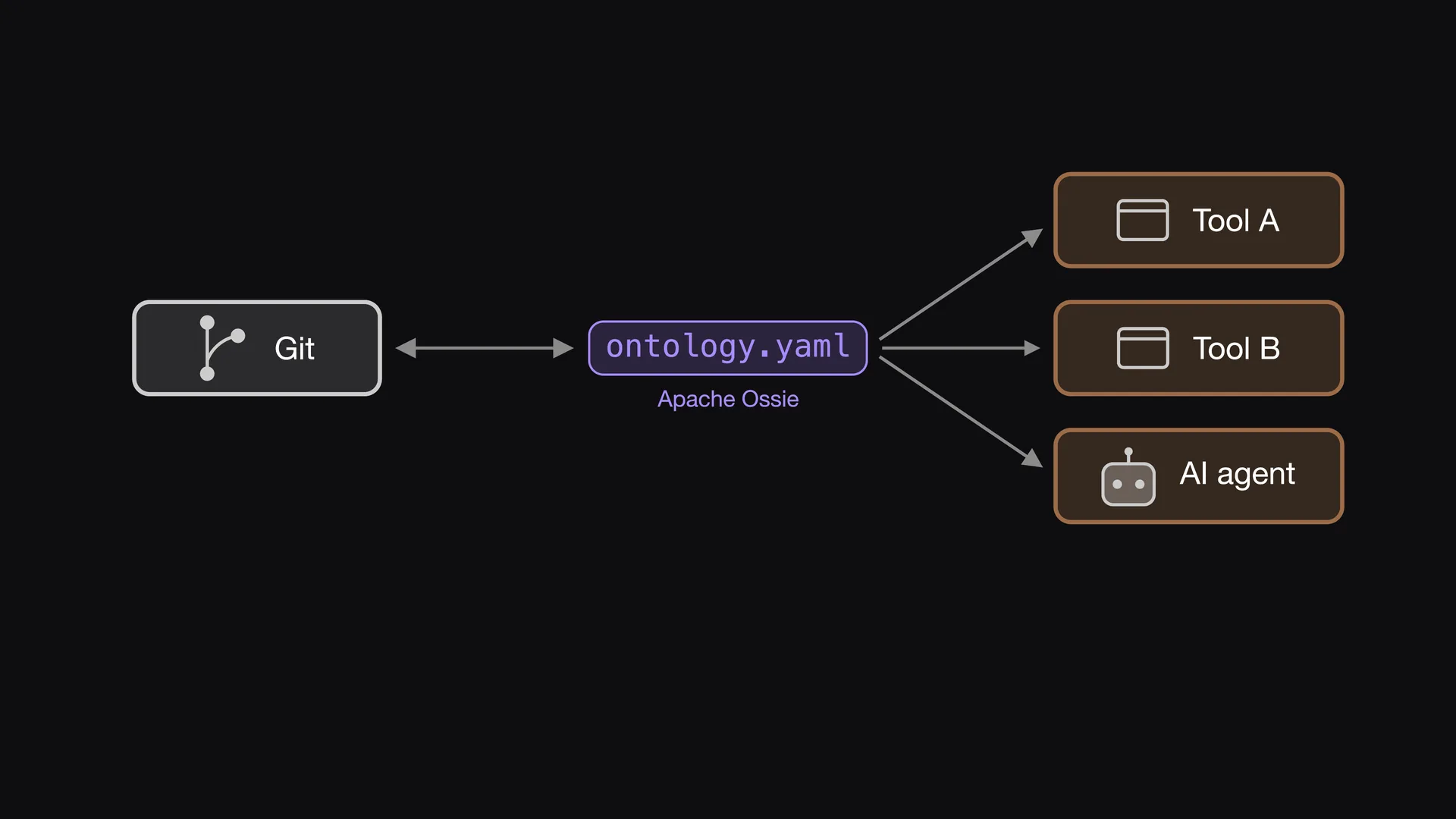
The ontology is one open file in the Apache Ossie format. So the ontology is portable. You keep the file in Git and you move it between tools. Each AI agent reads the same meaning from the same file.
What your business means
Concepts, relationships, and rules describe what your business means. Here, a customer places orders, a customer ID identifies the customer, and the total of an order must be more than zero. The open format lets tools calculate with this meaning.