The Open Data Contract Standard from Bitol
What is the Open Data Contract Standard?
By Dr. Simon Harrer · · 2:50 video · 7 slides
In short
ODCS is the open standard for data contracts, and Bitol maintains it. ODCS gives every data contract the same shape in one YAML file. Editors, tests, data marketplaces, and AI agents can then read all data contracts.
Watch on YouTube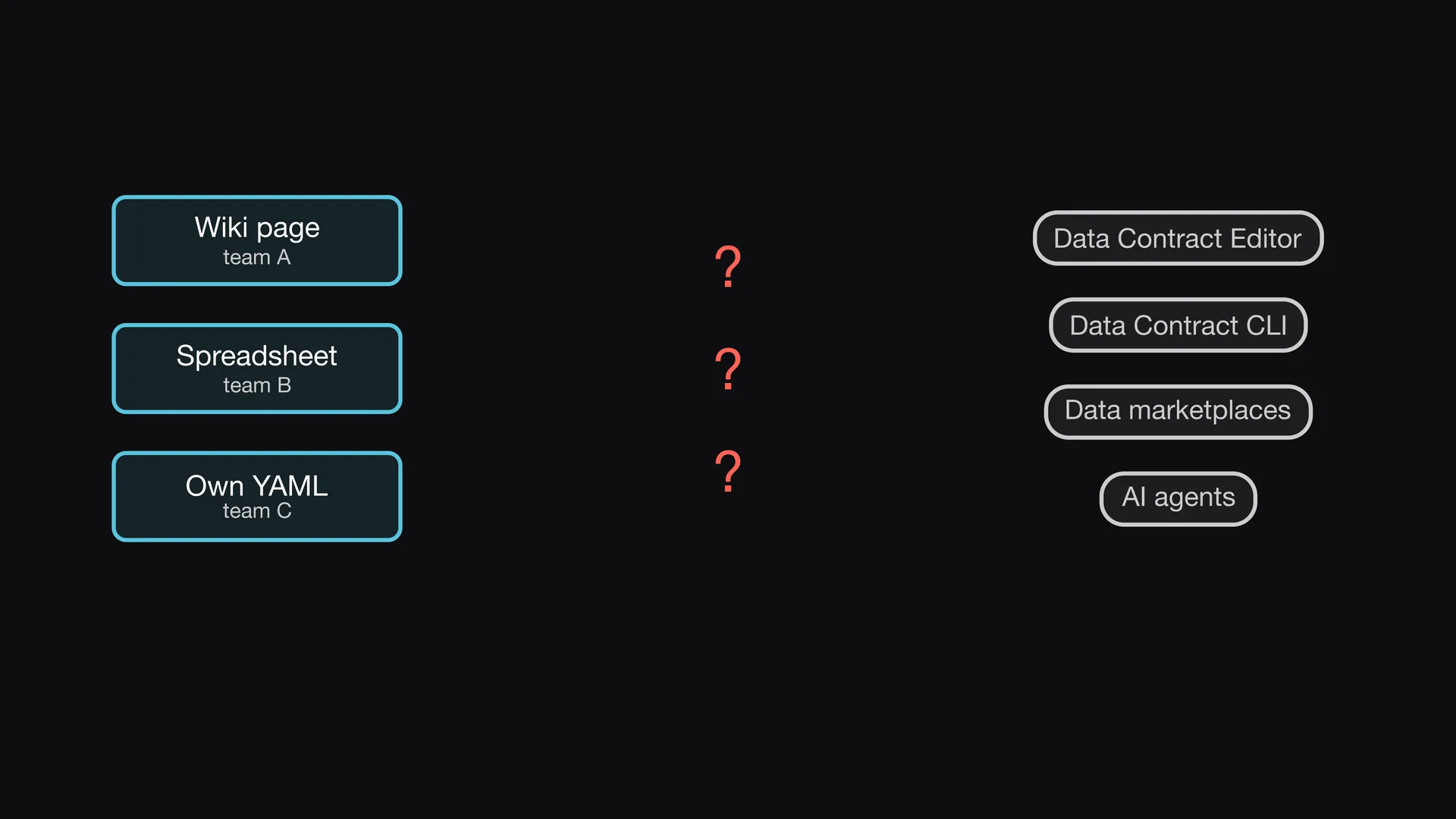
Why a standard
Every team can write a data contract in its own way: in a wiki, in a spreadsheet, or in its own YAML. Then no tool can read all of these data contracts. Each new tool must learn each format again.
One shape for every tool
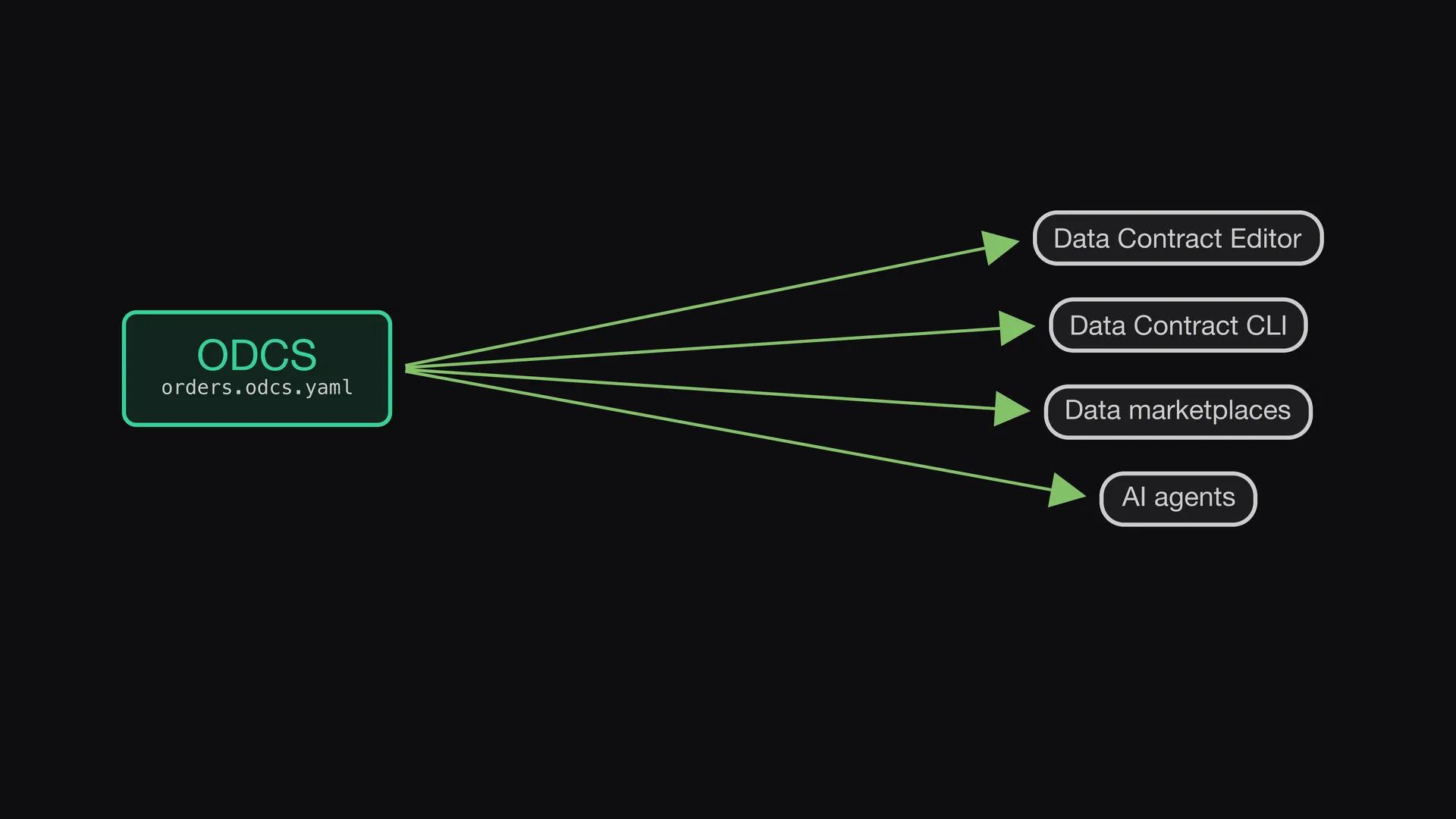
ODCS, the Open Data Contract Standard, gives every data contract the same shape. All tools read the same file. The Data Contract Editor, the Data Contract CLI, data marketplaces, and AI agents use it. Each tool needs to learn only one format.
Where it comes from
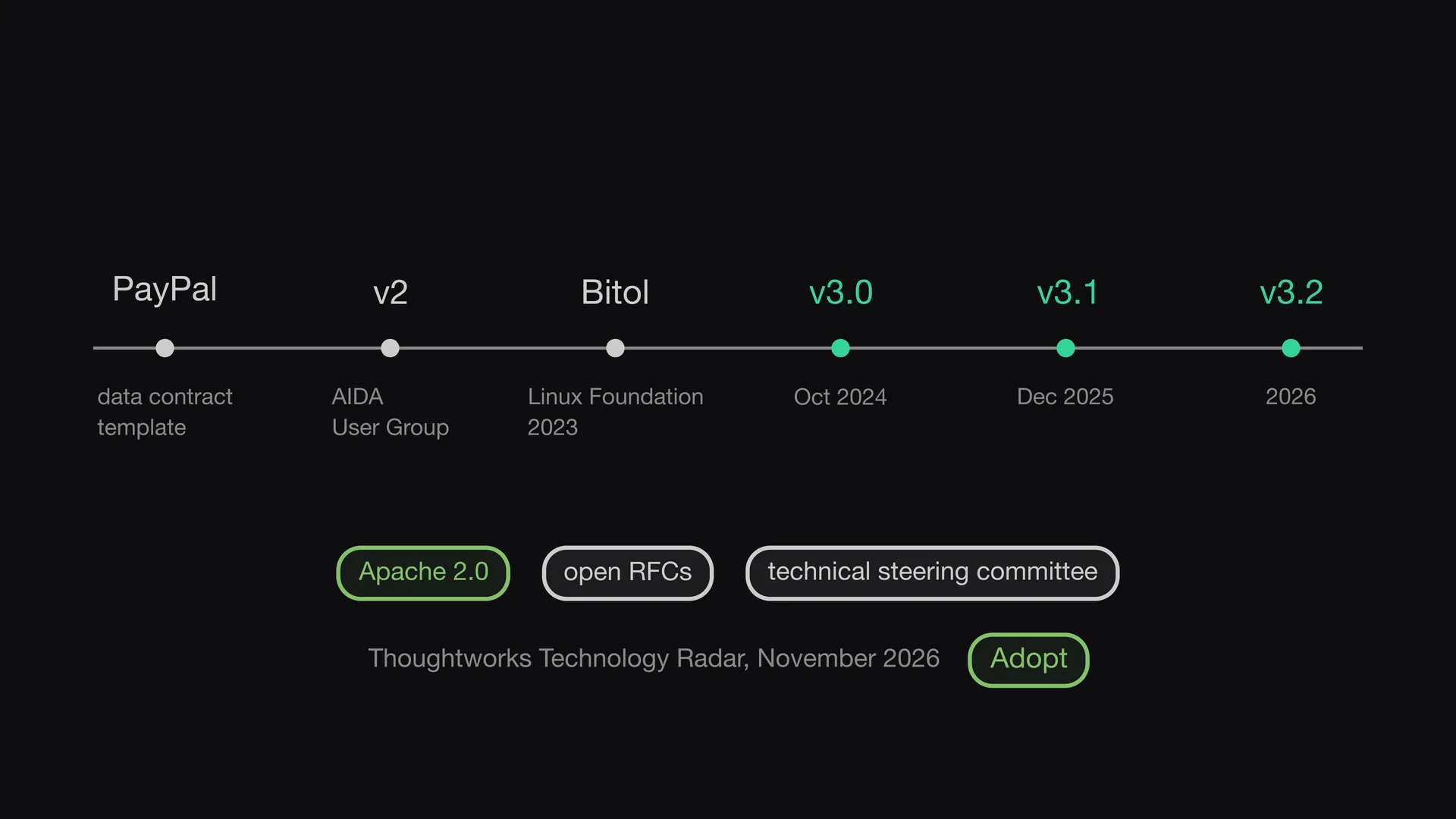
ODCS started at PayPal as their data contract template. Since 2023, Bitol, a Linux Foundation project, maintains it. Version 3 opened the standard, and the Data Contract Specification community moved to ODCS. Today, ODCS is the de facto standard for data contracts. In November 2026, the Thoughtworks Technology Radar put ODCS in Adopt.
One file, many sections
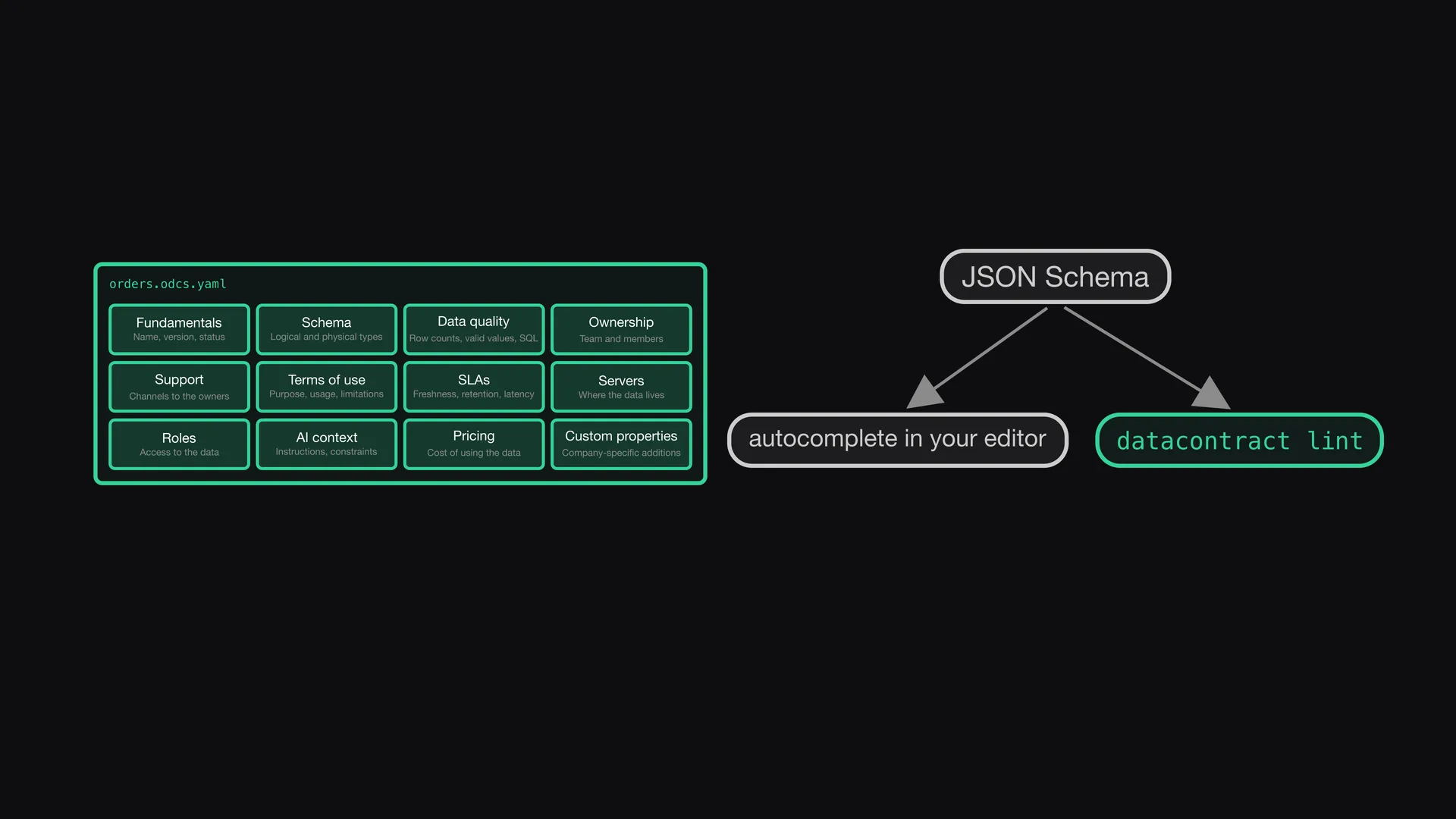
A data contract is one YAML file with twelve sections. Fundamentals, schema, and data quality describe the data. Ownership and support tell who is responsible. Terms of use, SLAs, servers, roles, AI context, and pricing tell how to use the data. A JSON Schema checks each file.
Fundamentals and versions
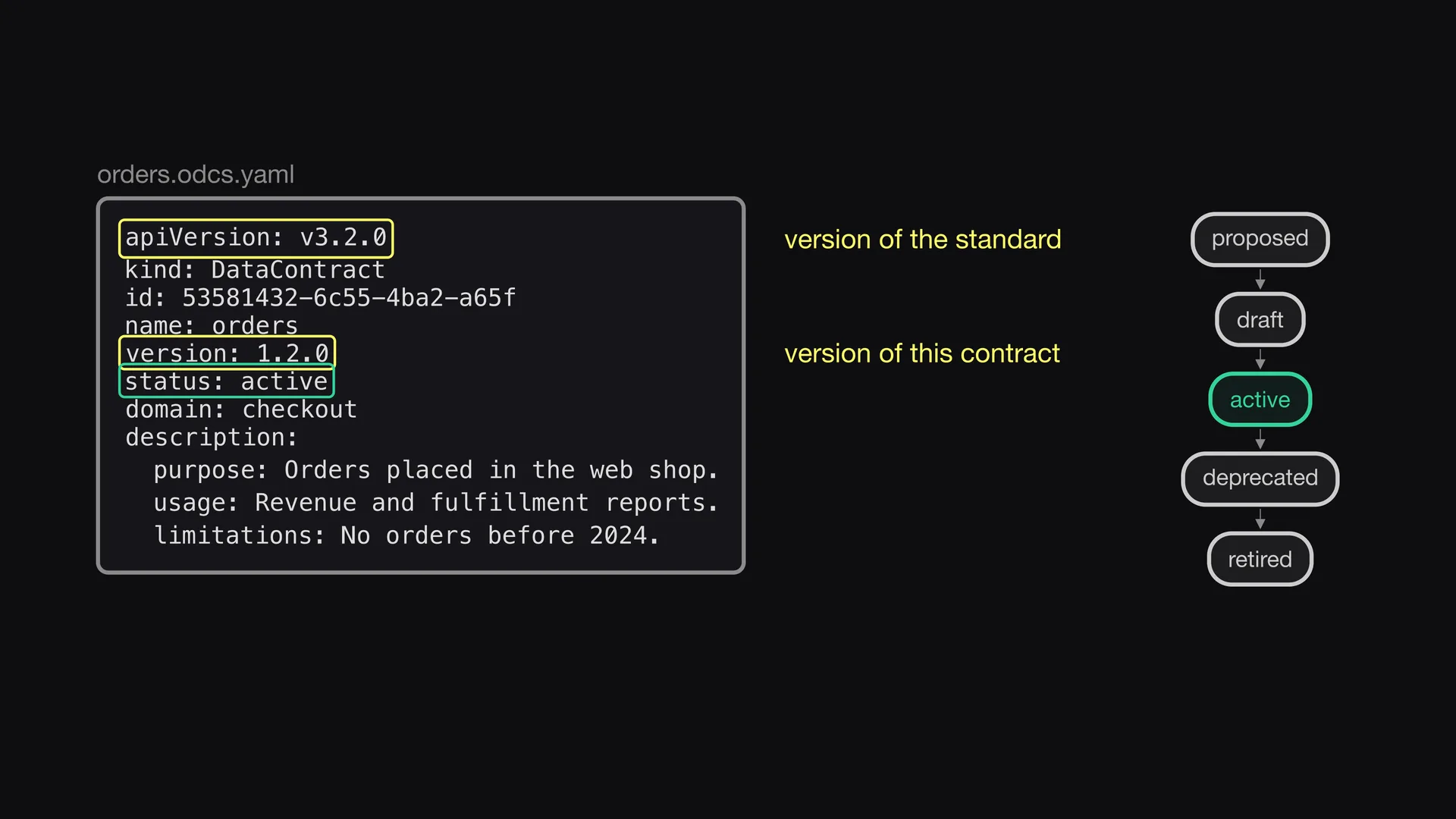
The fundamentals say what the data contract is: its id, name, domain, and purpose. There are two versions: the version of the standard and the version of the contract. The status goes from proposed to retired, so consumers know what they can use.
Schema
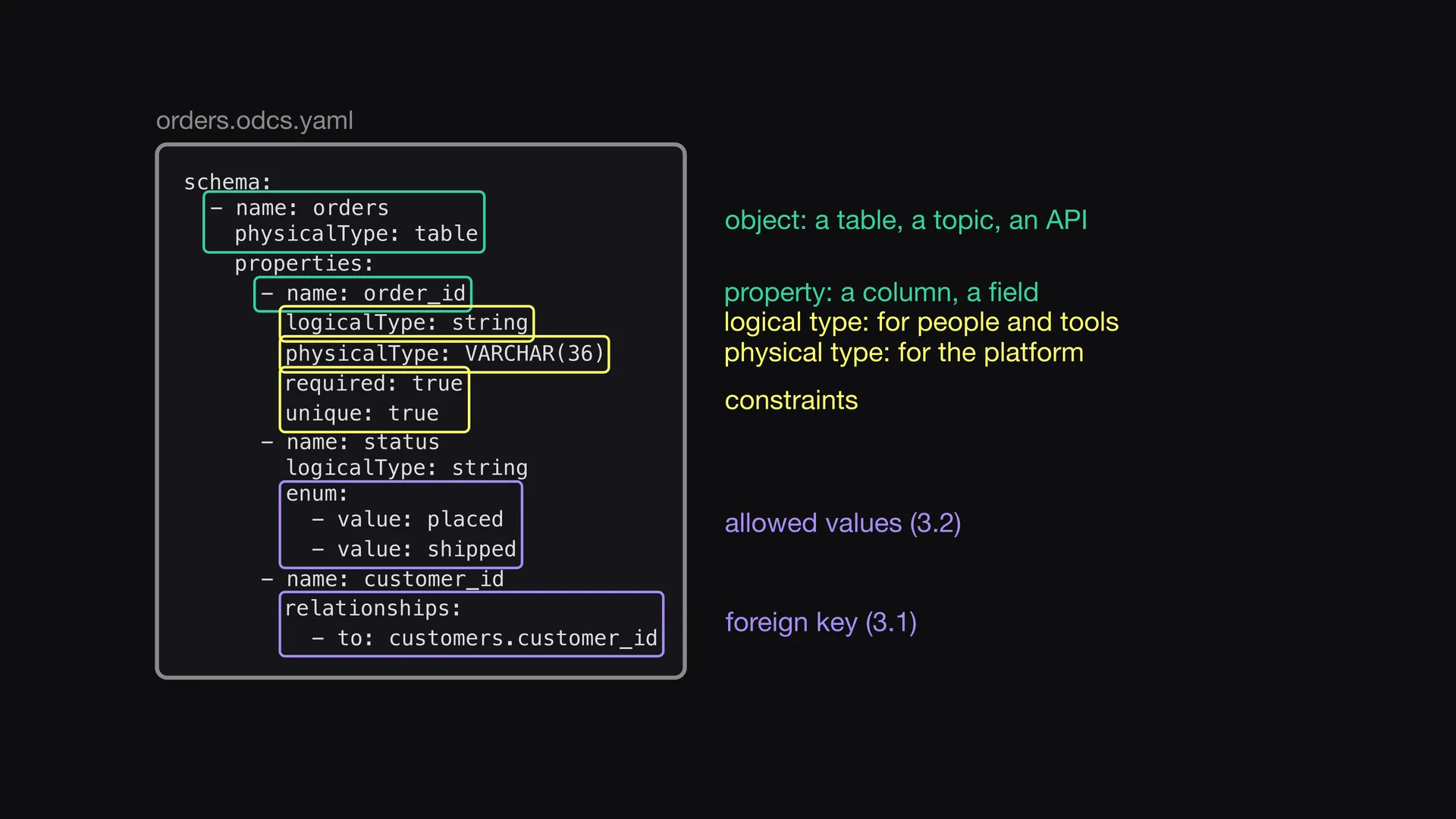
The schema describes objects, for example tables, and their properties, for example columns. Each property has a logical type for people and tools. It also has a physical type for the platform. Constraints, allowed values, and relationships to other tables complete the schema.
Context for AI
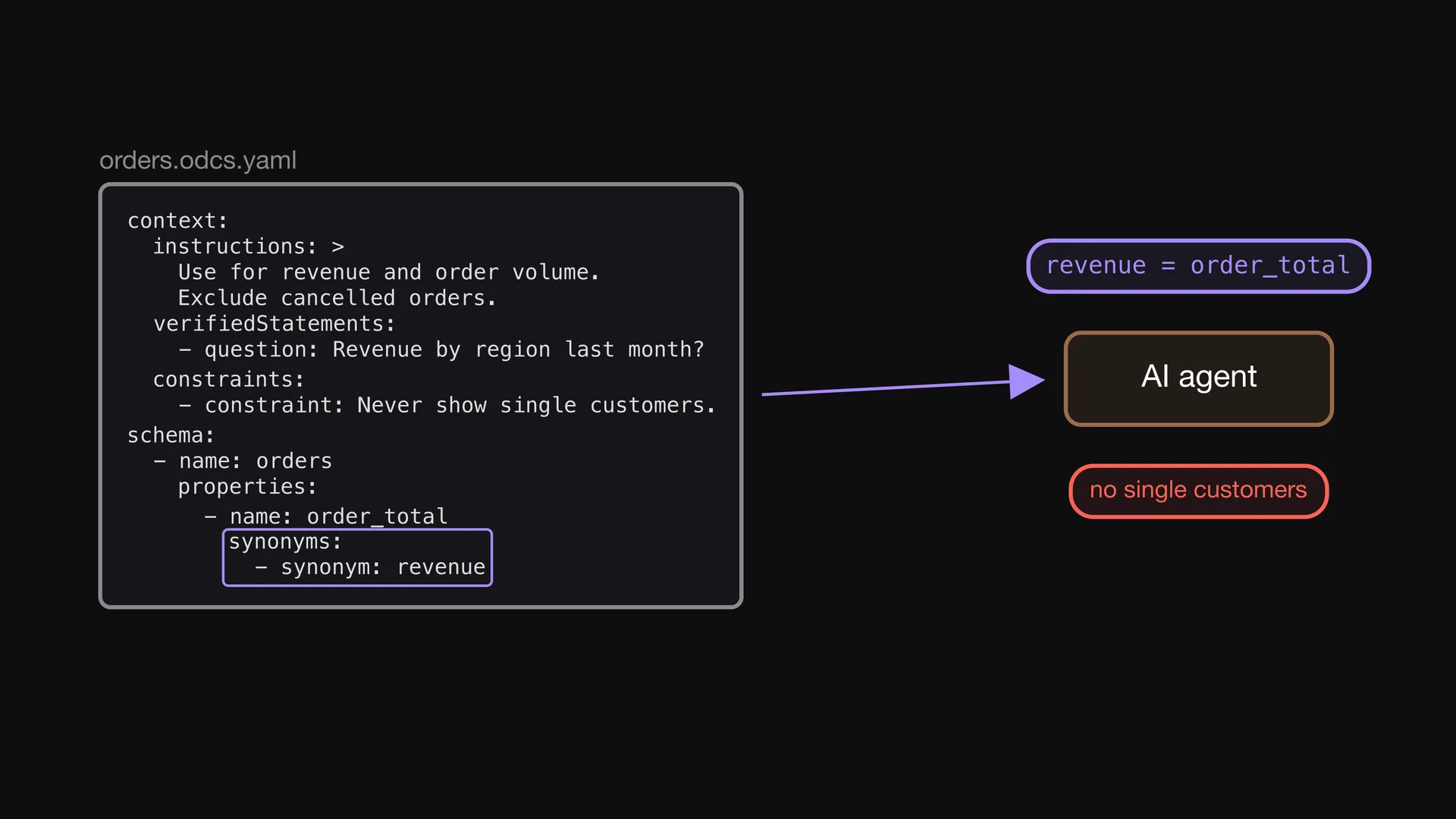
Version 3.2 adds what AI agents need to use the data correctly. A context block gives instructions, verified questions that the data answers, and constraints. Here, a constraint tells the agent not to show single customers. Synonyms tell the agent that revenue means order total.