Four Open Standards for Data Management
Which open standards describe your data, and how do they fit together?
By Dr. Simon Harrer · · 1:49 video · 7 slides
In short
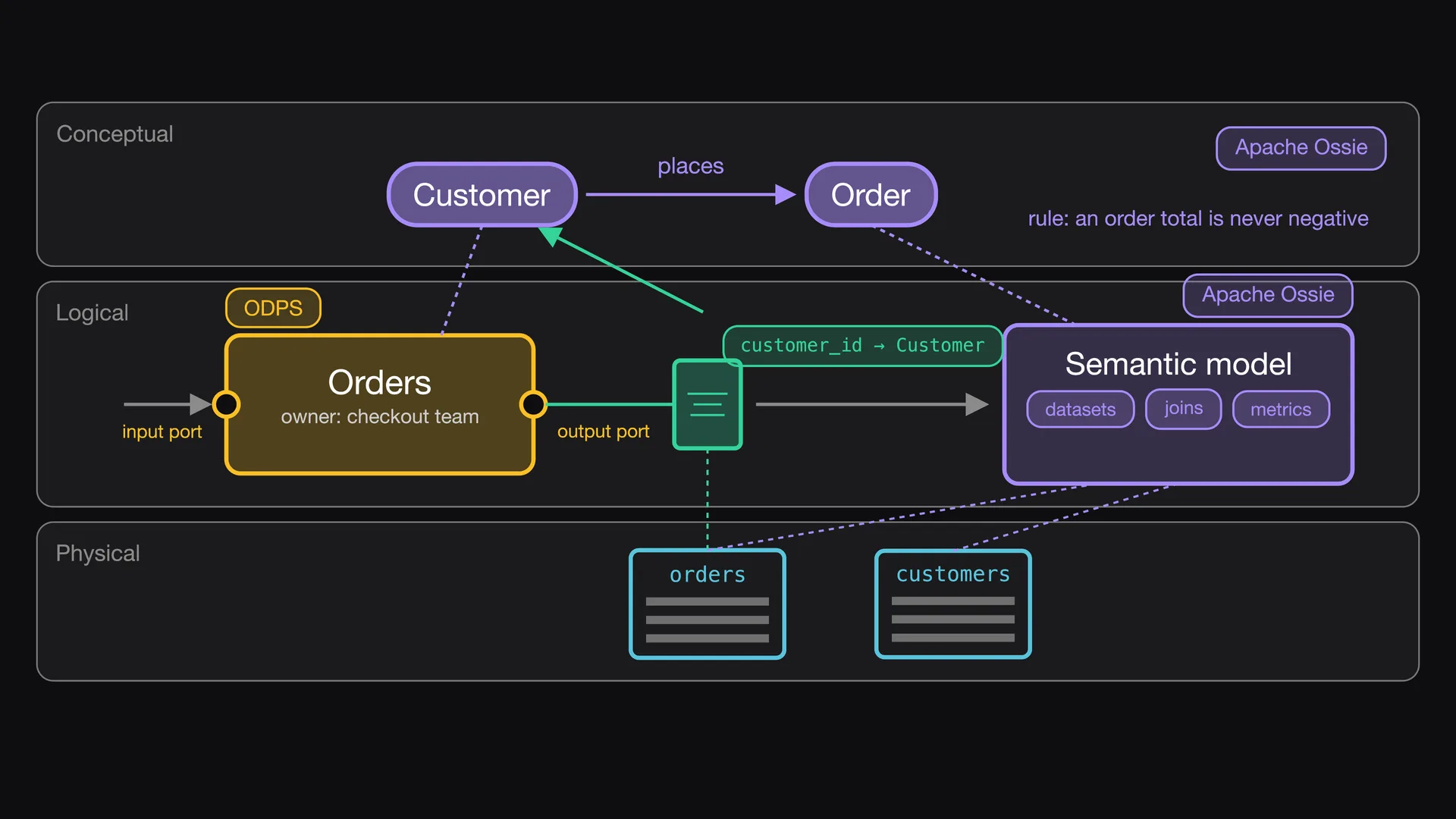
Four open standards describe your data on three levels. ODPS describes the data product, and ODCS describes its data contracts. Apache Ossie describes semantic models and the ontology. Each column in a data contract points to its business concept.
Watch on YouTube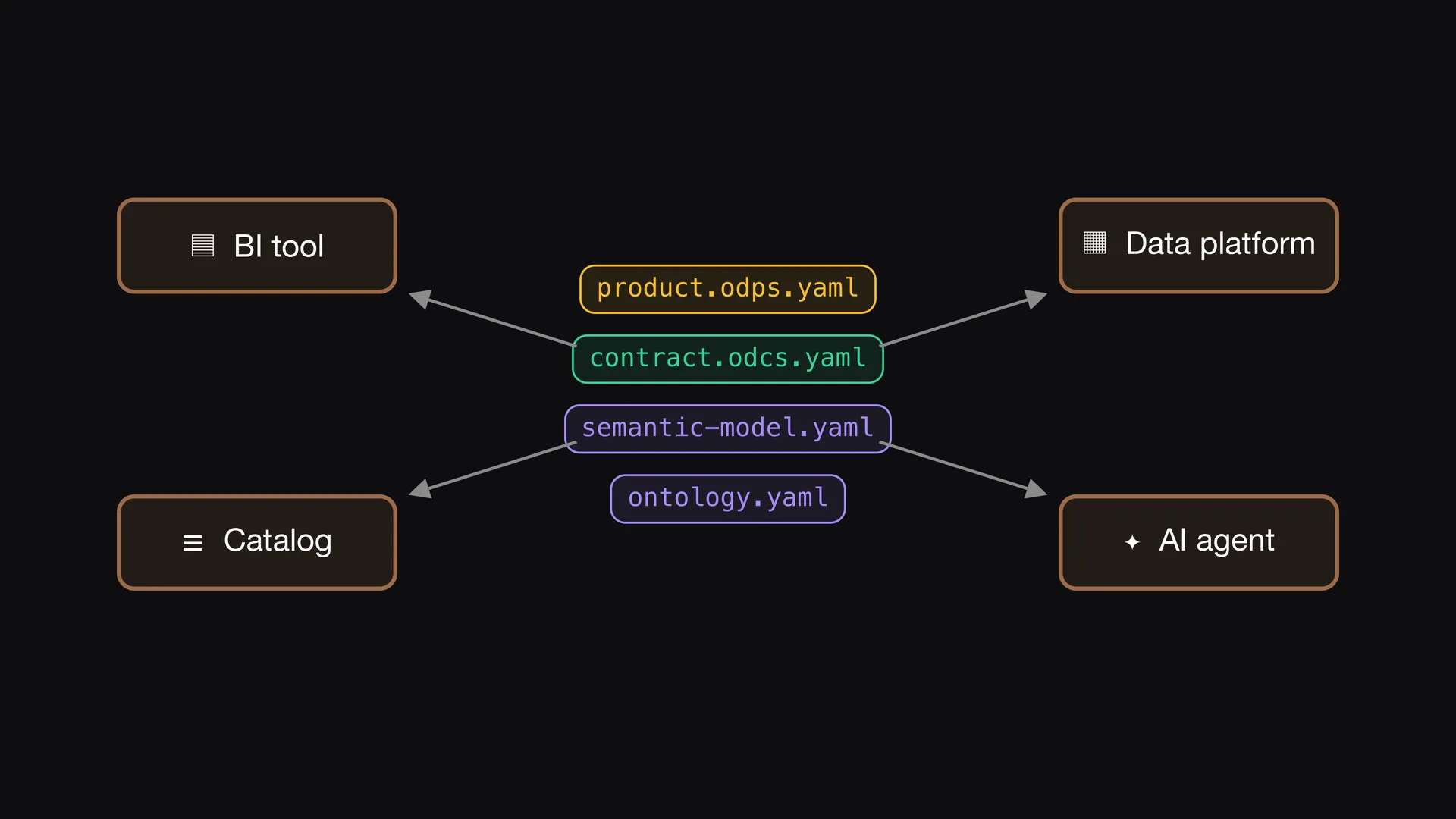
Files that every tool reads
Define once, use everywhere only works if all tools read the same files. There is one file for the data product, one for the data contract, one for the semantic model, and one for the ontology. BI tools, data platforms, catalogs, and AI agents read these files.
Three levels
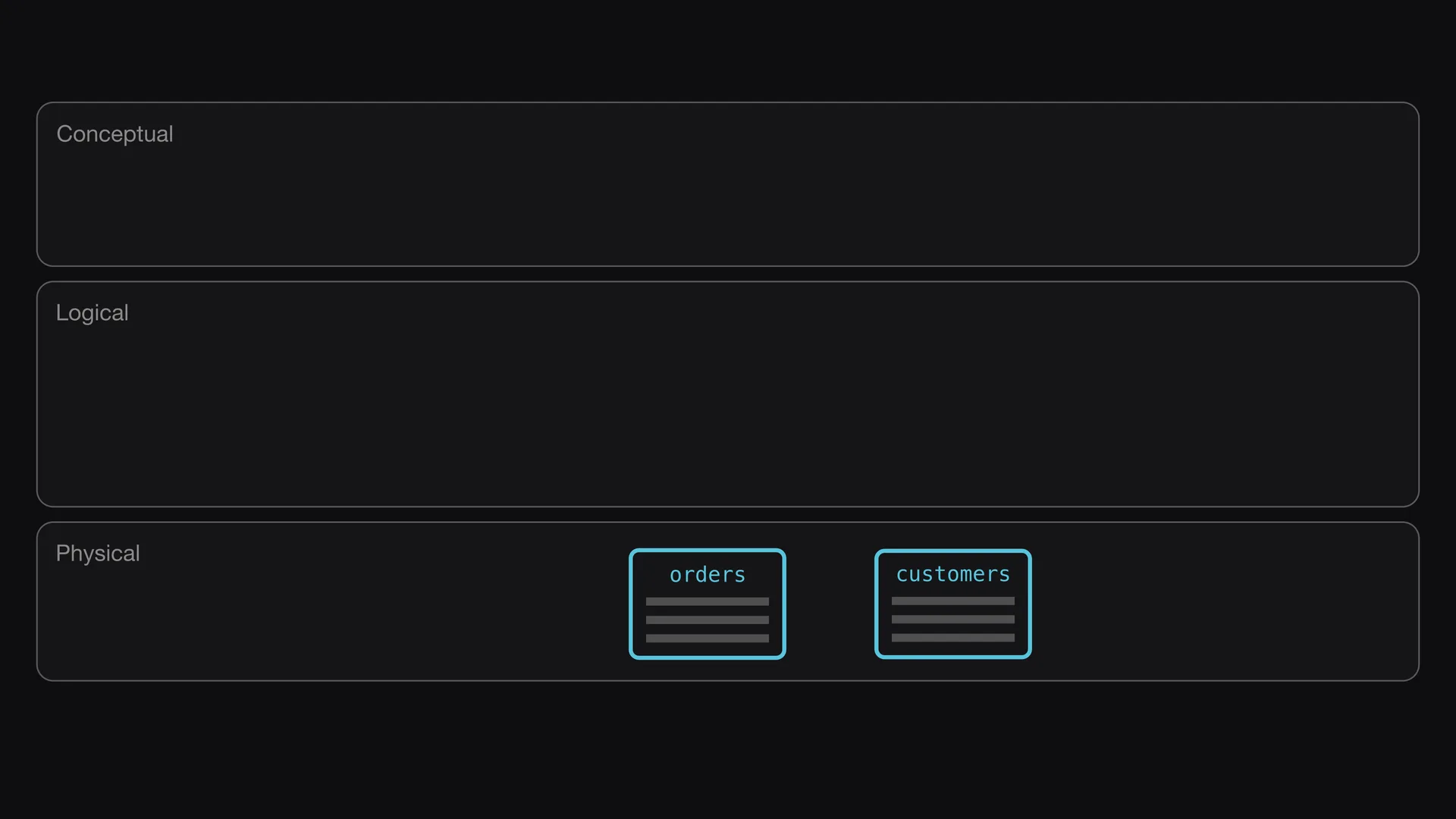
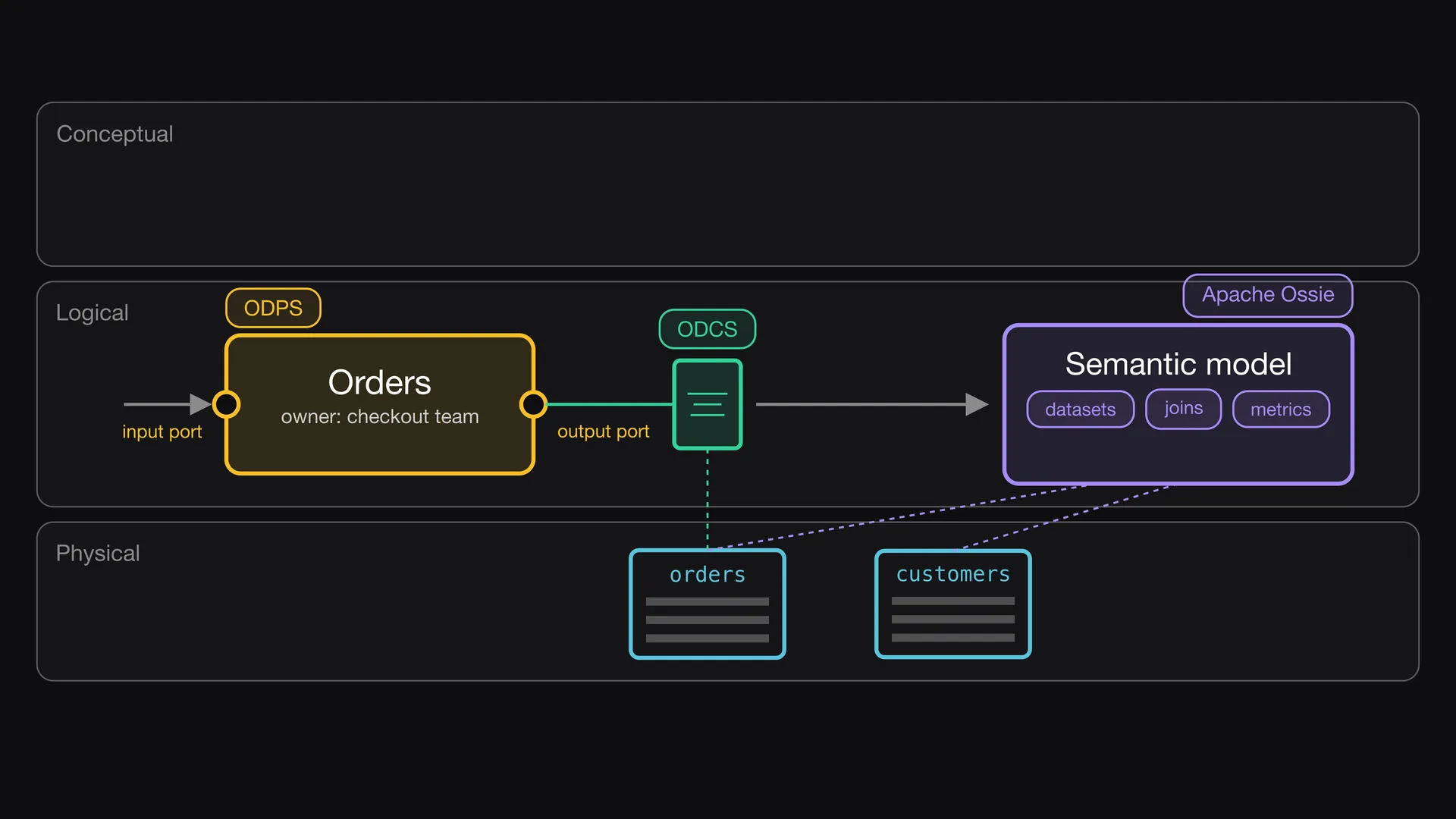
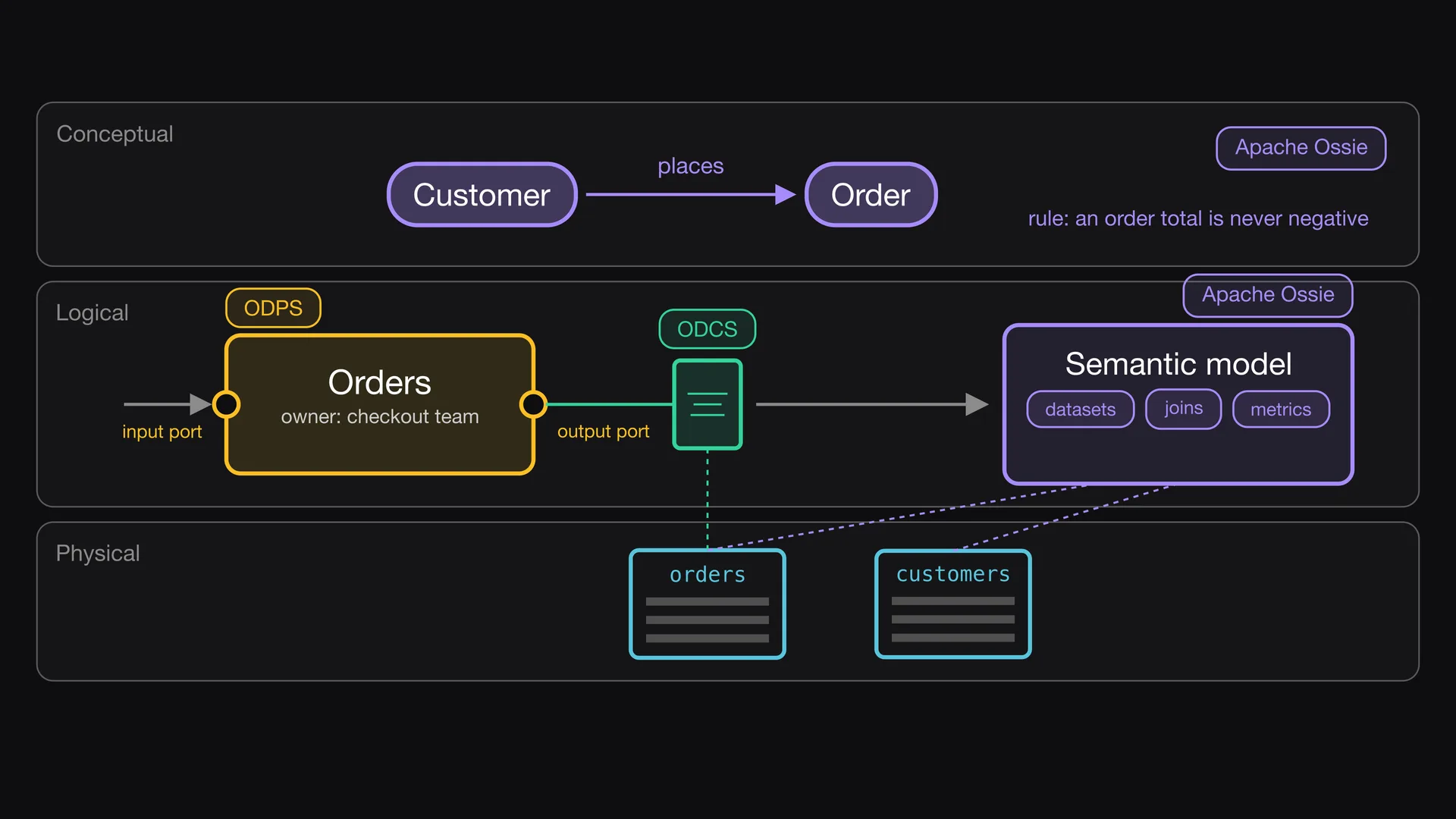
The standards work on three levels. The physical level has the tables. The logical level has data products, data contracts, and semantic models. The conceptual level has the ontology, which says what your business means.
ODPS: the data product
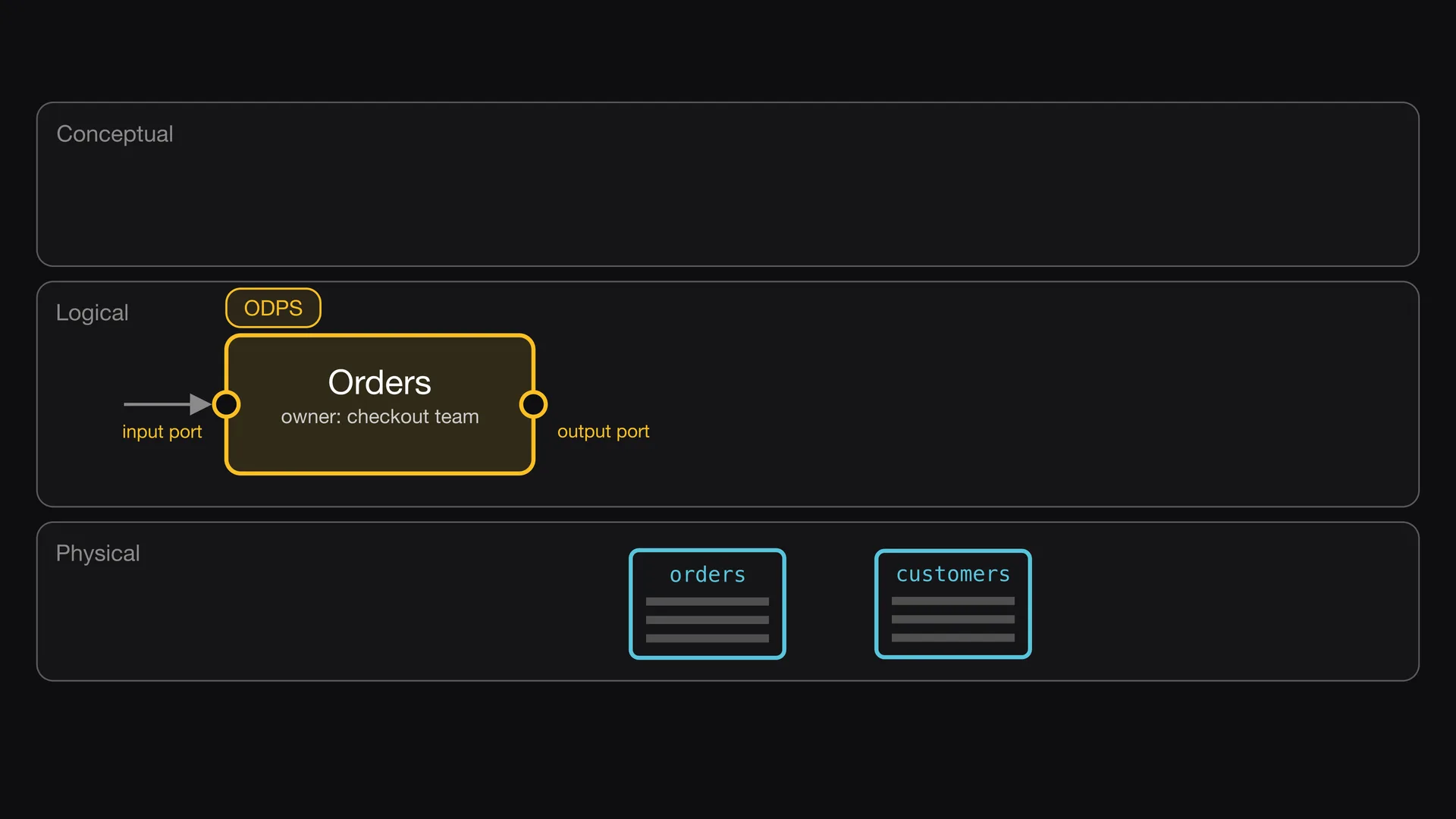
ODPS, the Open Data Product Standard, describes the data product. It names the owner, for example the checkout team. It also lists the input ports and the output ports. Consumers and other data products connect through these ports.
ODCS: the data contract
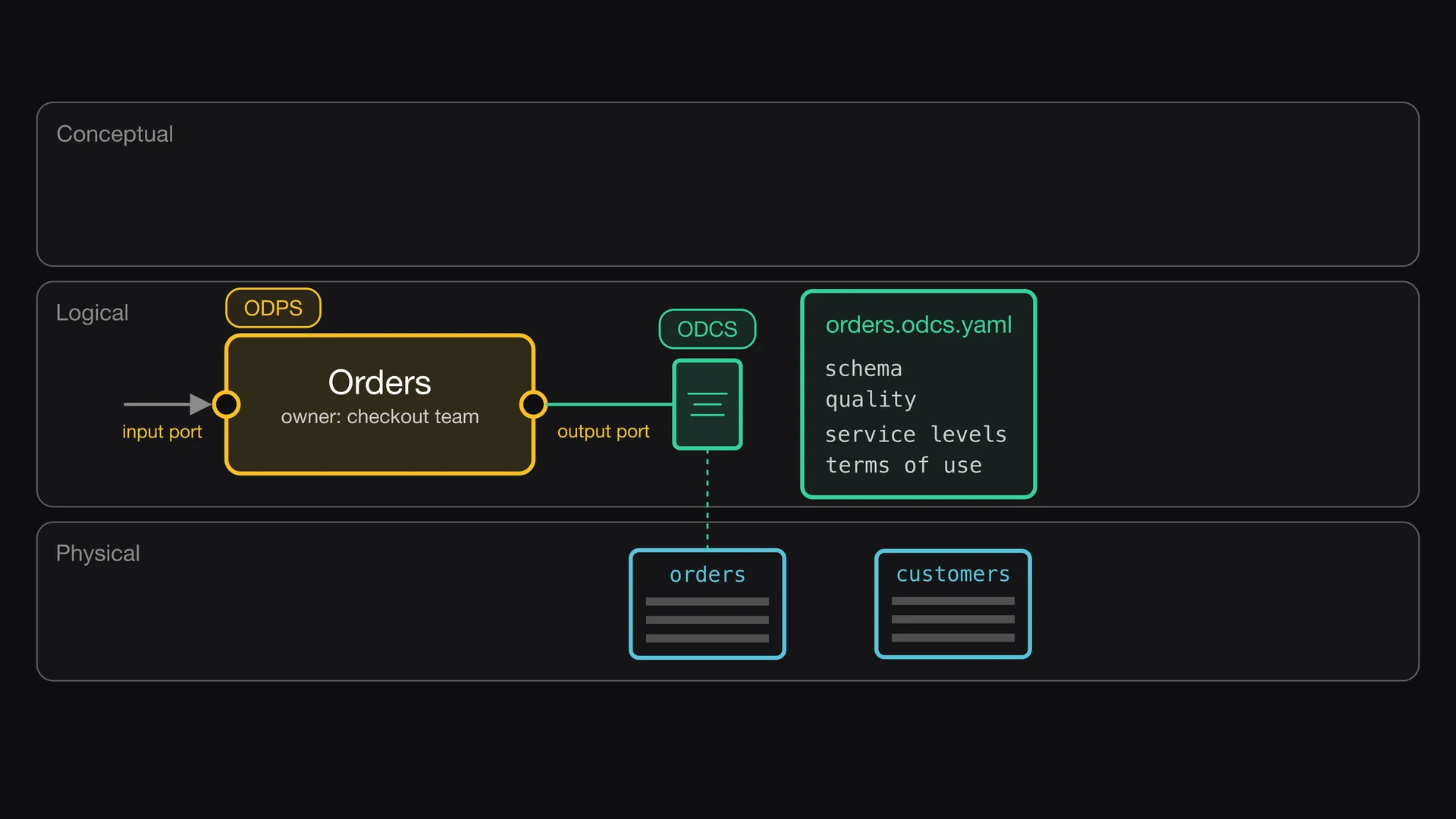
ODCS, the Open Data Contract Standard, specifies one output port. The data contract contains the schema, the quality rules, the service levels, and the terms of use. Bitol, a Linux Foundation project, maintains ODCS and ODPS.
Ossie: the semantic model
Apache Ossie adds two layers that carry meaning. The semantic model is on top of the tables and is for analytics. It contains datasets, joins, and metrics. Every tool then calculates revenue in the same way.
Ossie: the ontology
The ontology describes the business itself, without tables. It contains concepts, relationships, and rules. A customer places orders, and an order total is never negative. This is true on every platform where the data is.
How they fit together
The ontology defines the meaning. Data products and semantic models implement it. The data contract connects the two levels: each column points to the concept that it implements. Here, the column customer_id points to the concept Customer.