The Value of Data Products, Contracts, and Semantics: For Managers
How to get budget for Data Products, Data Contracts, and semantics?
By Dr. Simon Harrer · · 2:17 video · 7 slides
In short
Data products, data contracts, and semantics give your data an owner, a promise that is checked every day, and one shared meaning. These definitions go to every platform. People and AI agents then get correct answers, and you can start with one use case.
Watch on YouTube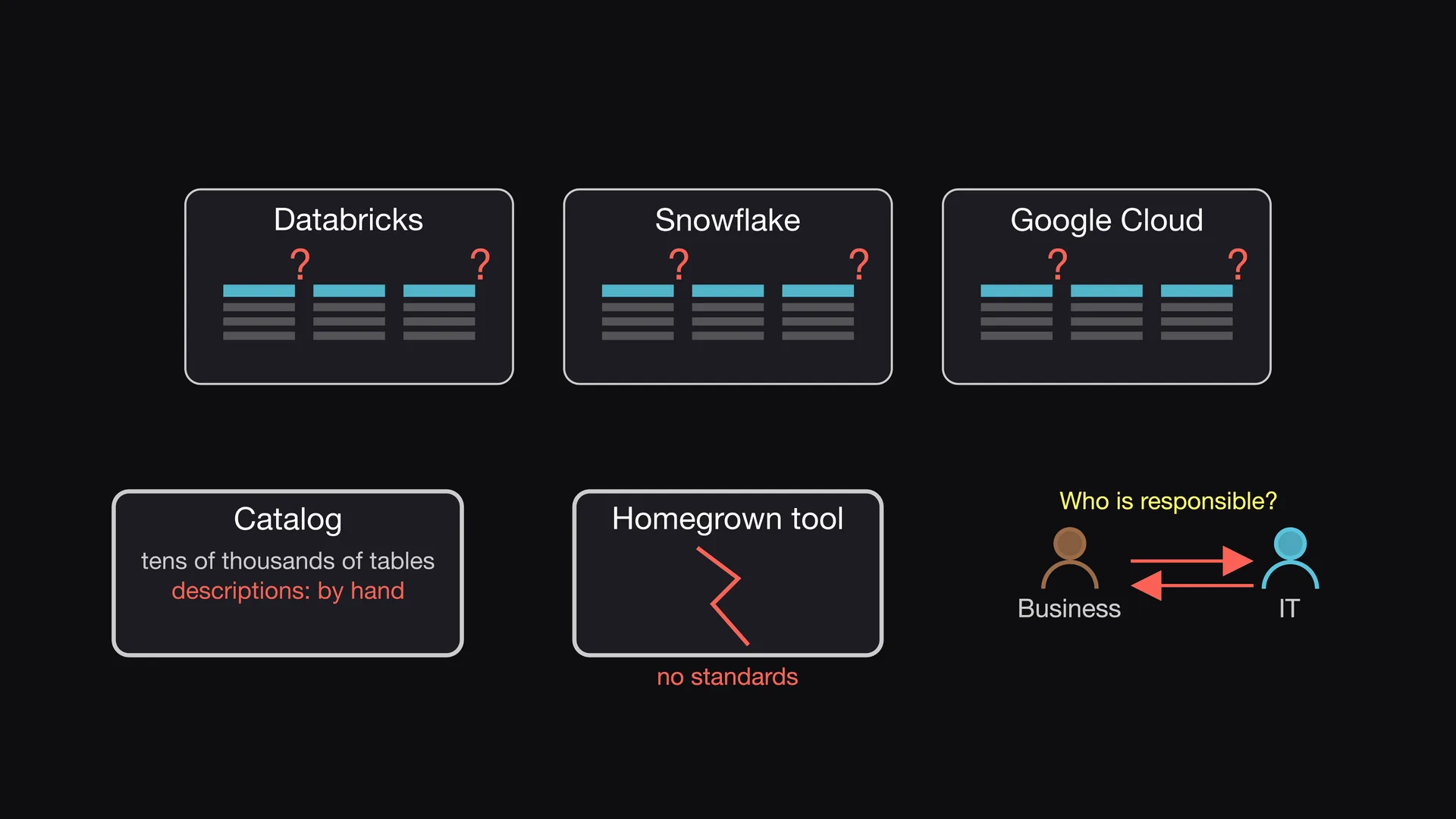
Data everywhere, meaning nowhere
Your data is on several platforms. Nobody has a shared, verified definition of what it means or how good it is. A catalog lists thousands of tables, and people write most descriptions by hand. Homegrown tools fail because there are no standards.
Why now: AI agents
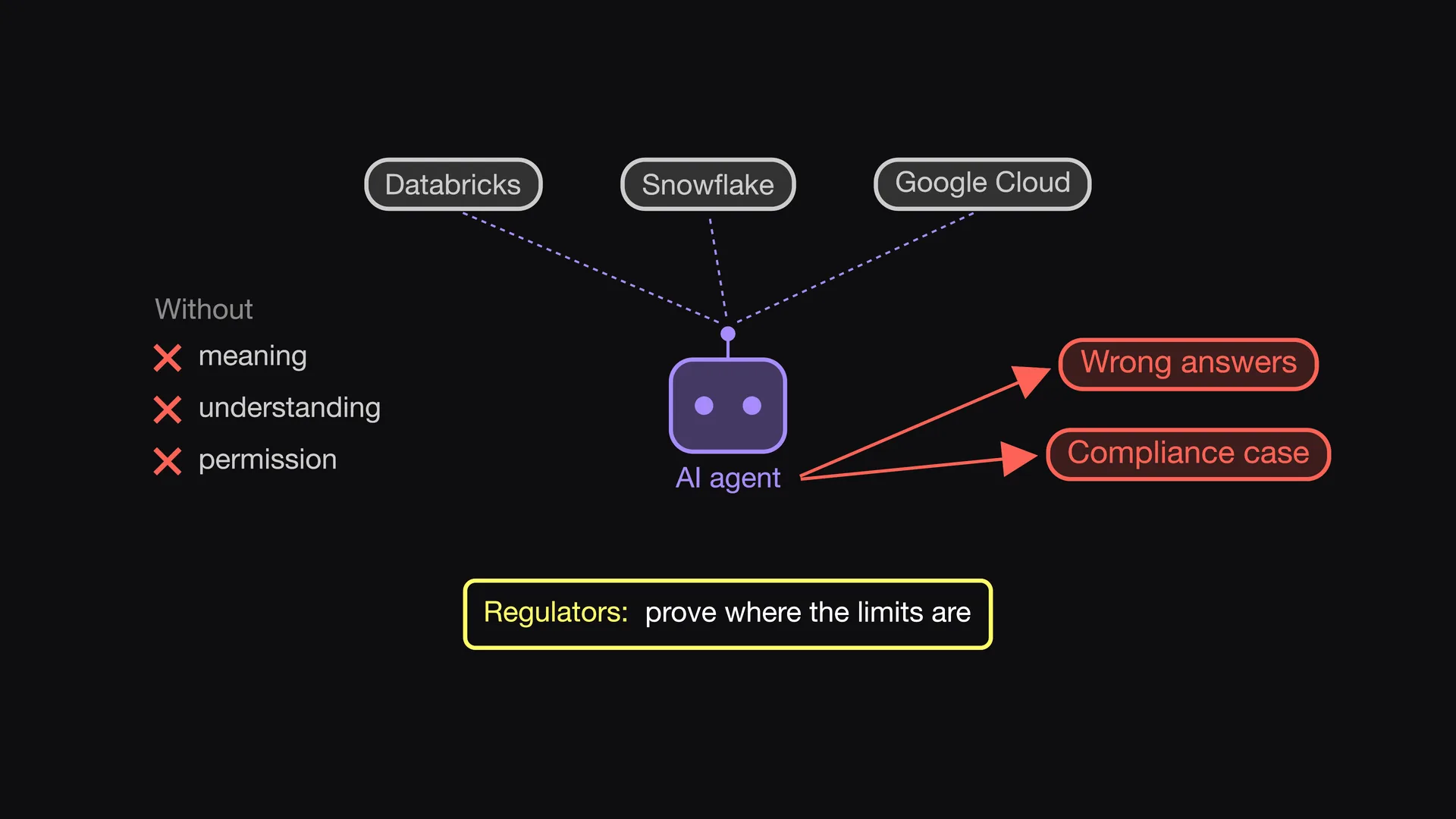
AI agents now use data across the whole company. Without meaning, understanding, and permission, an agent gives incorrect answers. It can also use data in a way that is not allowed. Regulators expect you to prove where the limits are.
Ownership with data products
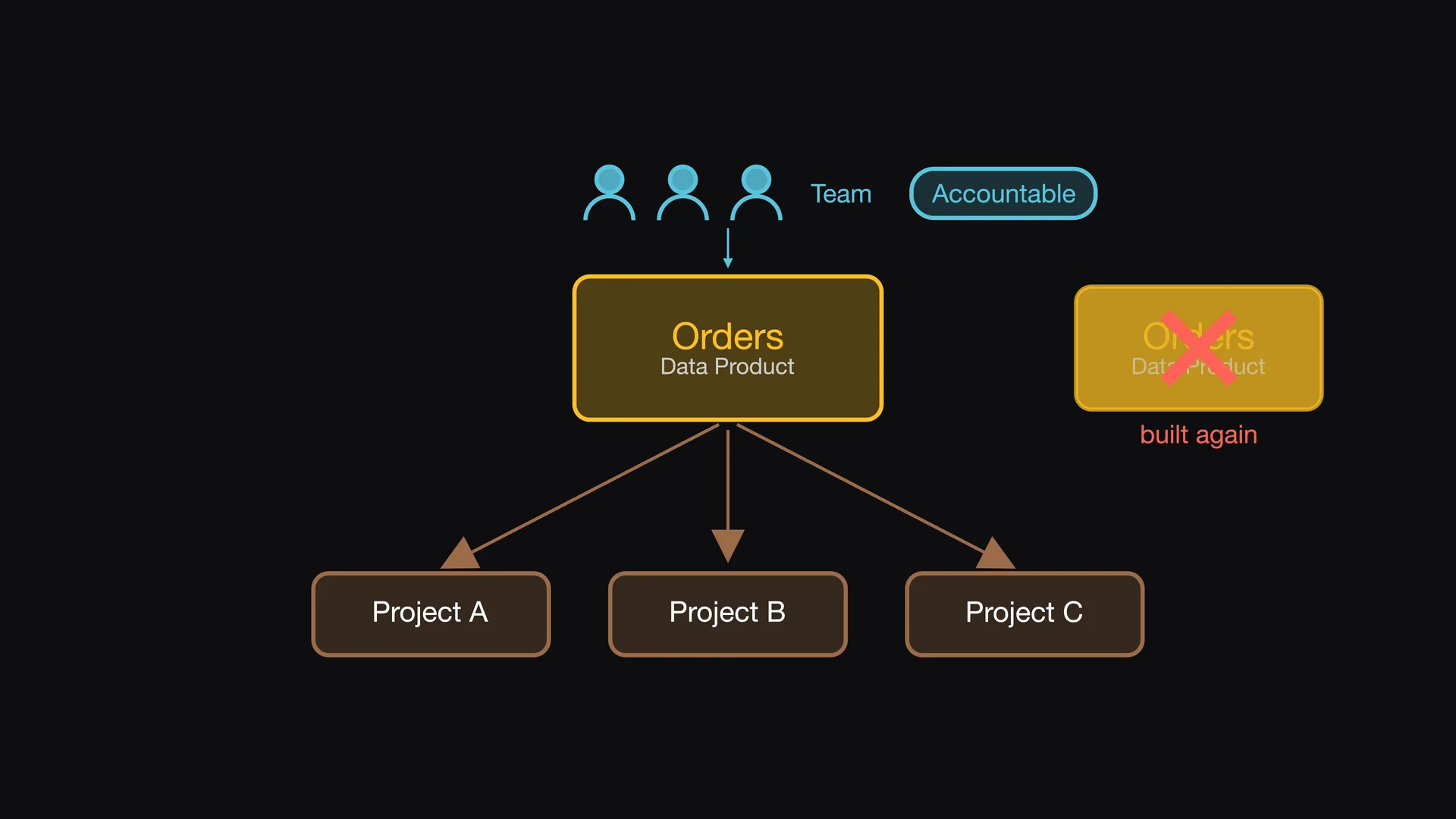
Start with ownership. A data product puts one team in charge of a piece of data, so one team is accountable. The next project uses the same data product again. Nobody builds the same data a second time.
Trust with data contracts
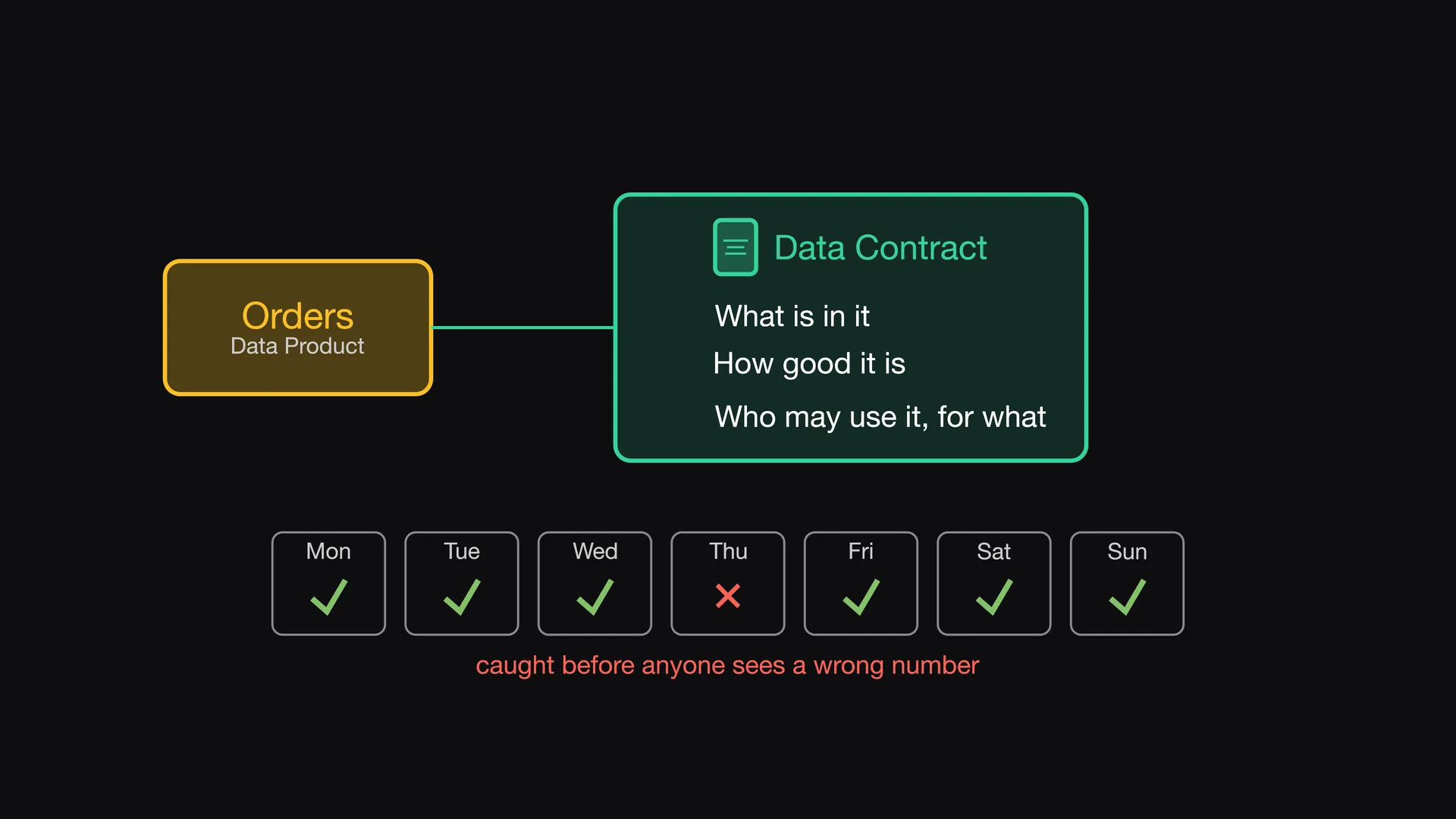
A data contract writes down what the data promises. It says what is in the data, how good it is, and who may use it for what. Automatic checks run every day. A failed check shows the problem before anyone sees an incorrect number.
One language with semantics
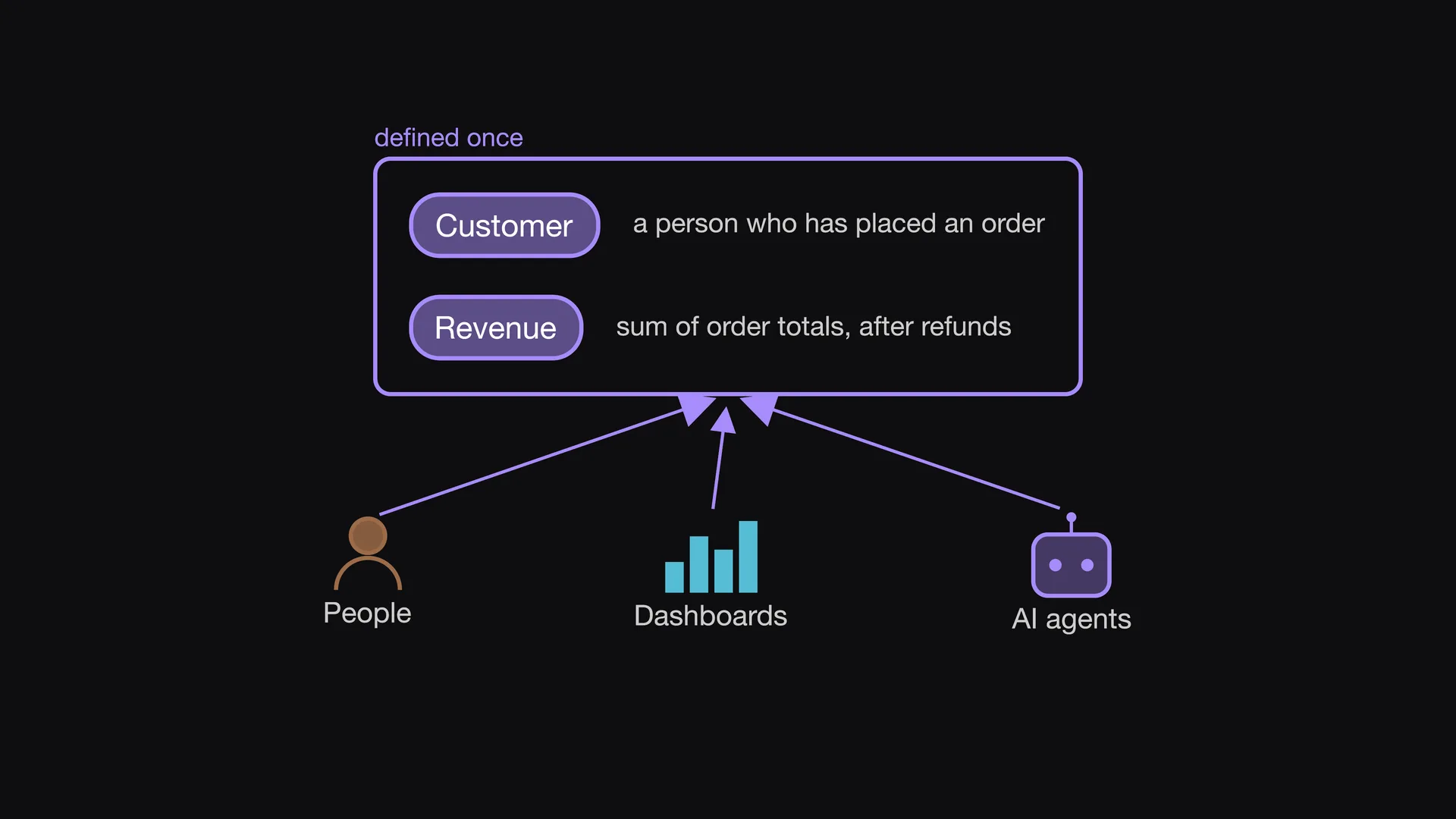
Semantics define what your business means, one time. For example, they define what a customer is and how you calculate revenue. People, dashboards, and AI agents all use the same definition. Nobody has to guess what a word means.
Define once, use everywhere
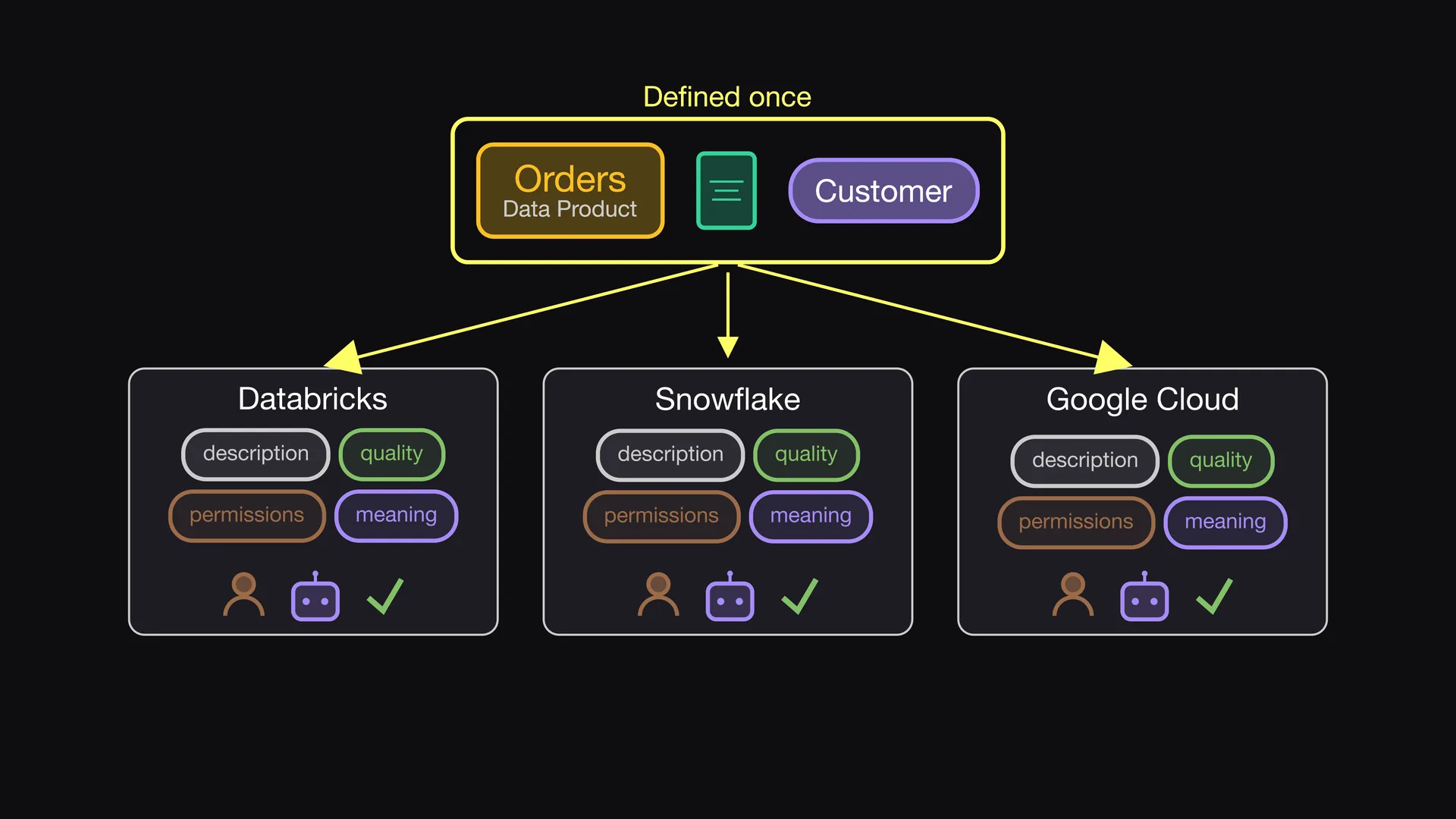
The definitions go to every platform: descriptions, quality, permissions, and meaning. People and agents work in Databricks, Snowflake, or Google Cloud. On each platform, they find the same verified definitions. The same definitions apply on each platform, so nobody copies them by hand.
Open standards, no lock-in
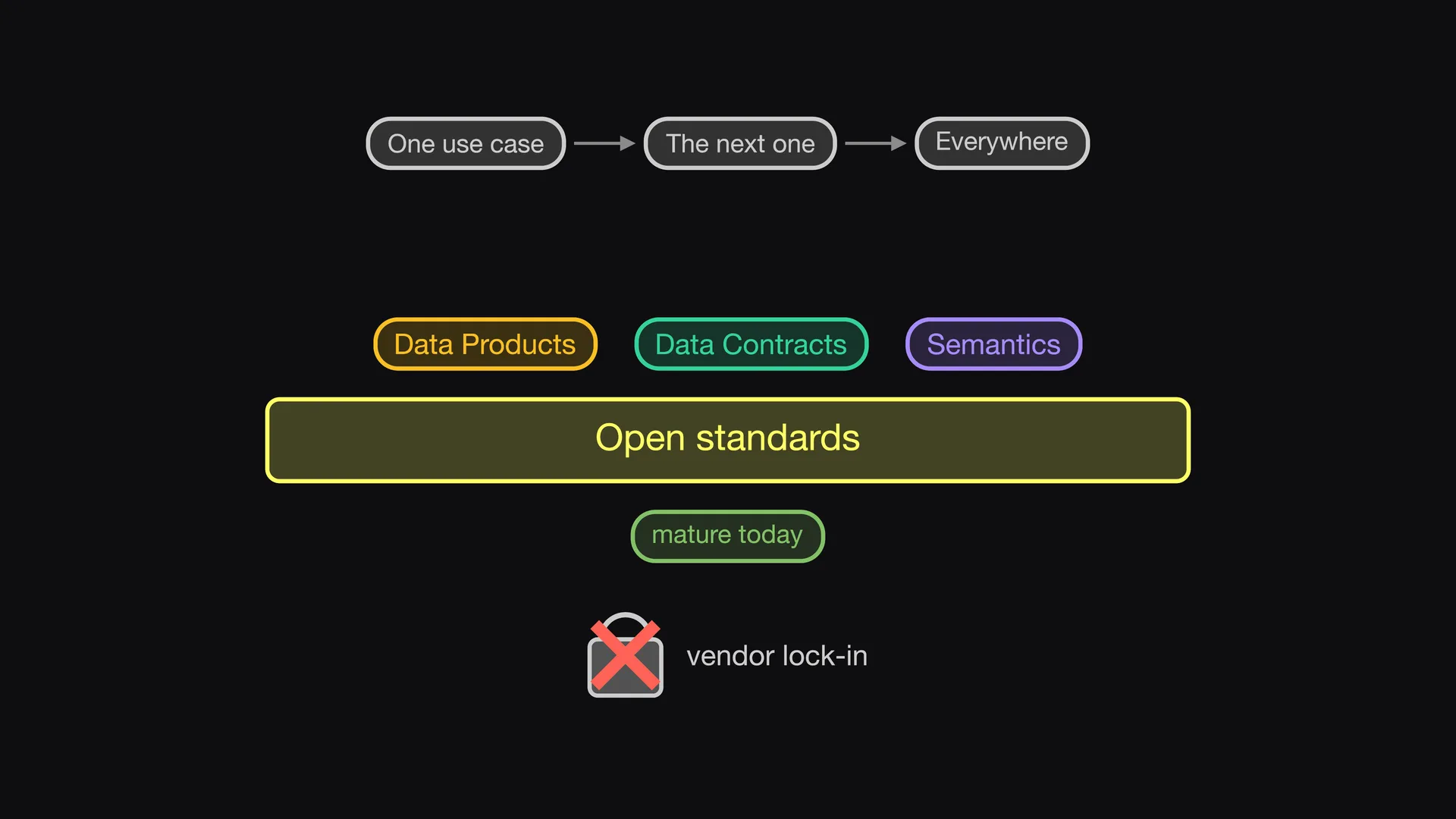
Open standards for data products, data contracts, and semantics are mature today. You can start now with one use case, then add the next one. Because the standards are open, you do not depend on one vendor.