Data Contracts and Semantics
How do AI agents know what your data means?
By Dr. Simon Harrer · · 2:18 video · 7 slides
In short
You model the meaning of your business once, in an ontology. Then you link the columns of your data contracts to the concepts of the ontology. People and AI agents can then find the meaning of the data and use it correctly.
Watch on YouTube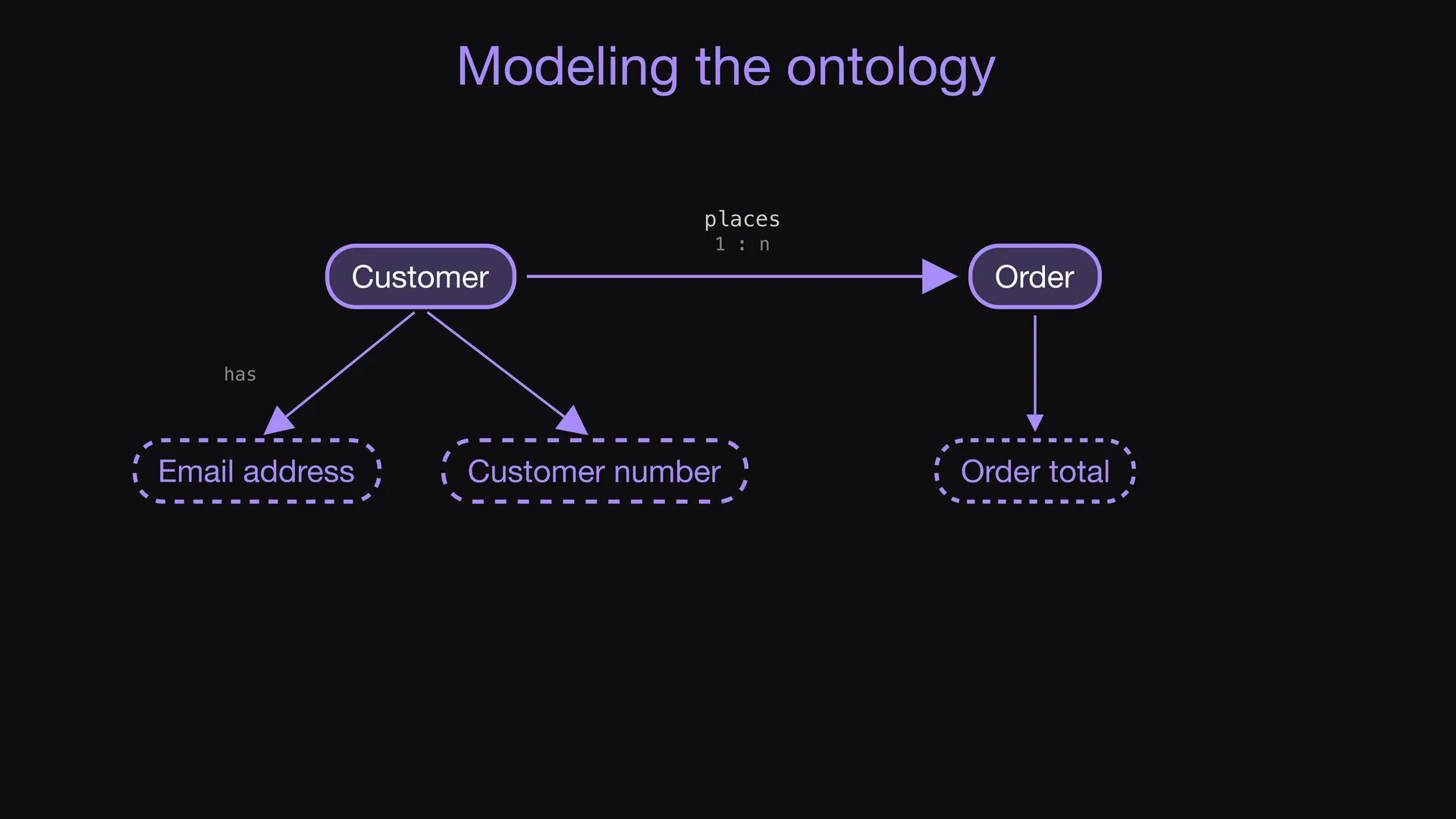
Start with the business
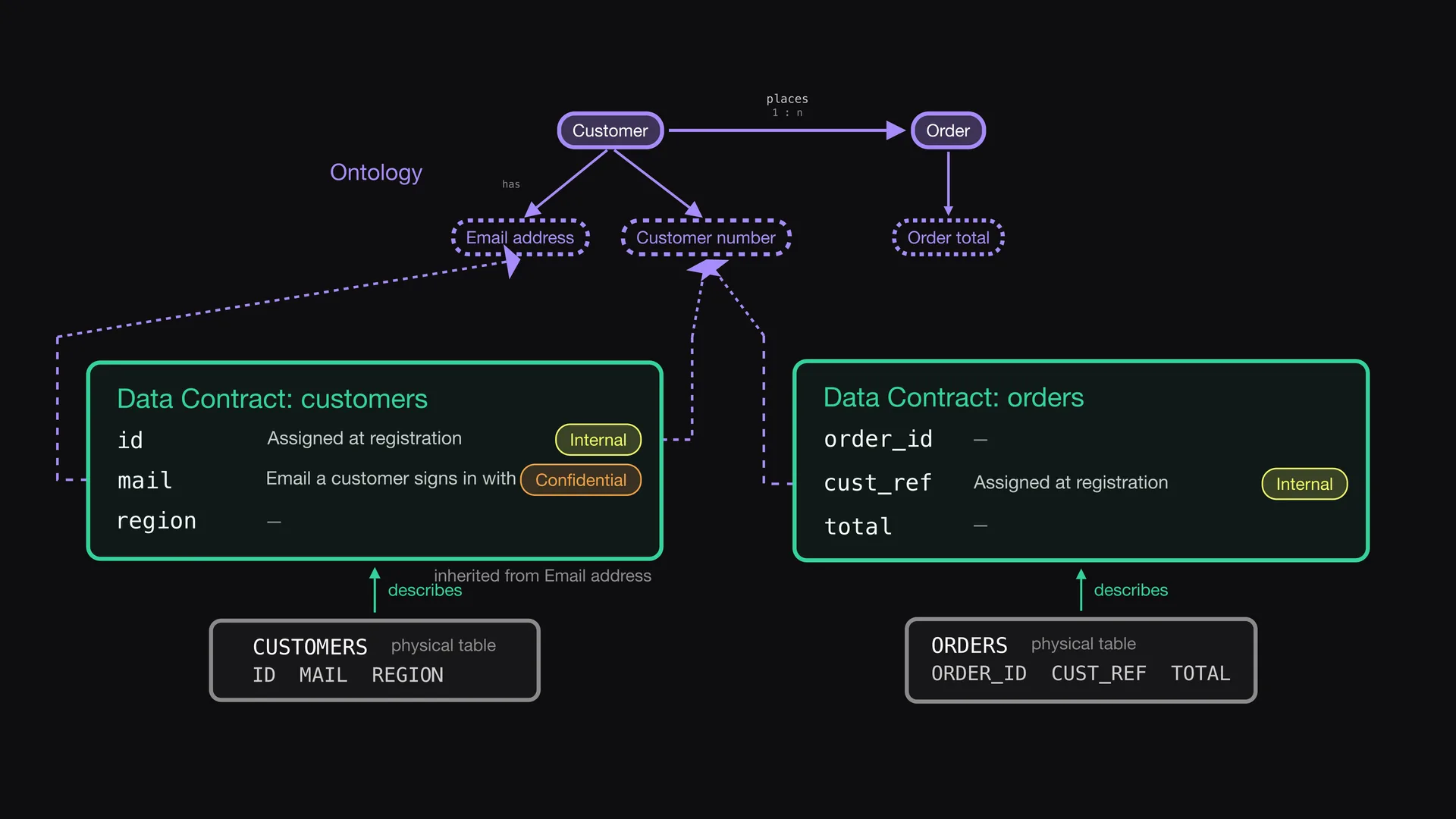
Start with the business, not with the tables. An ontology shows the things that your business is made of. A customer and an order are entities. Properties describe them, and relationships connect them: a customer places orders.
Each concept has a meaning
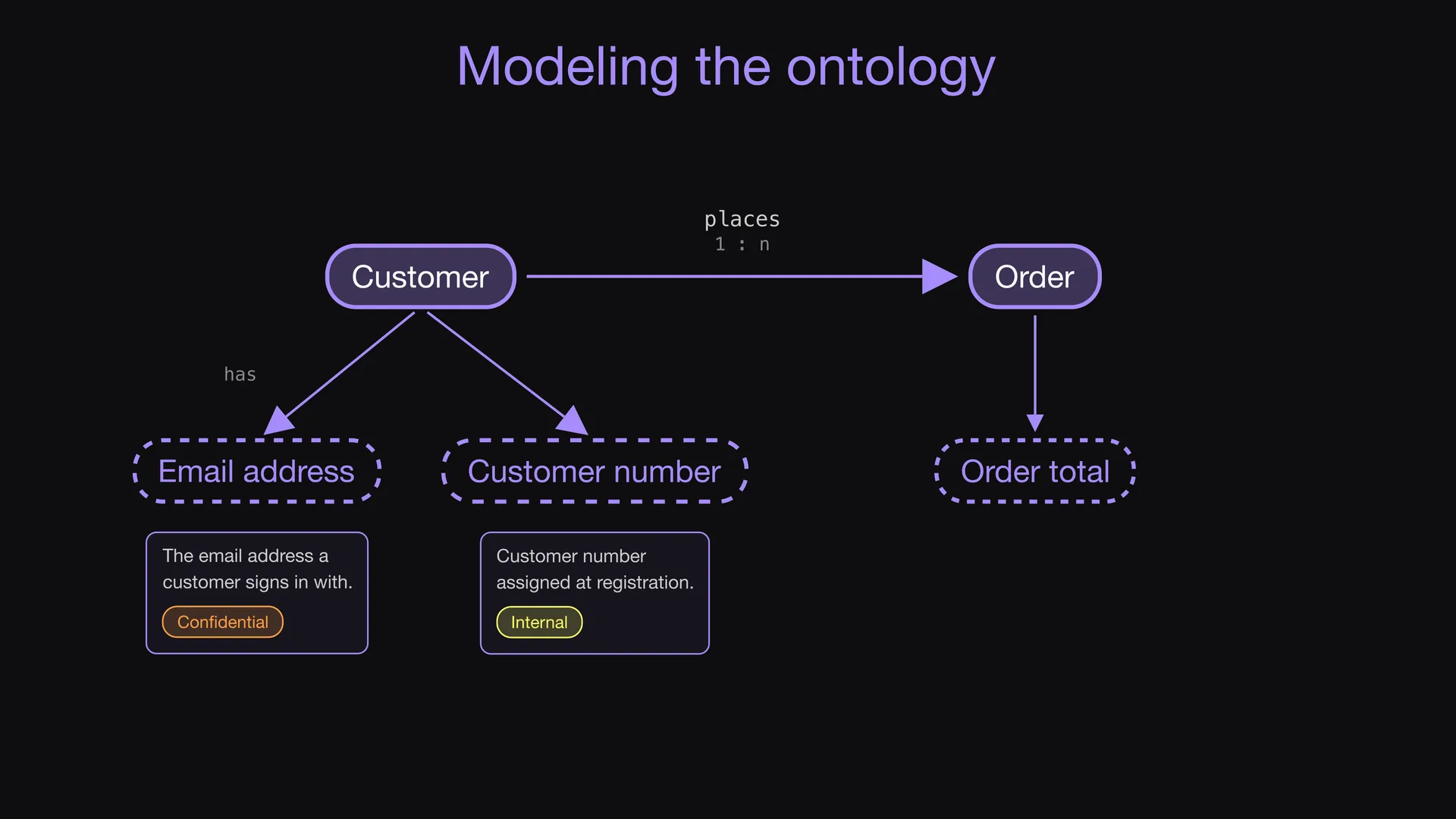
Each concept has a description that tells what it is. It also has a classification that tells how sensitive it is. For example, the email address is confidential, and the customer number is internal. The classification tells people and AI agents how they can use the data.
An open format
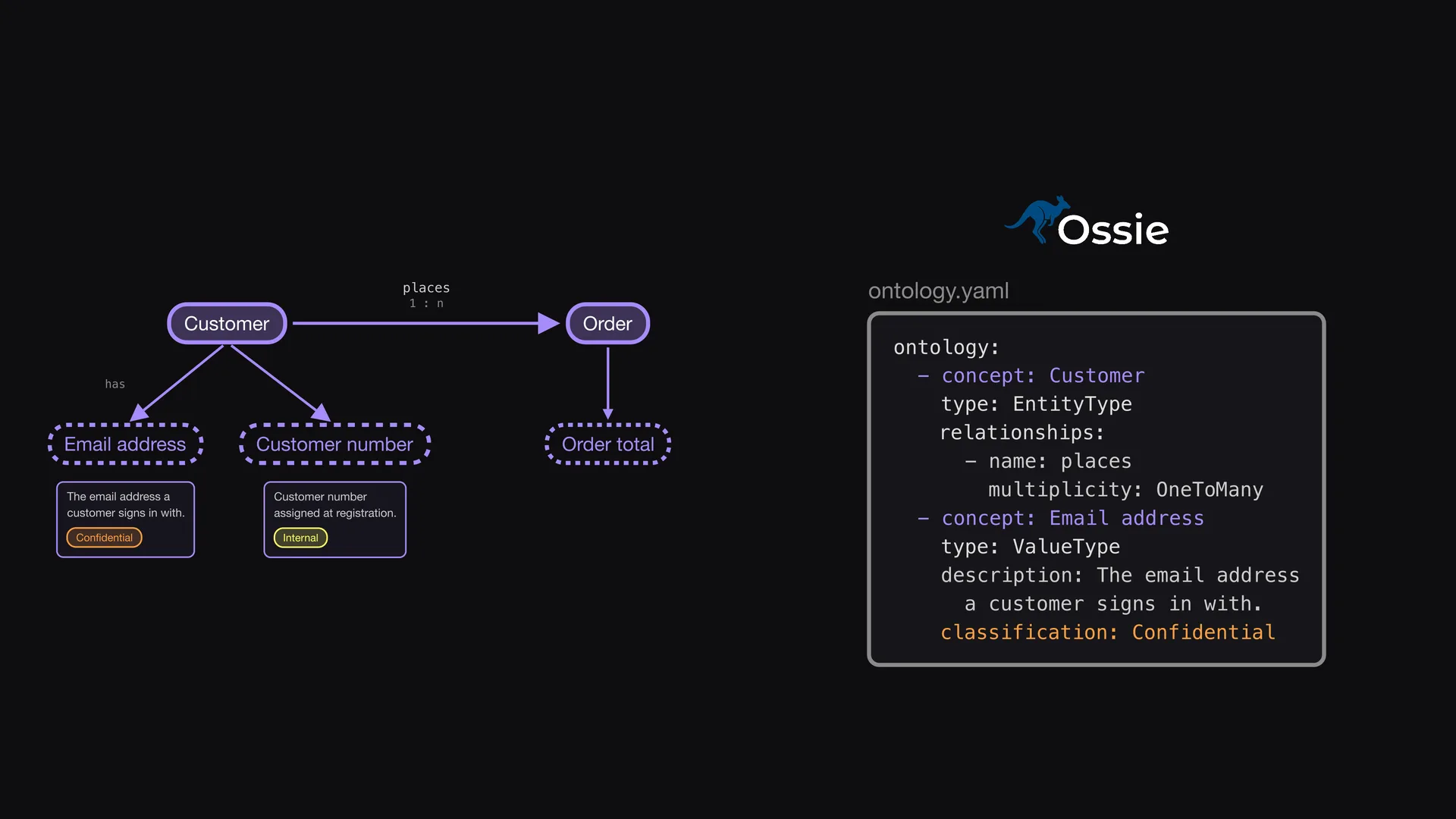
You write the ontology in an open format: Apache Ossie, formerly the Open Semantic Interchange. The file is plain YAML. People, tools, and AI agents can all read it. The file contains the concepts, the relationships, the descriptions, and the classifications.
Link a column to a concept
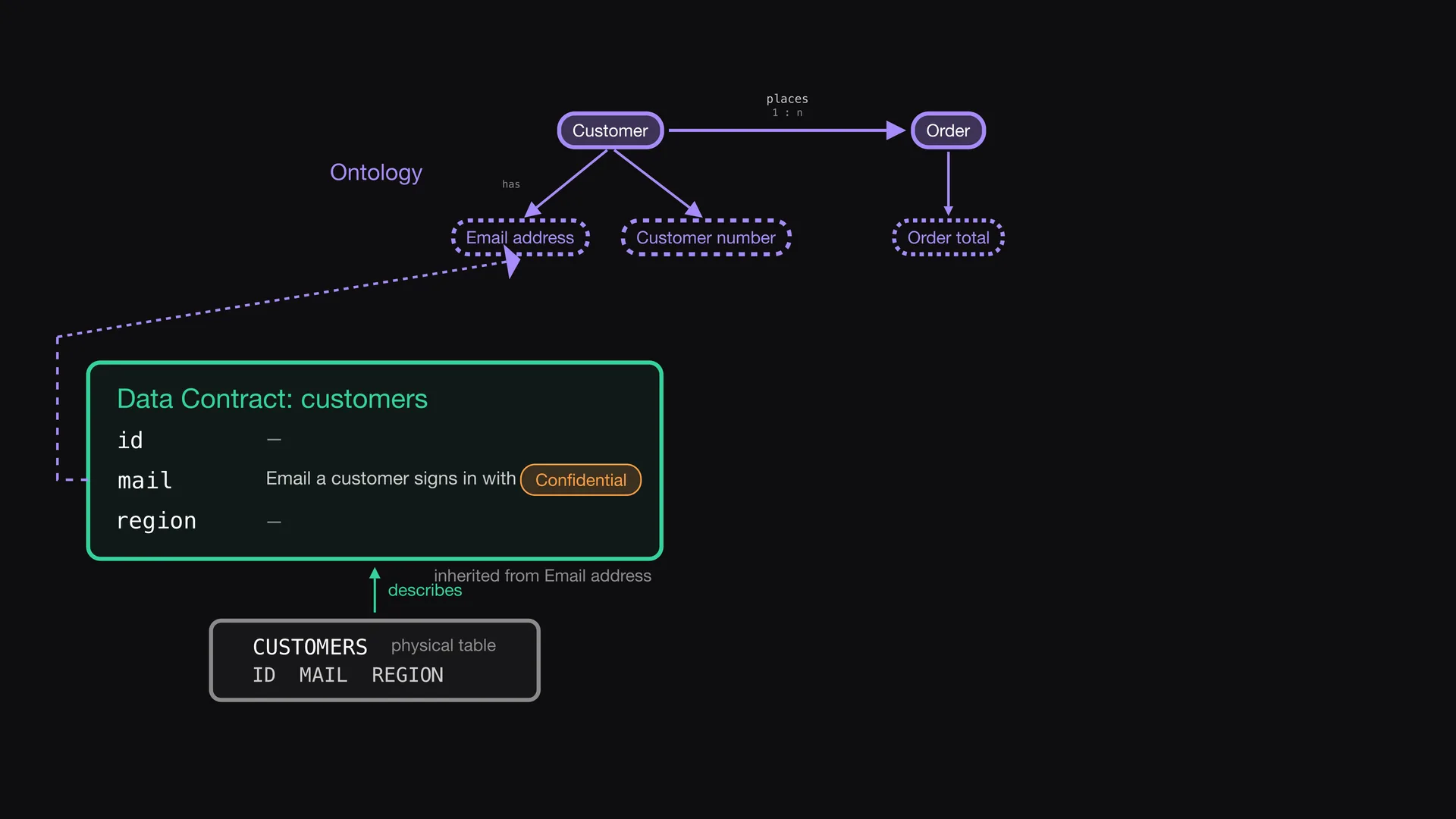
A data contract describes a physical table with the columns id, mail, and region. These names do not tell what the data means. You link the mail column to the concept email address. The column then gets the description and the confidential classification, and nobody types them again.
Define once, use everywhere
The orders data contract does the same. Its column cust ref points to the concept customer number. The id column of the customers data contract points to the same concept. So the data contracts connect the physical tables to the business ontology.
The agent knows how to join
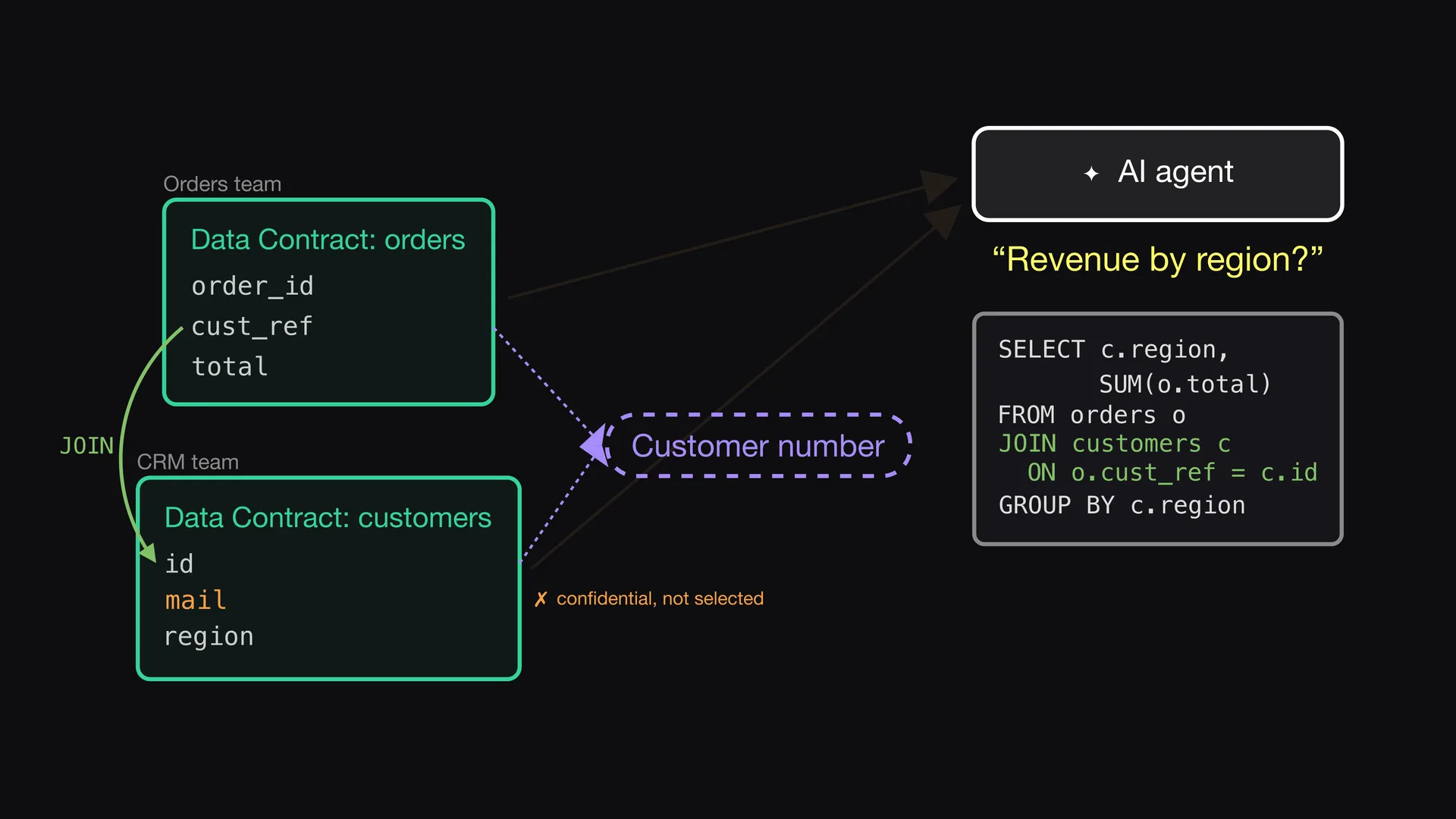
An AI agent must show revenue by region. It needs orders and customers from two teams, with different column names. Both columns point to customer number, so the agent knows how to join them. The mail column is confidential, so the agent does not select it.
Model the meaning once
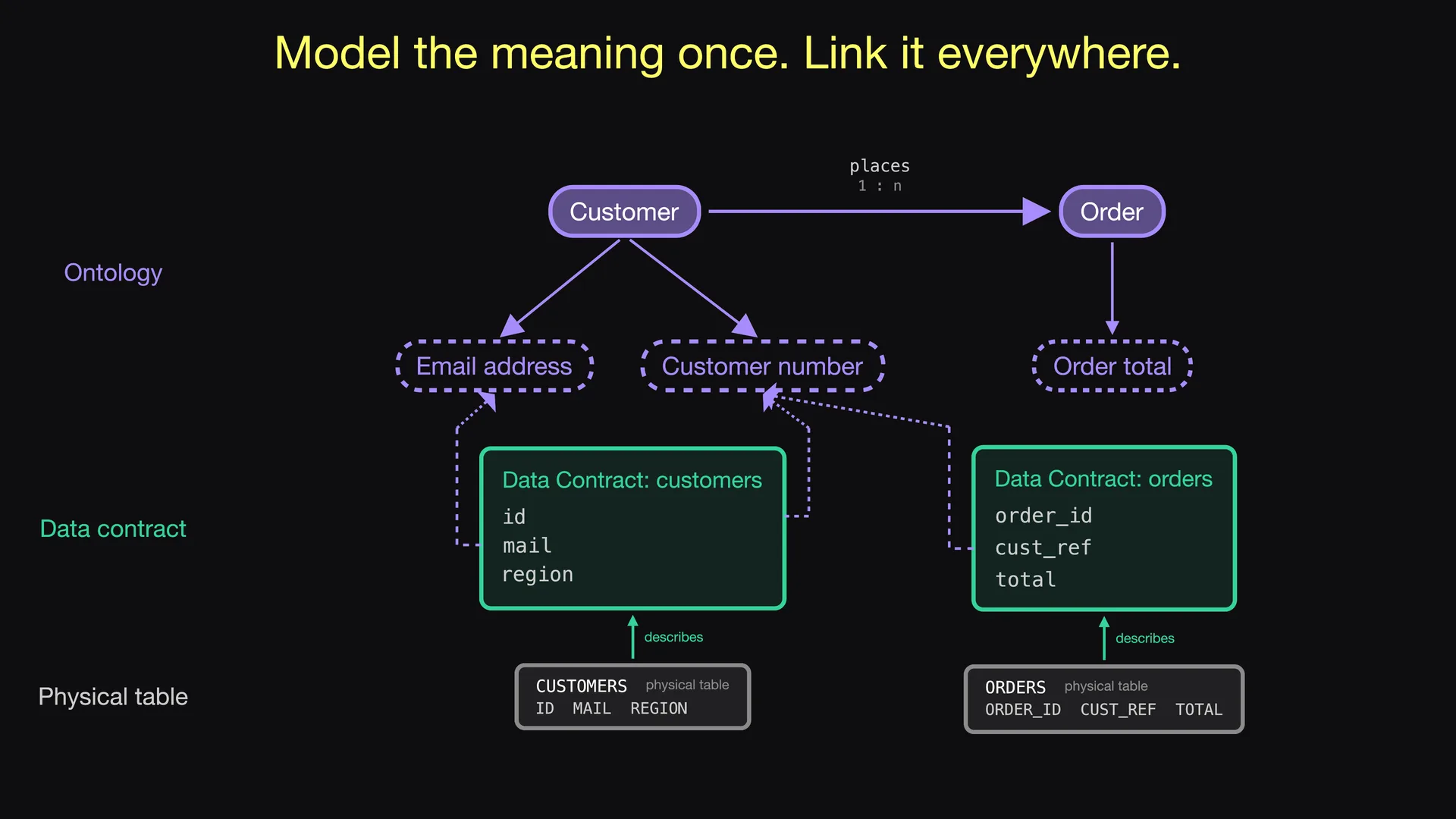
The ontology is on top, the data contracts are in the middle, and the physical tables are at the bottom. You model the meaning once. Then you link it from each data contract. Each column that points to a concept gets the same meaning in each data product.