Domain Ontologies
How do you model an ontology across many domains?
By Dr. Simon Harrer · · 2:13 video · 8 slides
In short
Give each domain its own ontology, which the domain team owns. While there are few domains, link their ontologies directly. When there are many domains, link them through a small central ontology that contains only the shared concepts.
Watch on YouTube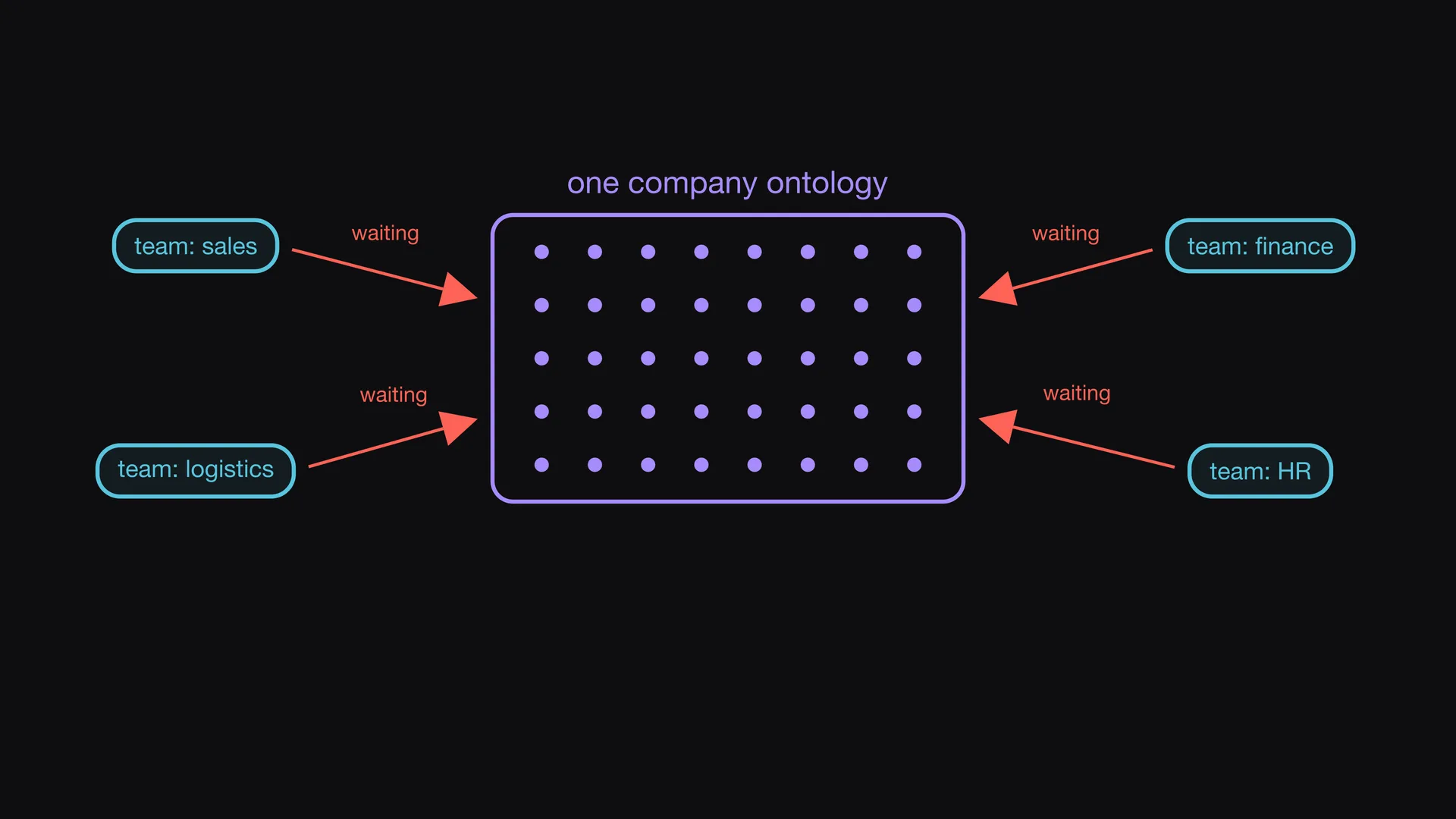
One ontology for the company
One ontology for the full company looks simple. But each change needs the agreement of each domain. The teams wait for each other. Thus the ontology grows slowly, and it does not fit any team well.
One ontology per domain
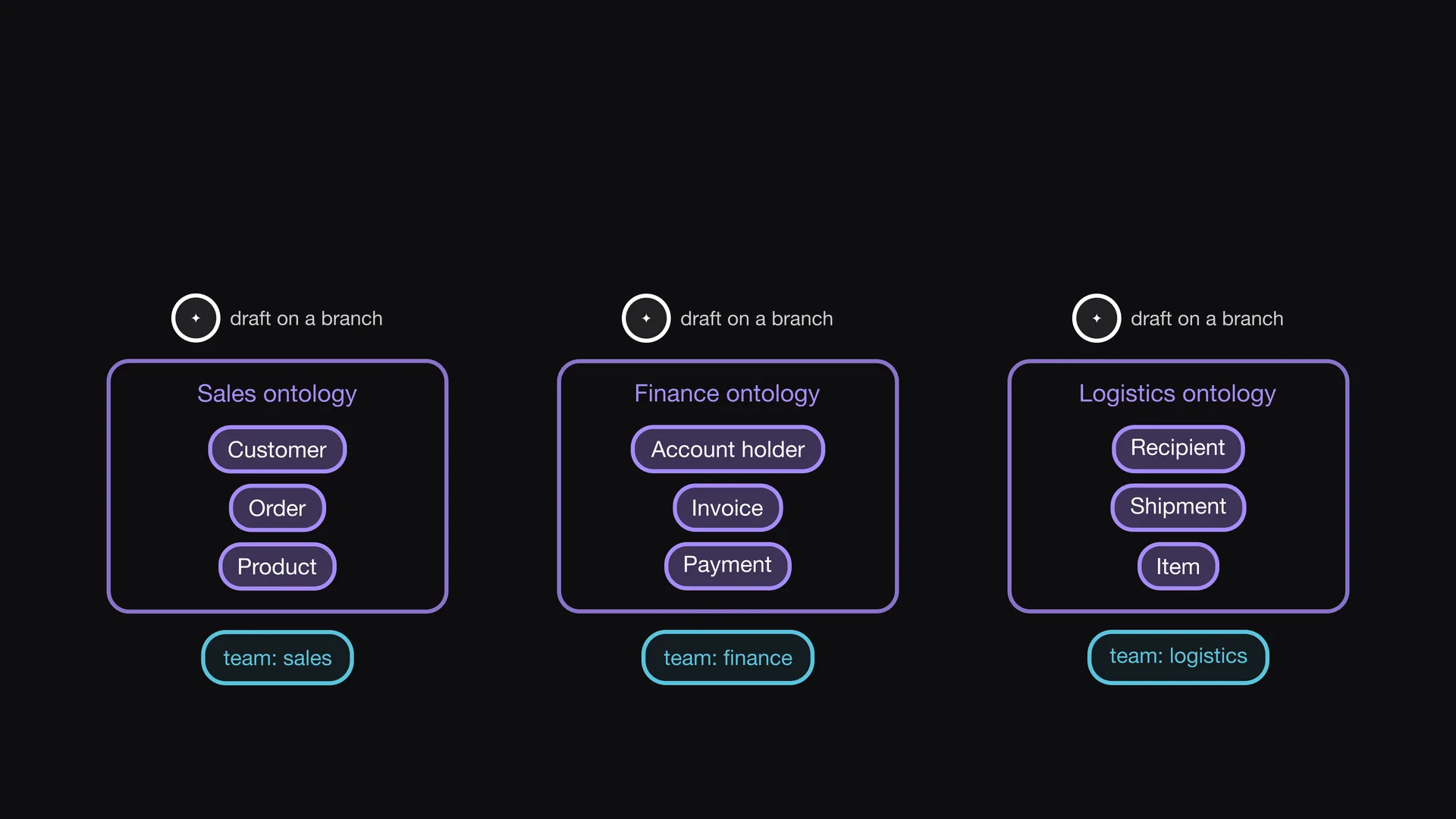
Model the business the way the business is organized. Each domain has its own ontology. The domain team owns it and models its own language, with agents that make the drafts. Each domain changes its ontology at its own speed.
Questions cross domains
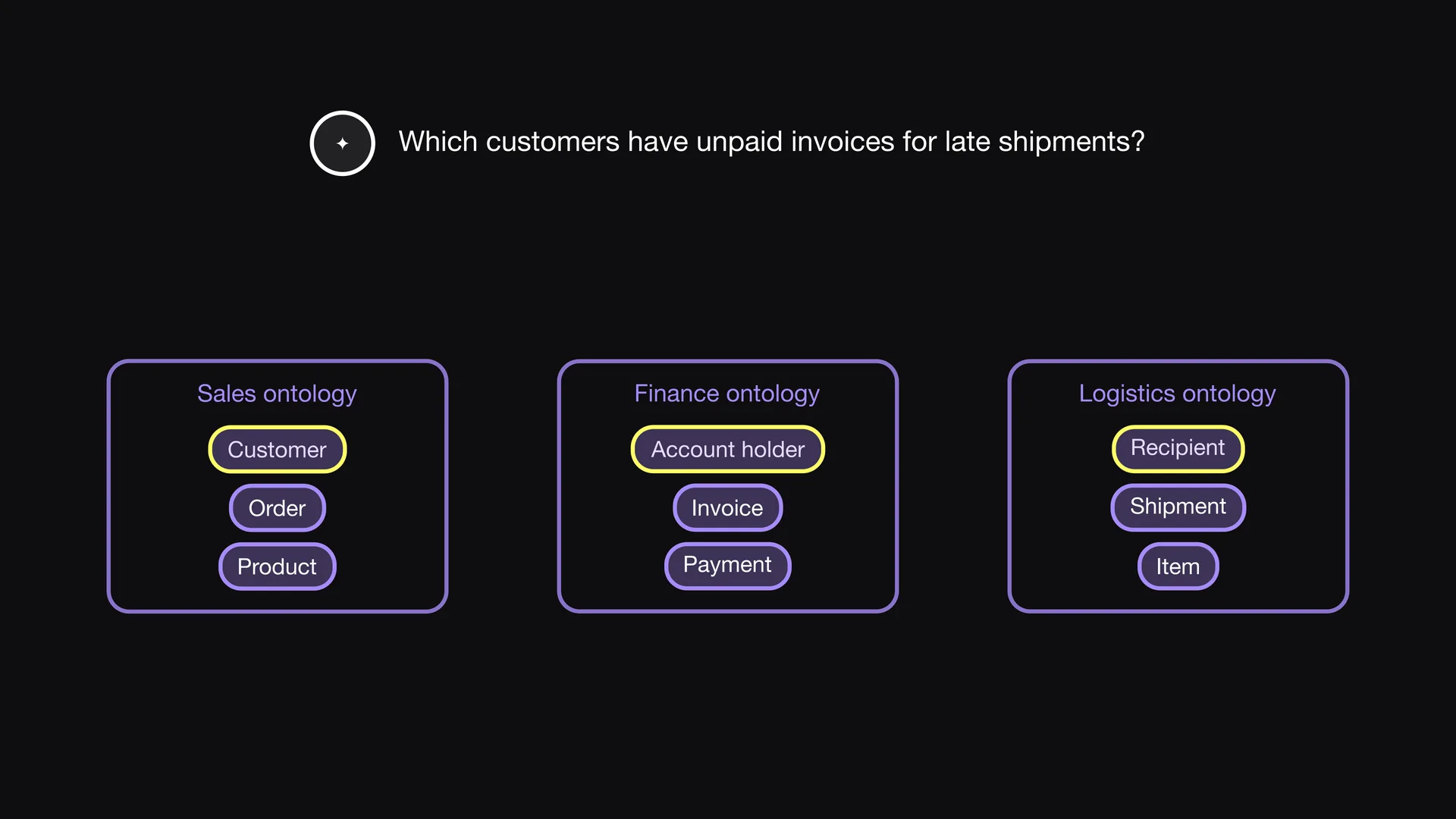
Questions do not stop at the border of a domain. Which customers have unpaid invoices for late shipments? Sales says customer, finance says account holder, and logistics says recipient. Business people and agents cannot tell if these words mean the same thing.
Link the domains directly
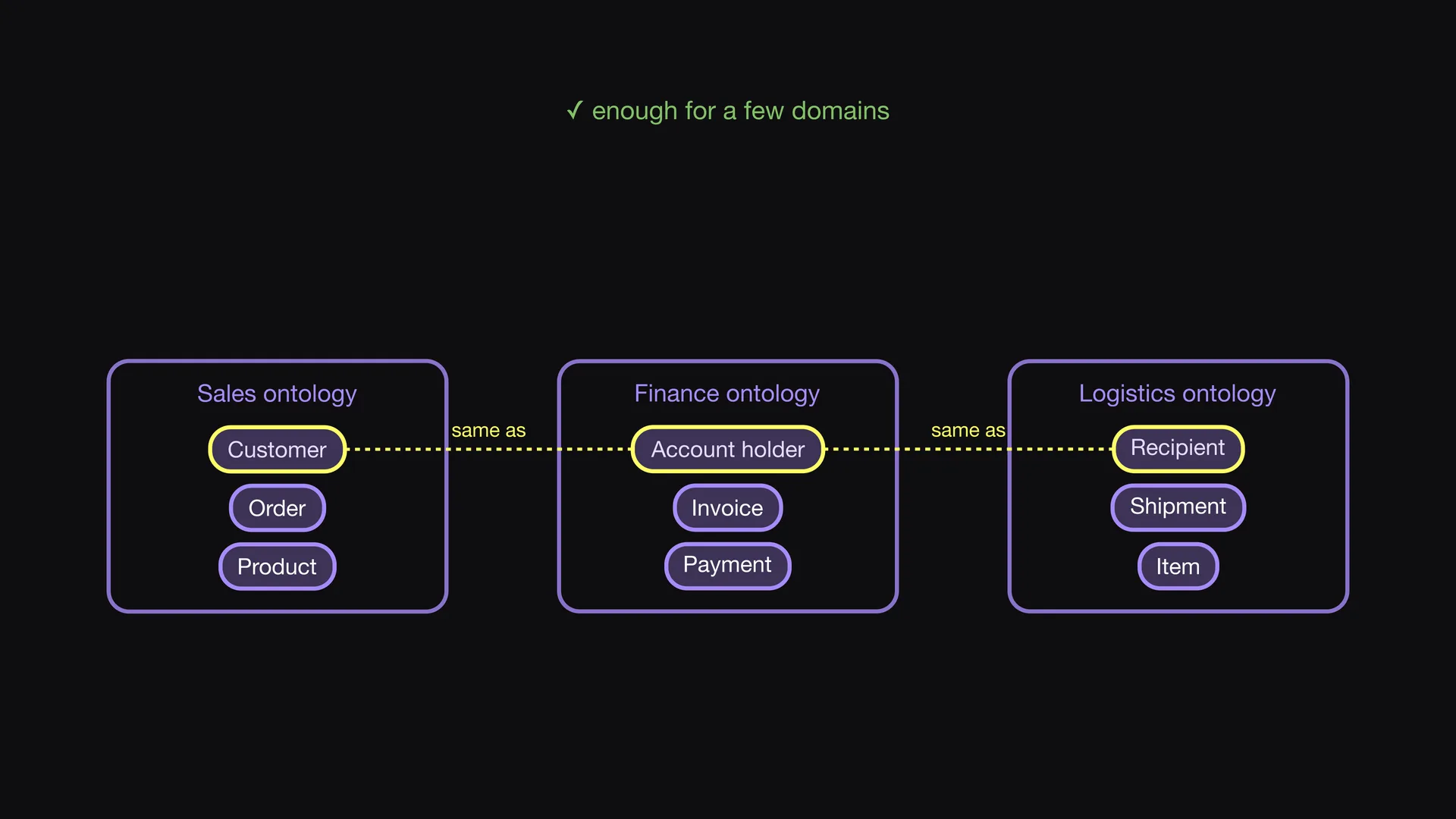
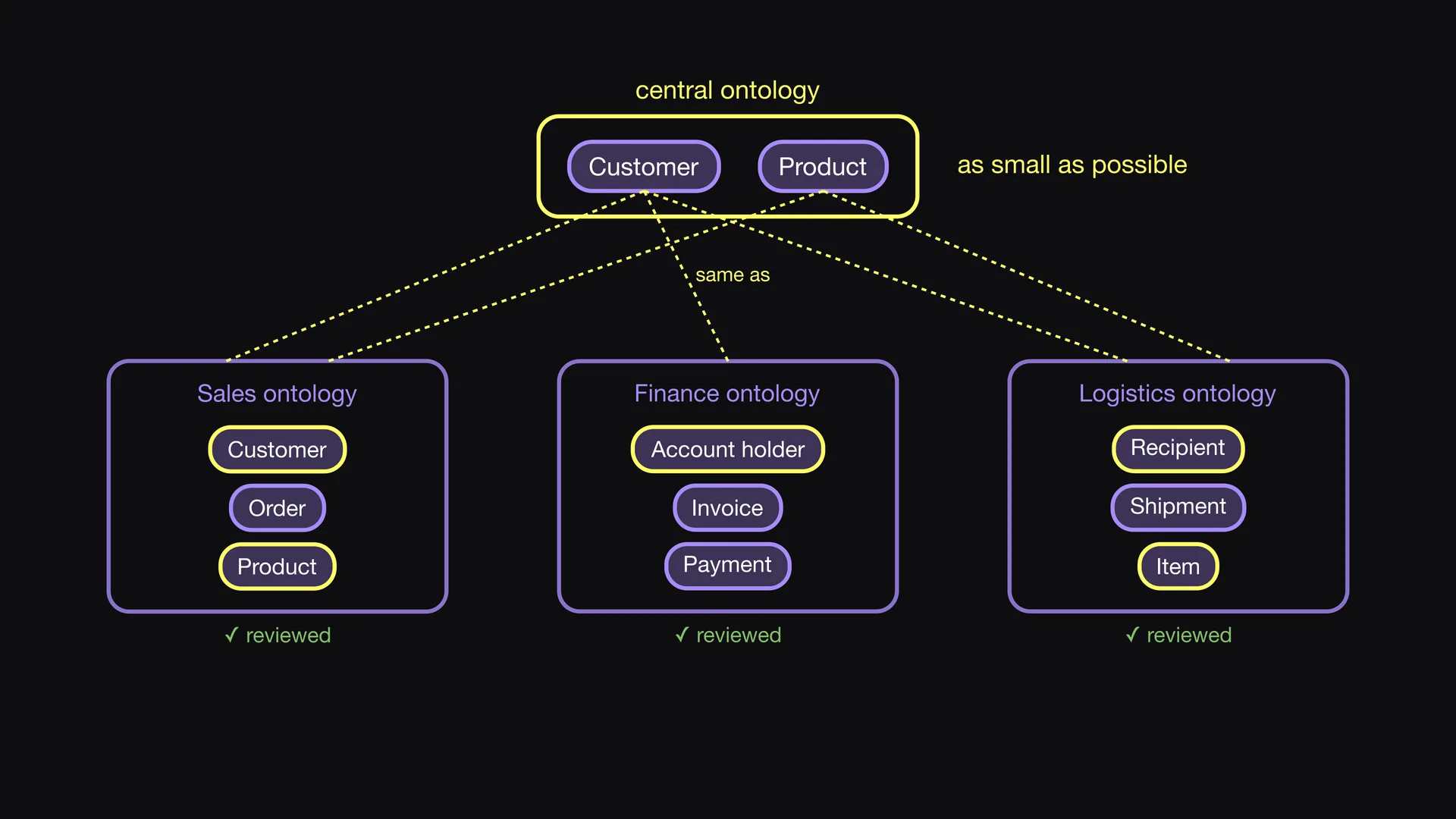
The simplest solution is a direct link between two ontologies. The customer in sales is the same as the account holder in finance. The two owners agree on each link. For a small number of domains, this is sufficient.
Too many pairs
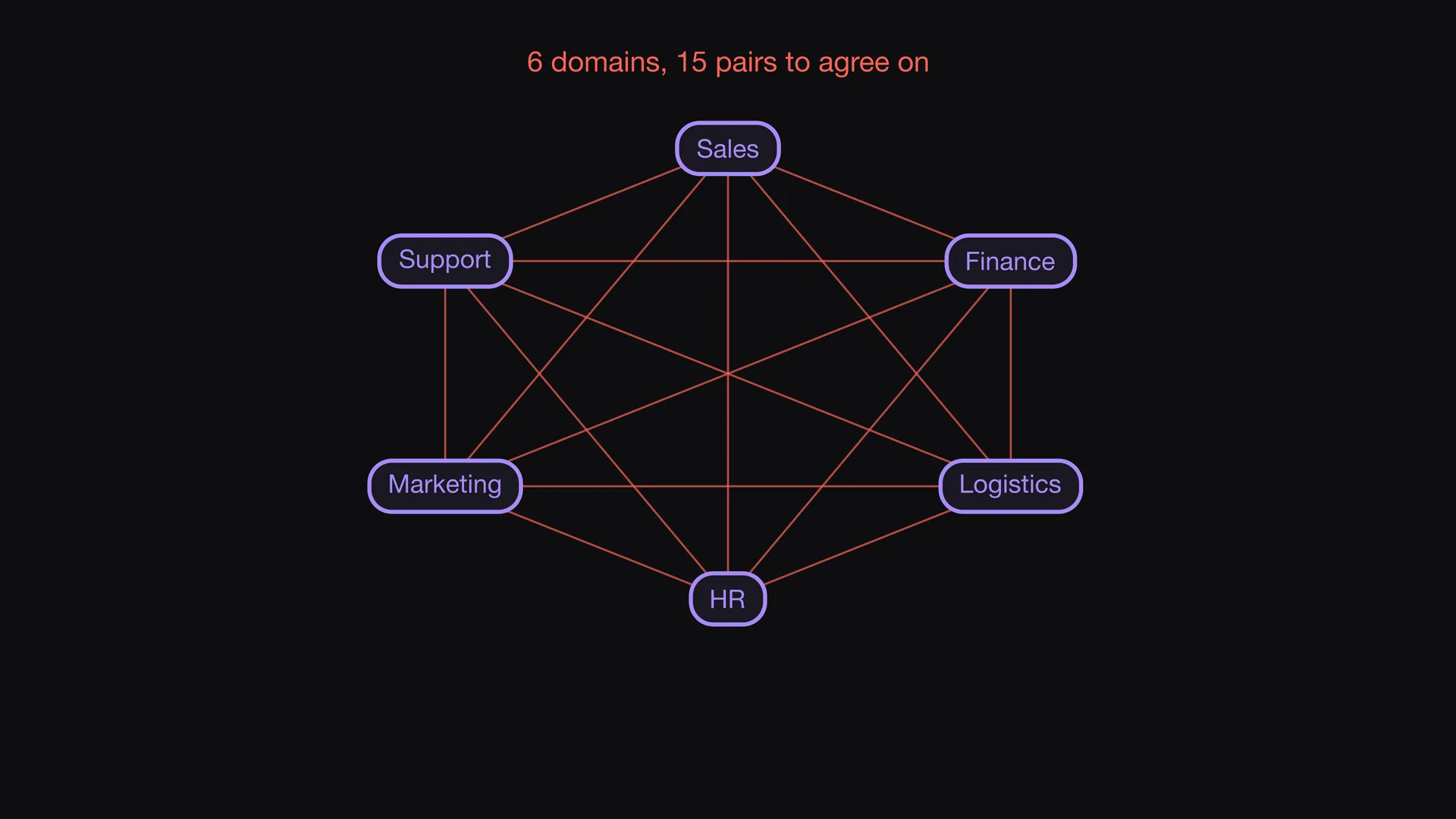
Each new domain needs links to all other domains. Six domains give fifteen pairs. Each pair must agree on the same mapping again and again. Direct links work for a few domains, but not for many domains.
A small central ontology
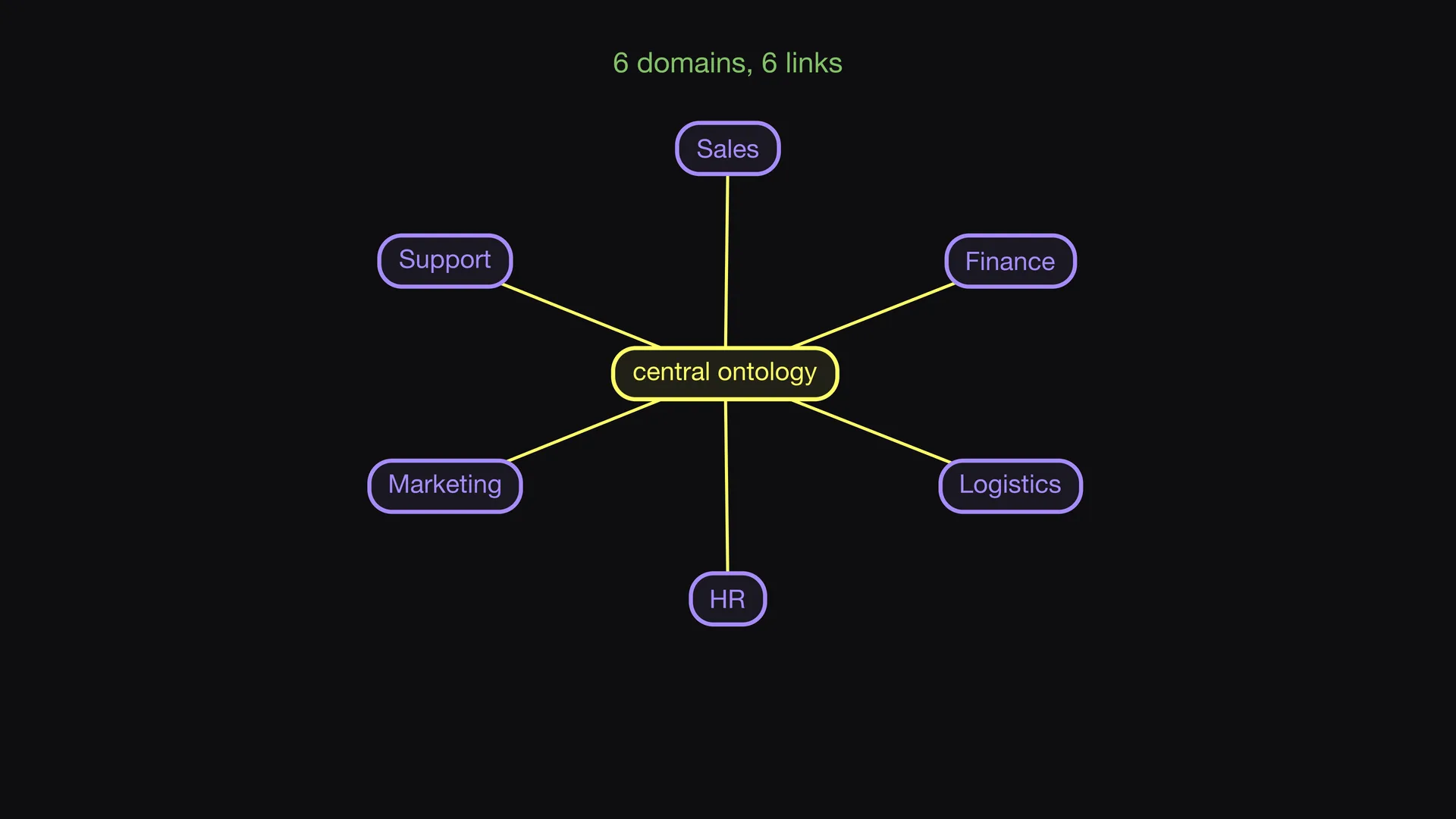
When there are many domains, link each domain to a small central ontology. Six domains then need only six links. Each domain maps its own word to the shared concept. A new domain needs only one new link.
As small as possible
The central ontology contains only the concepts that the domains share. A concept that only one domain uses stays in that domain. A change to the center affects every domain. Thus the center changes rarely, on a branch, and every domain owner reviews the change.
Agents across domains
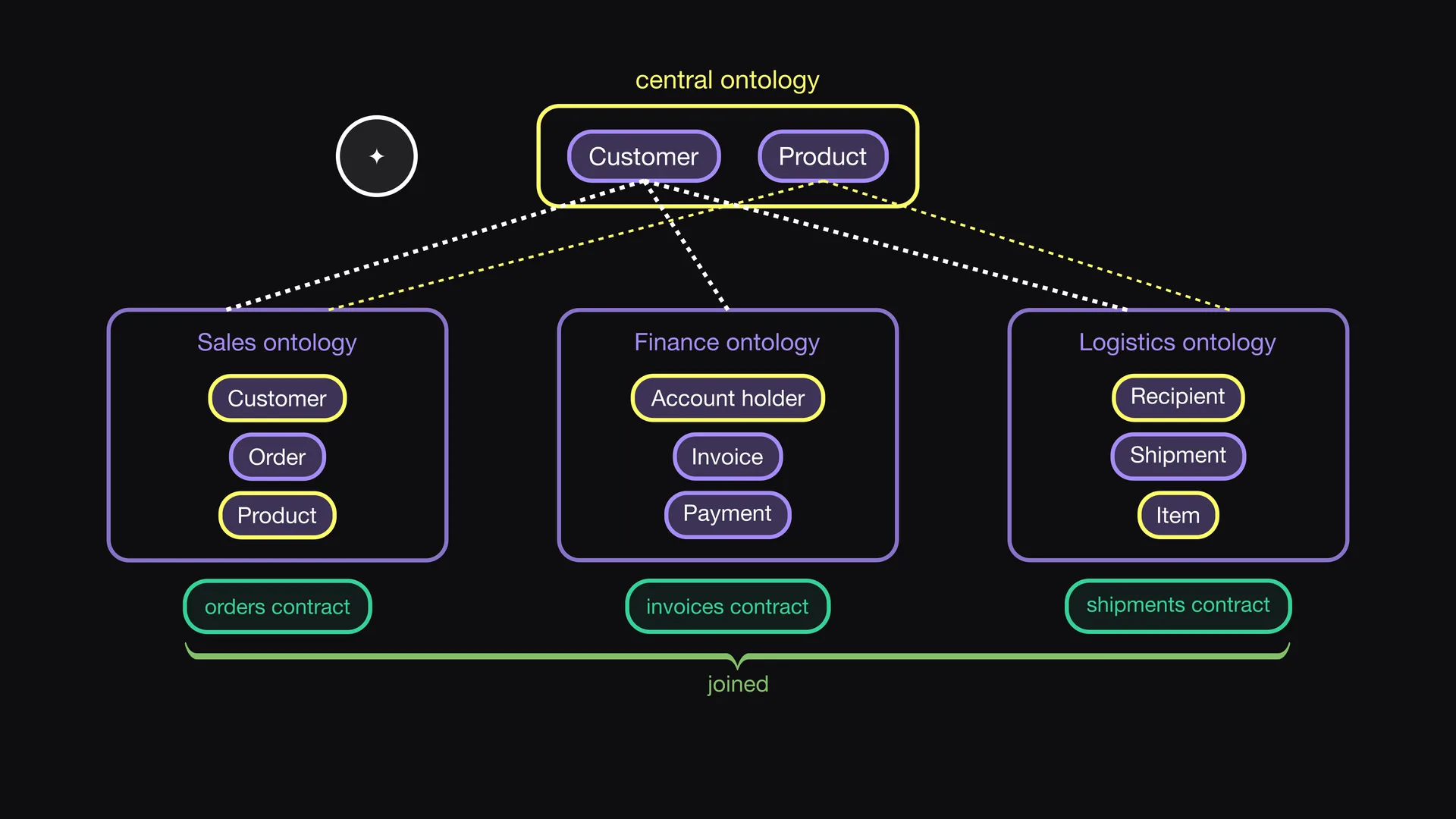
Now an agent can answer a question across domains. It follows the central concept into each domain. It finds the linked data contracts and joins the data. Thus it can find the customers with unpaid invoices for late shipments.